
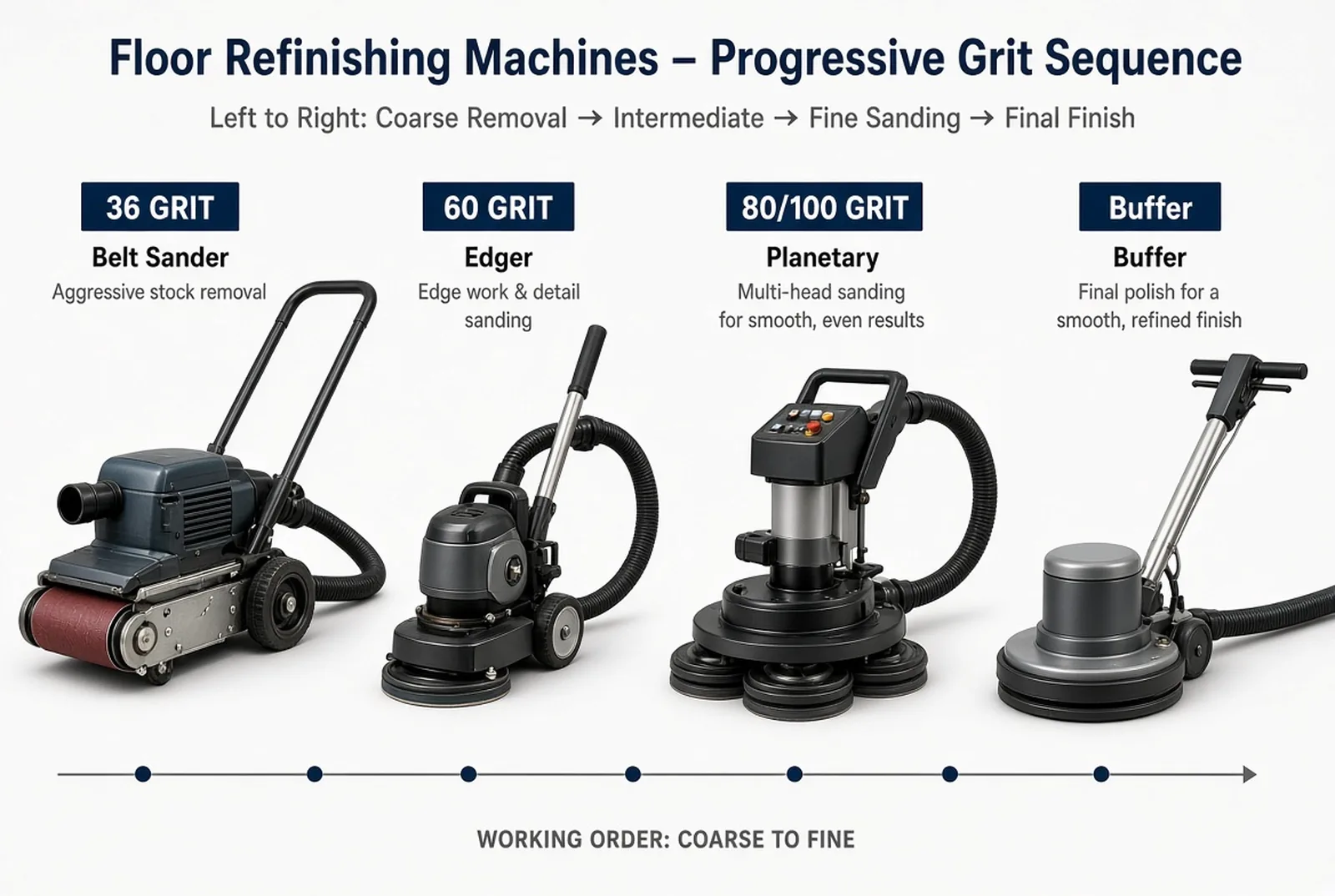
The four machines
Used in sequence with progressive grits and proper dust control, these four machines are the mechanical backbone of every professional hardwood refinish and every site-finished installation.
They are also available to anyone. The machines are not the moat — the sequence, the people running them and the discipline to not skip a stage are.
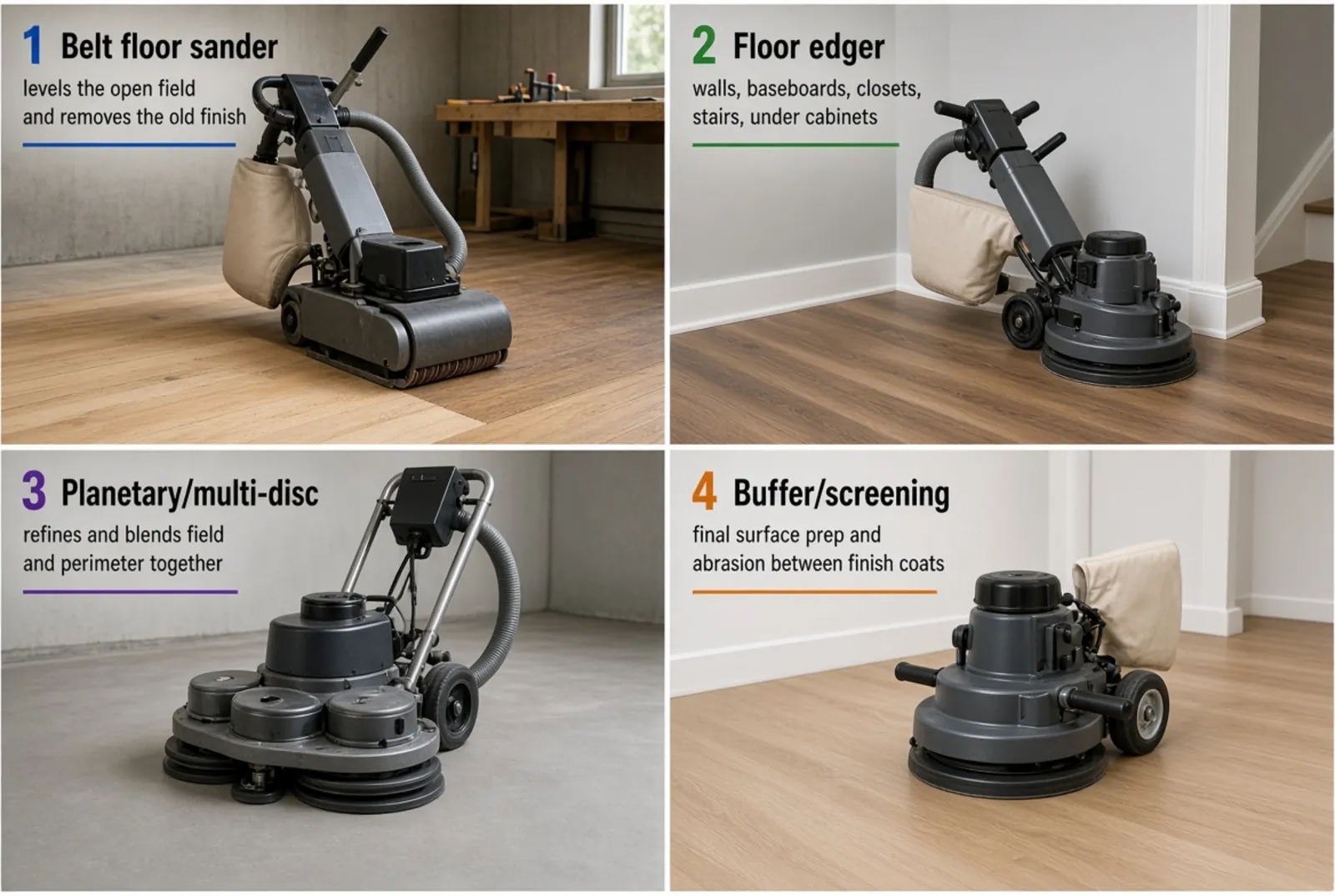
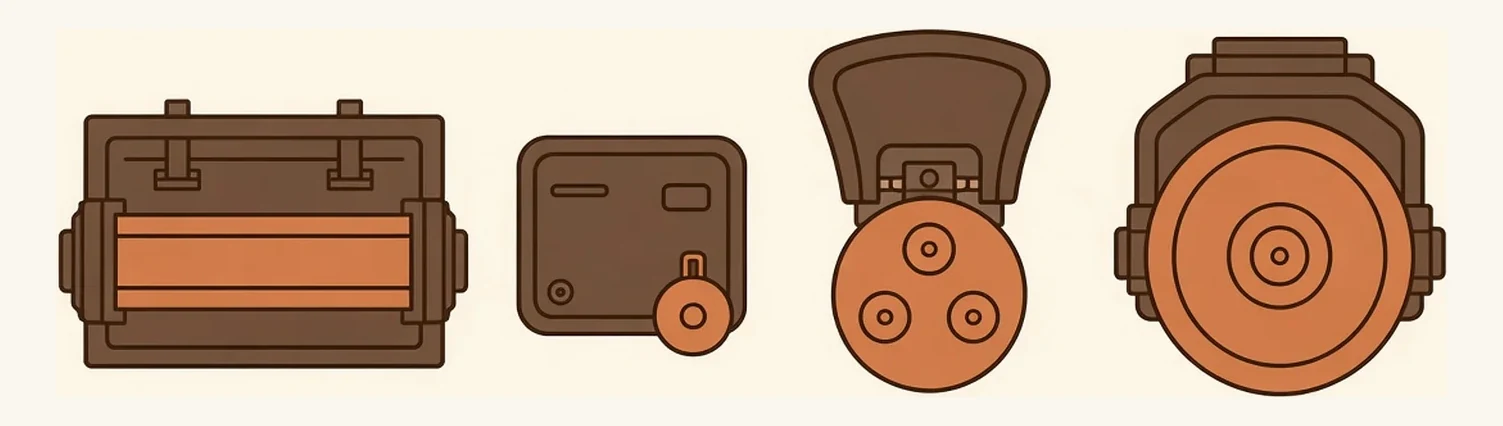
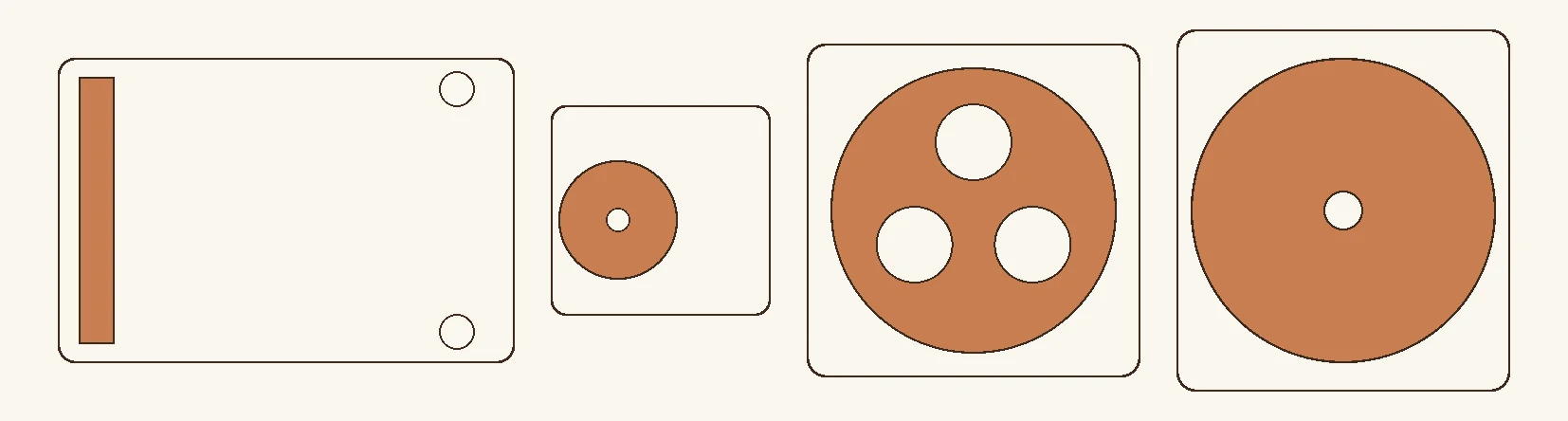
Four machines, four footprints, one scale. The sequence is not a preference: each machine reaches what the one before it could not, and the reason is the size and geometry of its working face.View full size — The four floor machines drawn to a single common scale in plan — belt sander, edger, planetary sander and buffer — so the difference between an eight-inch drum, a six-to-seven-inch disc and a sixteen-to-twenty-inch drive plate is visible as size.
| # | Machine | What it does |
|---|---|---|
| 1 | Belt floor sander | Levels the open field and removes the old finish |
| 2 | Floor edger | Walls, baseboards, closets, stairs, under cabinets |
| 3 | Planetary / multi-disc sander | Refines and blends field and perimeter together |
| 4 | Buffer / screening machine | Final surface prep and abrasion between finish coats |
1 — Belt floor sander, the big machine
A continuous abrasive belt runs over a cylindrical drum roughly 200 mm (8 inches) wide, with the operator walking behind at a steady pace. It is the primary material-removal machine: it strips old finish, levels high spots, takes out cupping and crowning, and establishes the flat plane every later machine builds on.
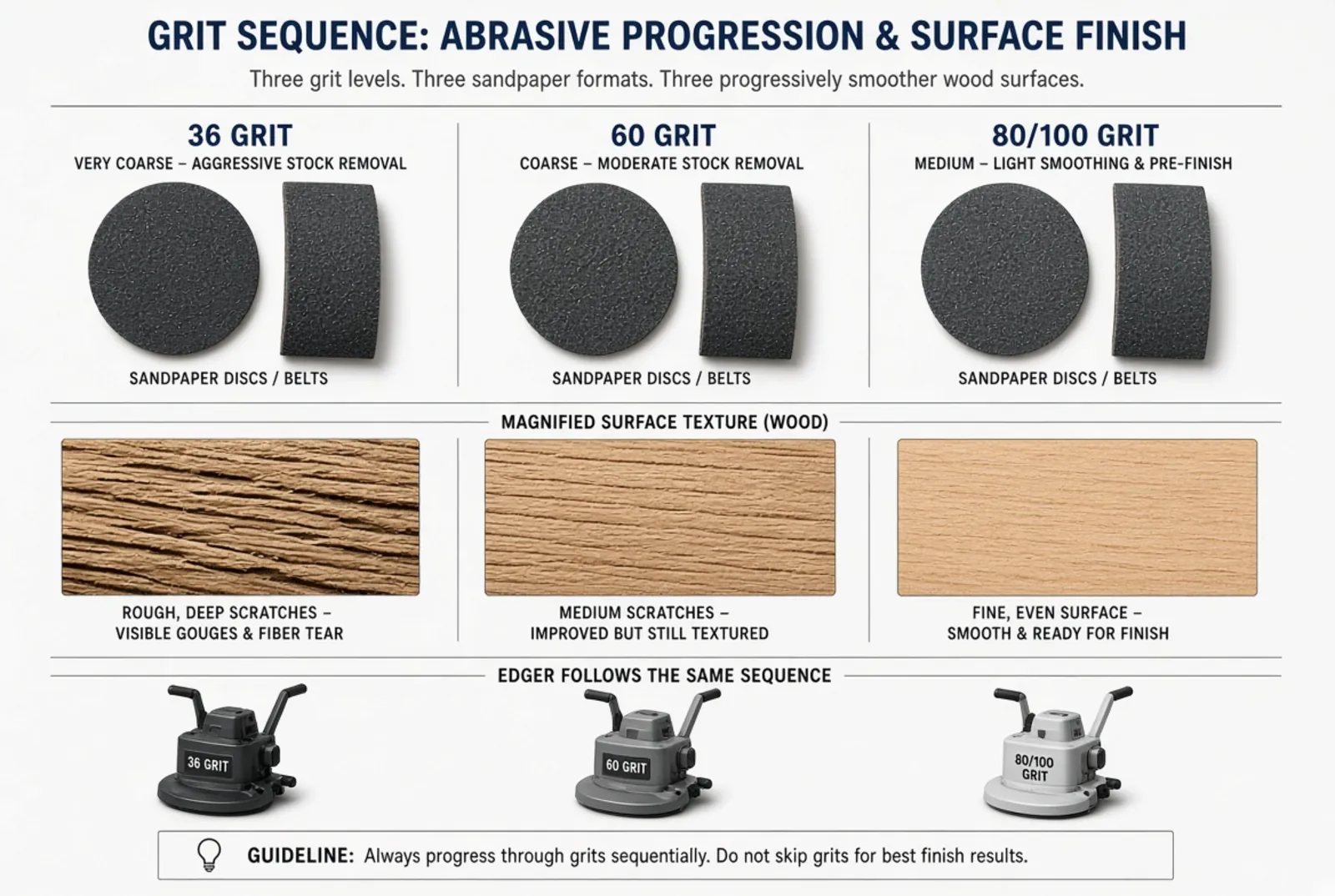
It handles roughly 80% of total material removal on a typical refinish. Drum pressure is adjustable in steps, and the standard progression is 36 → 60 → 80/100 grit.
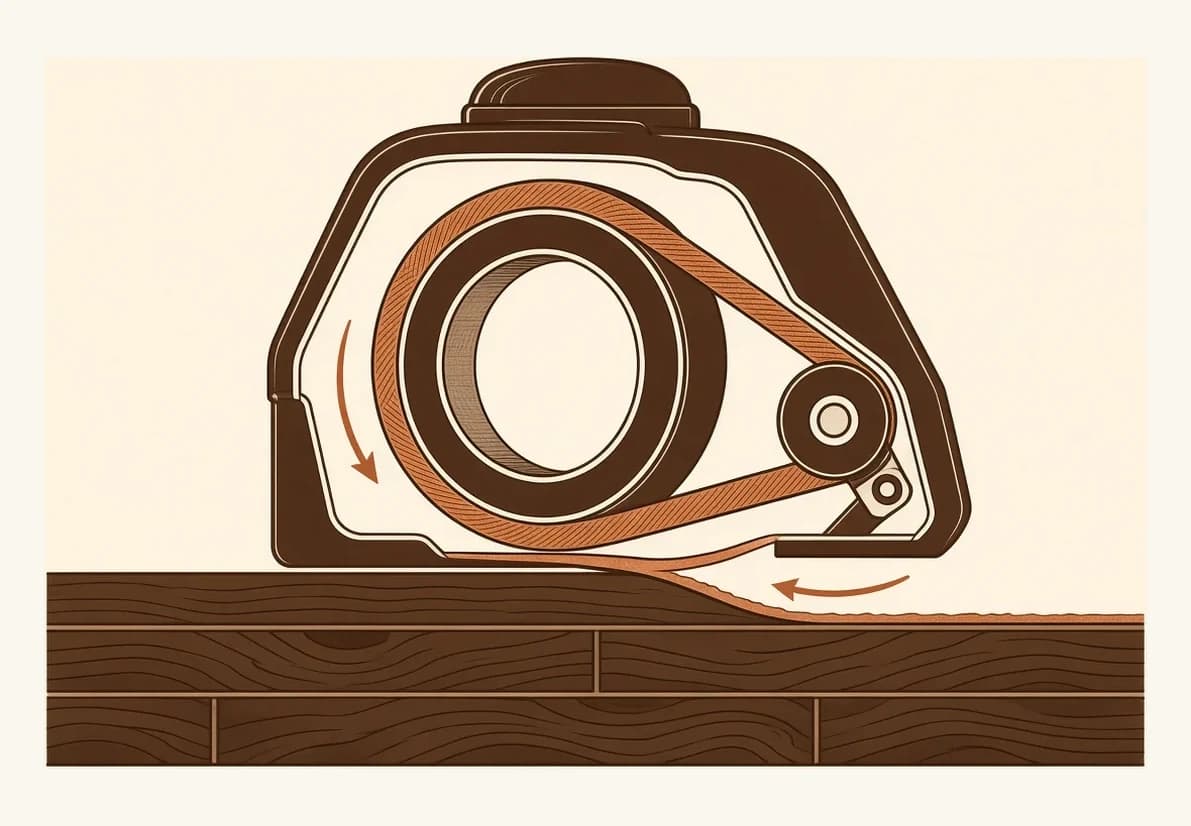

The belt sander levels the open field. A continuous abrasive belt runs over a cylindrical drum about 200 mm wide, and the operator walks behind it at a steady pace — pace is what decides whether it levels or gouges.View full size — Cross-section through a belt floor sander showing the continuous abrasive belt running over a cylindrical drum roughly two hundred millimetres wide, with the cut it takes into the board surface below.
- Keep it moving. Stopping or hesitating creates a permanent low spot.
- Belt tracking and consistent forward speed decide the final quality.
- Incorrect technique leaves waves, side-cut marks or chatter that later machines struggle to erase.
- Always run with high-efficiency dust extraction.
2 — Floor edger
A high-speed rotating disc, typically 150–178 mm (6–7 inches), in a body compact enough to reach walls, baseboards, closets, stairs and the space under cabinets — everywhere the belt sander physically cannot go.
Per square centimetre it is the most aggressive of the four, and it must follow the exact same progressive grit sequence as the field. Corners and detail areas often still need hand scraping or orbital detail sanding afterwards.
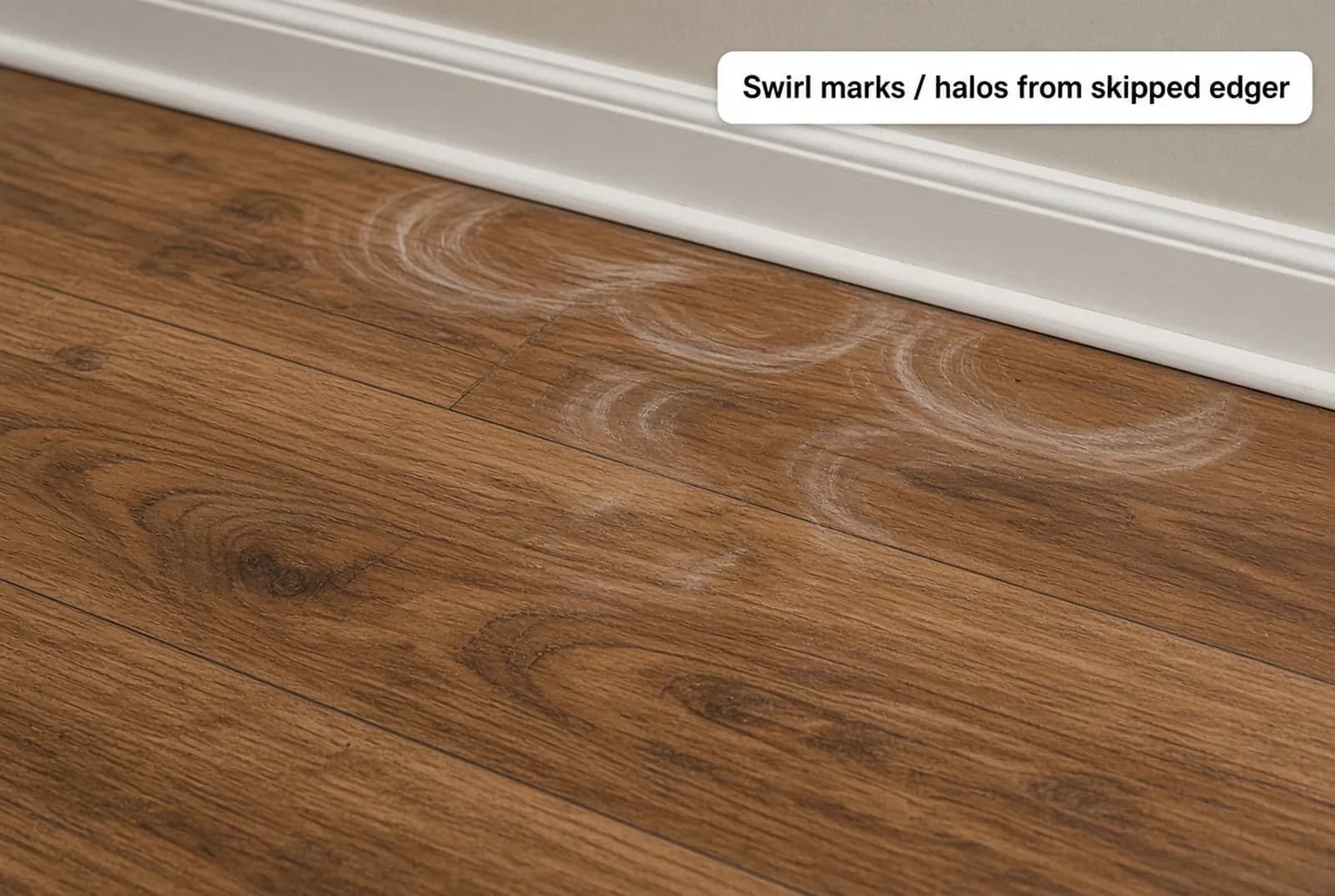
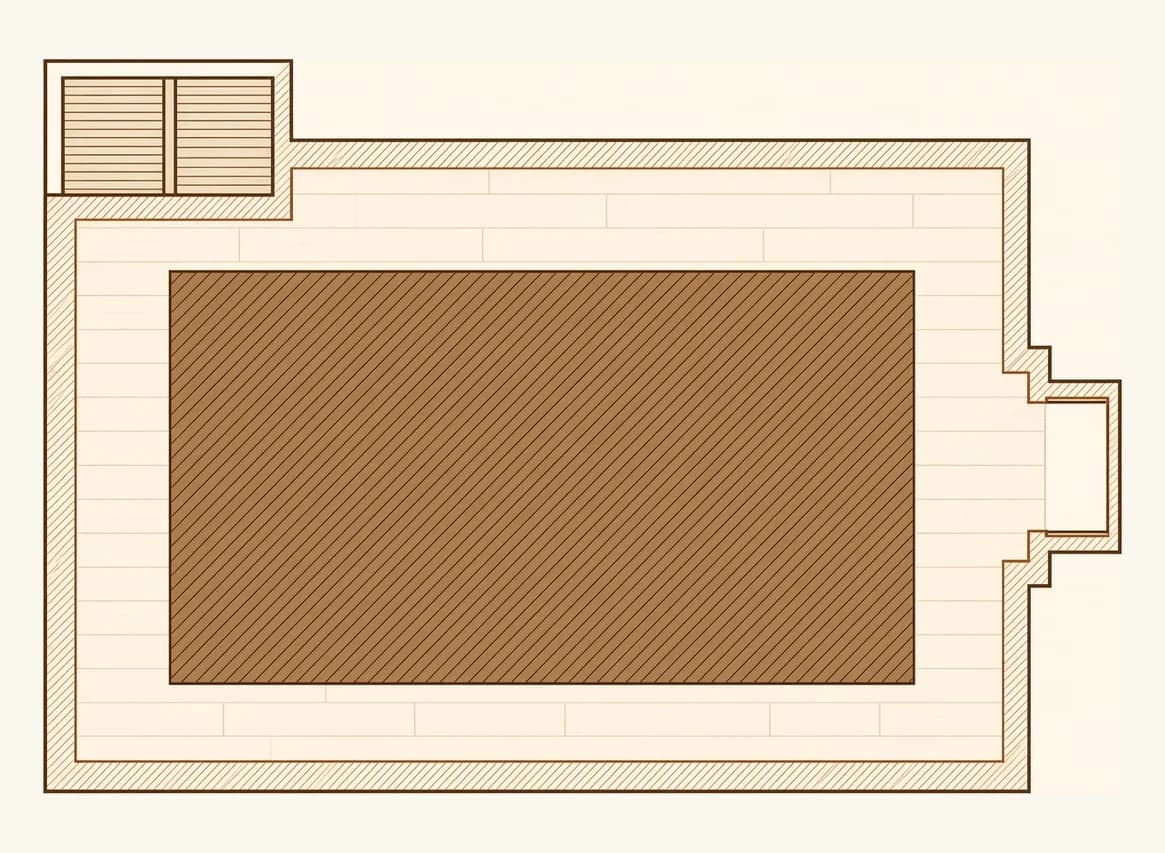
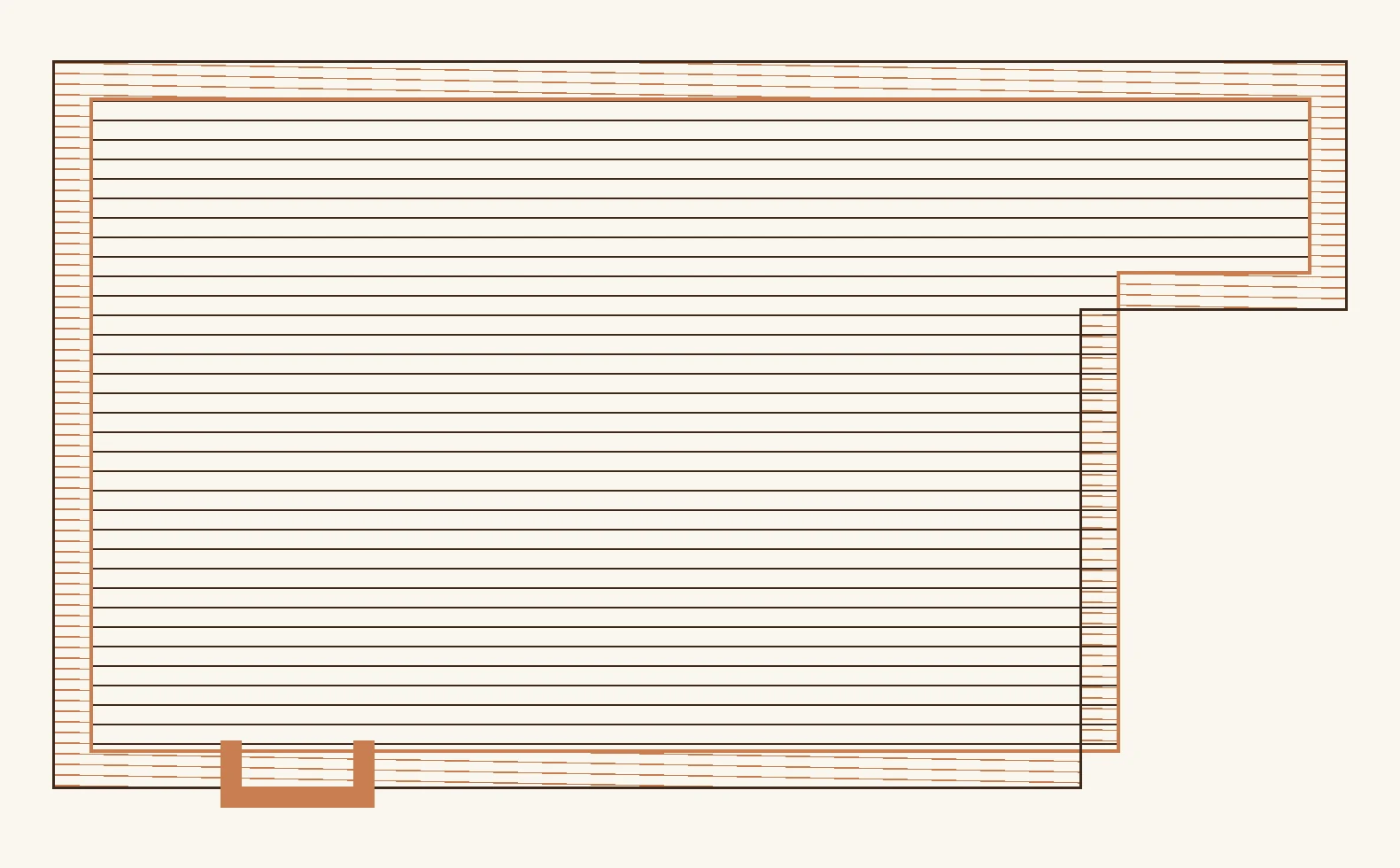
The edger exists because the big machine cannot reach a wall. Its disc is roughly 150–178 mm across, in a body compact enough for baseboards, closets and stair treads — and the boundary between the two machines is where the halo forms.View full size — Plan view of a room showing the wide central field the belt sander reaches, and the narrow band around the walls, into closets and around obstructions that only the smaller edger can reach.
- Edges and transitions are where most low-quality jobs fail visually.
- Poor technique leaves swirl marks that are highly visible under a clear finish.
- Never edge ahead of the field — always match the grit of the current pass.
- Dust control is harder here than on the big machine.
3 — Planetary / multi-disc sander
Three or more counter-rotating discs mounted on a head that itself rotates. Because the discs spin independently while the head turns, the scratch pattern comes out random and multi-directional rather than aligned to a direction of travel.
This is the refining and blending stage: it erases belt lines, edger swirls and cross-grain scratches, and leaves a uniform microscopic surface so stain and finish absorb evenly. It is particularly valuable on multi-species floors, on mixed hard and soft grain, and on engineered floors where aggressive belt sanding risks cutting through the wear layer.
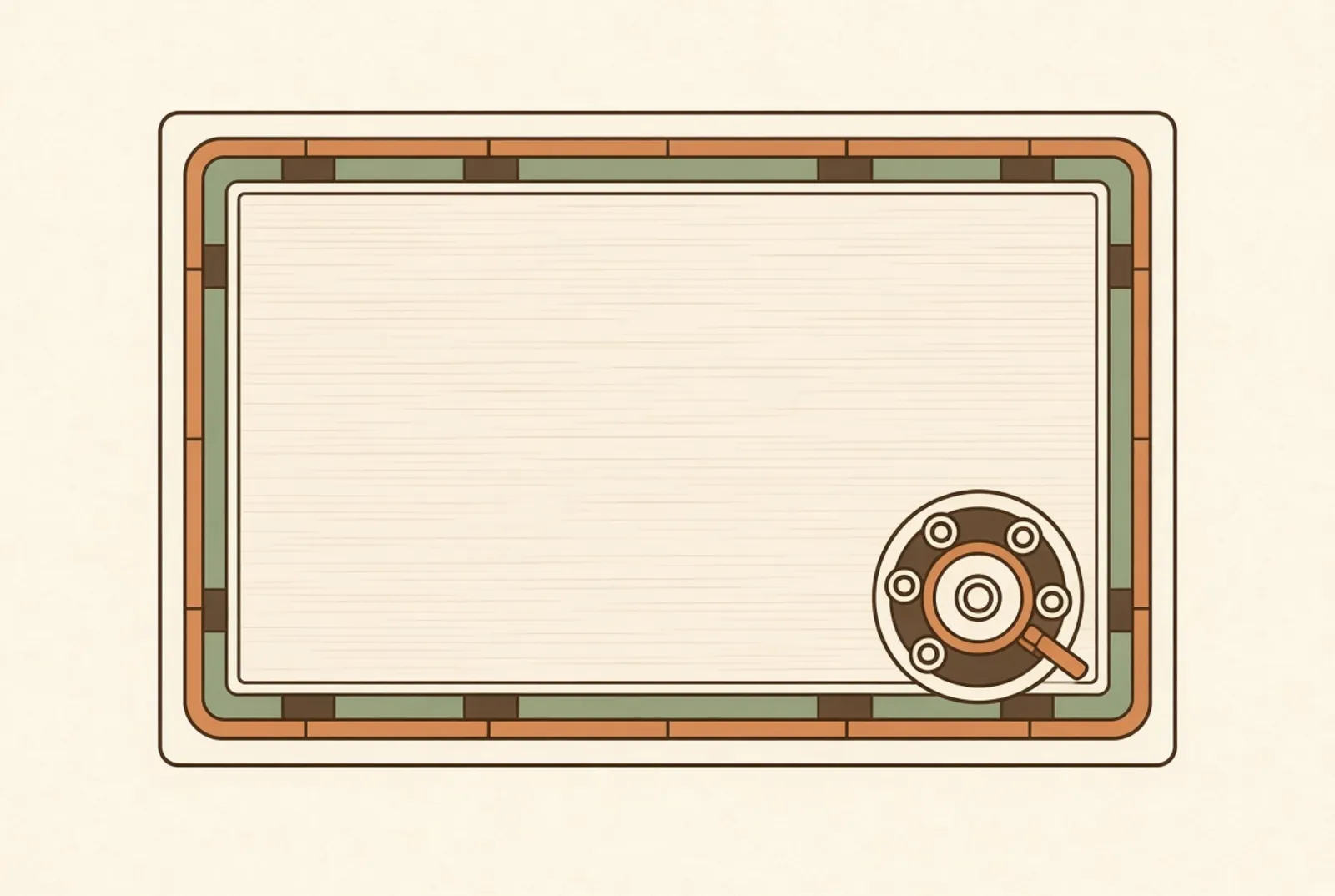
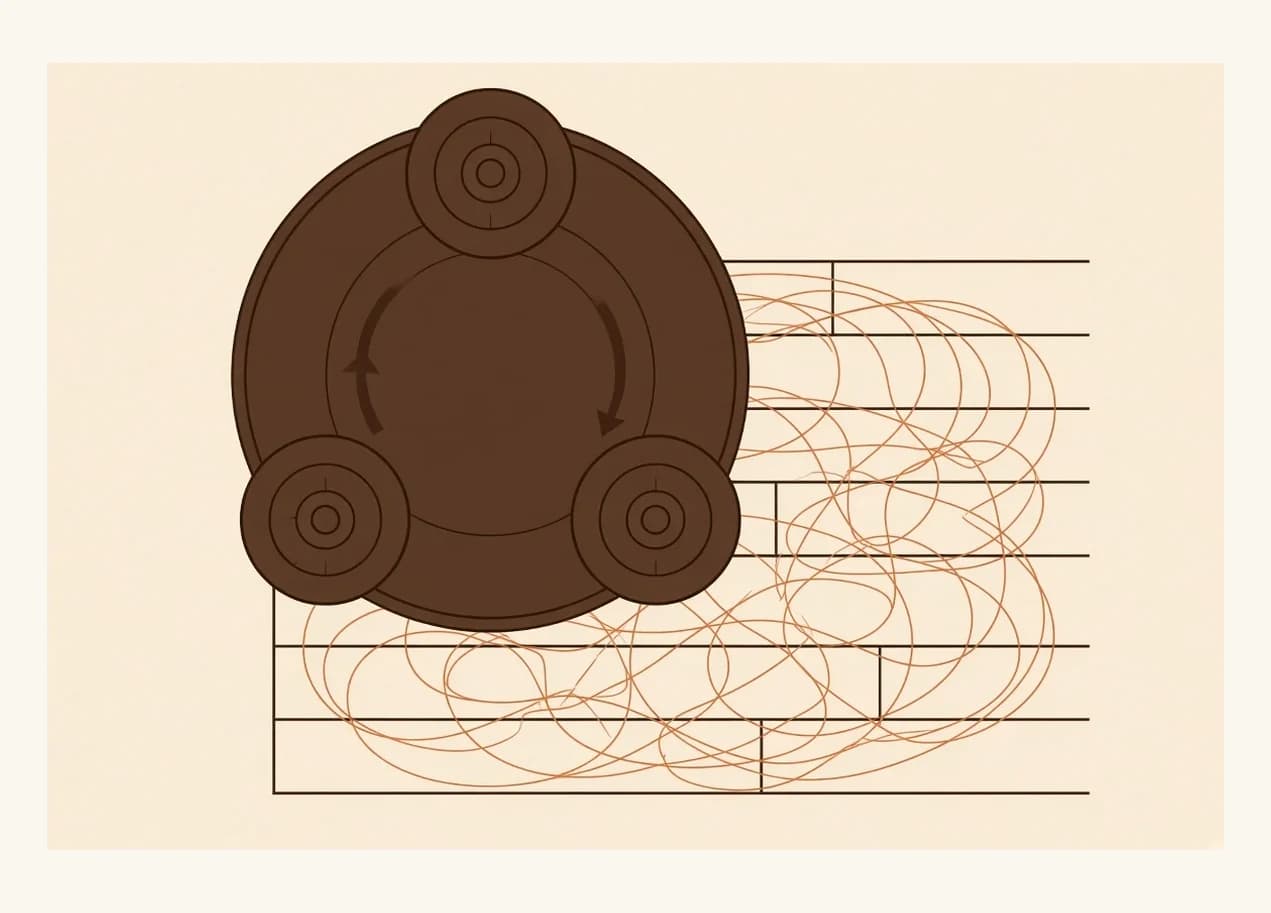
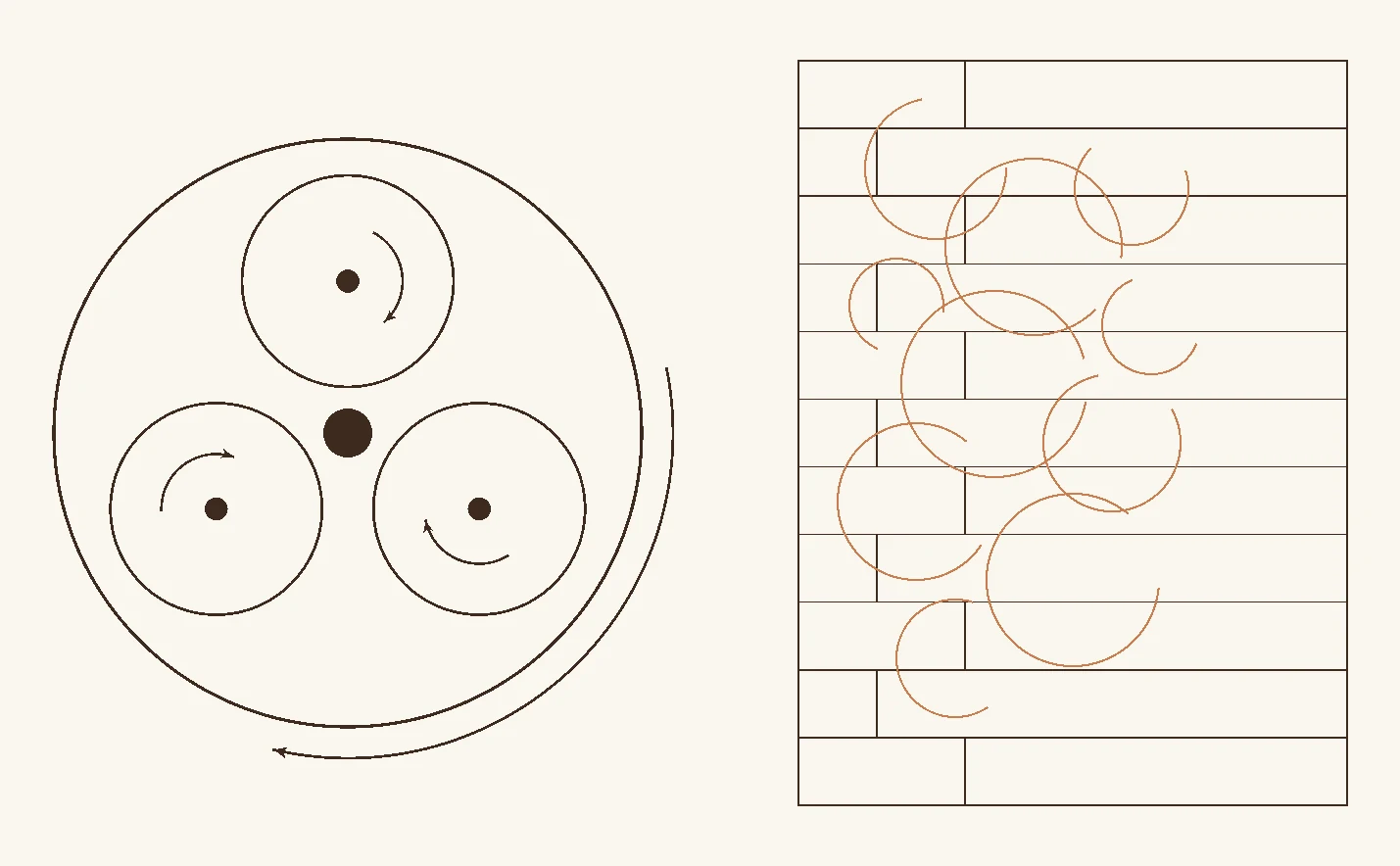
The planetary sander blends the field and the edge together. Three or more discs counter-rotate on a head that is itself rotating, so no scratch repeats in the same place — which is what removes the boundary the first two machines leave.View full size — A planetary sander seen from above, with three counter-rotating discs mounted on a head that itself rotates, and the overlapping non-repeating scratch pattern this produces on the boards below.
4 — Buffer and screening machine
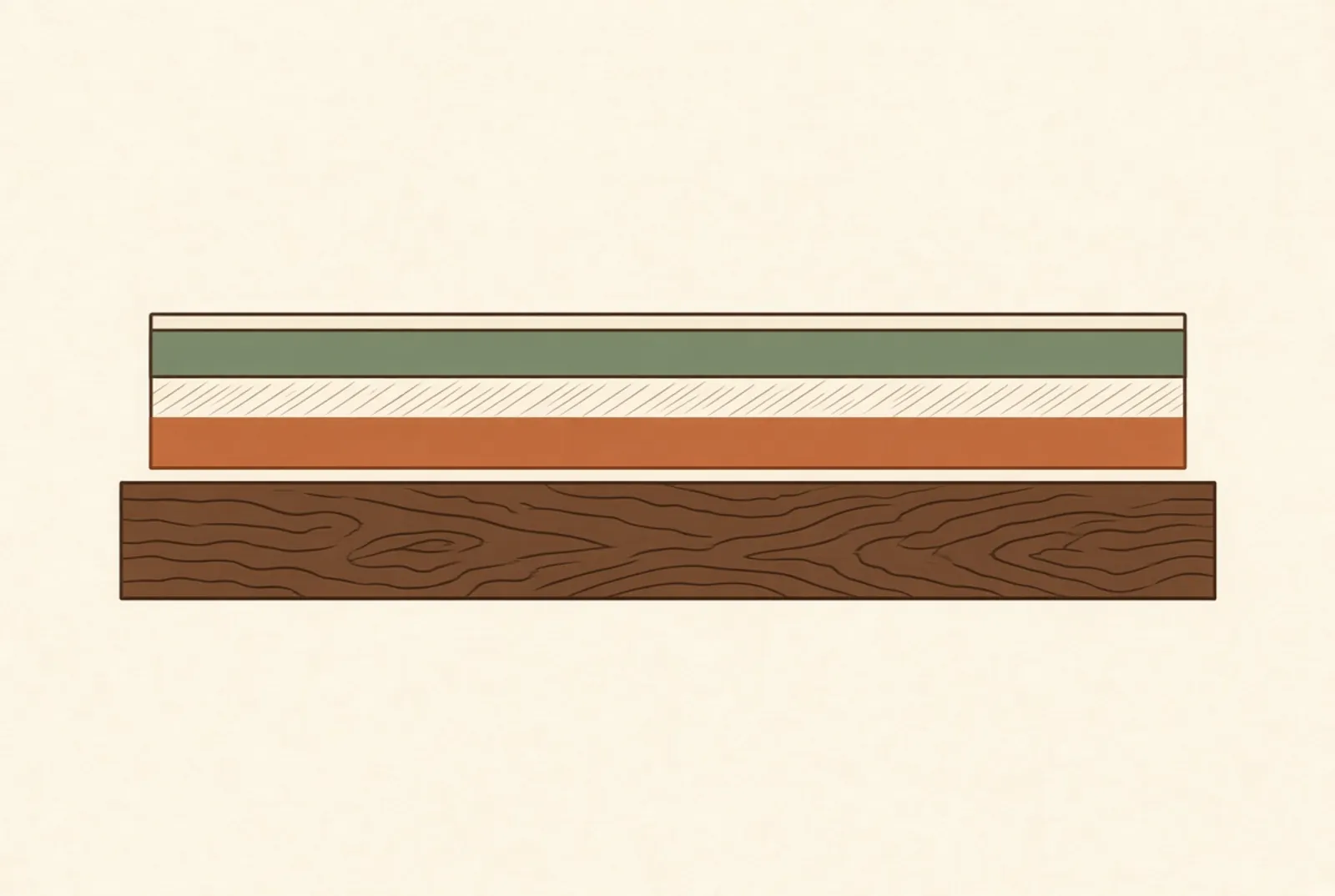
A single-disc rotary machine with a large drive plate, typically 16–20 inches (400–500 mm), fitted with fine mesh screens around 100–150 grit or with abrasive pads. It removes microns, not wood.
It does two jobs: final screening before the first coat of finish, and intercoat abrasion between successive coats. Both exist to create a uniform microscopic scratch pattern so the next layer of finish bonds properly.
- Mandatory between coats on multi-coat water-based systems.
- Screening is light abrasion — excessive pressure or dwell burnishes the surface or leaves swirl.
- Keep the machine moving in overlapping passes.
- It does not correct bad sanding. It only prepares a correctly sanded floor.
The full sequence
Any skipped step is a future liability, and most of them are invisible on handover day.
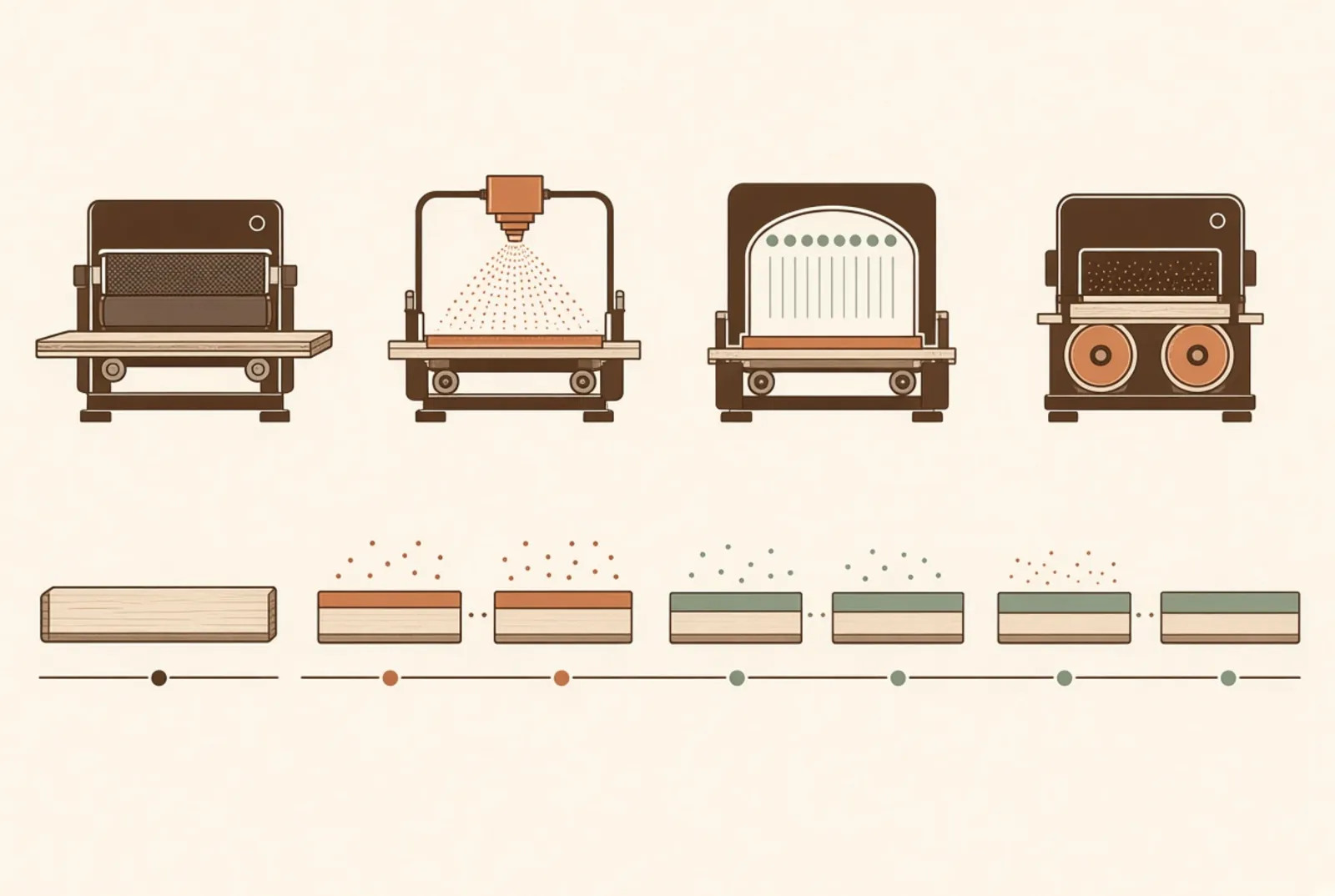
- Moisture testing and acclimation — minimum 72 hours in the actual conditioned space.
- Belt sander, progressive grits, field only.
- Edger, matching grits, on every perimeter and detail.
- Planetary / multi-disc, refining and blending field into edges.
- Buffer / screening for a final uniform surface.
- Vacuum, tack, apply the finish system.
- Intercoat screening with the buffer between coats.
- Final coat.
Equipment is not the difference
Every machine in this paper can be rented in the Greater Toronto Area this afternoon. What cannot be rented is the sequence being followed when nobody is watching, on the section behind the door, at the end of a long day.
| Market average | What the protocol requires | |
|---|---|---|
| Bid | Lowest | Fixed in writing |
| Labour | Subcontracted | Salaried artisans |
| Moisture testing | Optional | The first gate — before any deposit |
| Optimised for | Speed | Zero callbacks |