
Reference installation
Hickory hardwood flooring in Toronto — the hardest floor on the shelf
Is hickory flooring worth it in a Toronto home?
Hickory is the hardest species commonly sold as flooring in this market at 1,880 lbf, and the most visually dramatic — the colour range within a single board is the point of it, not a defect. It is also the species where the grading conversation matters most, because "hickory" covers a group rather than one wood.
Specification
The assembled specification
- Botanical name
- Carya ovata (shagbark hickory) and related species in the group
- Side hardness, 12% MC
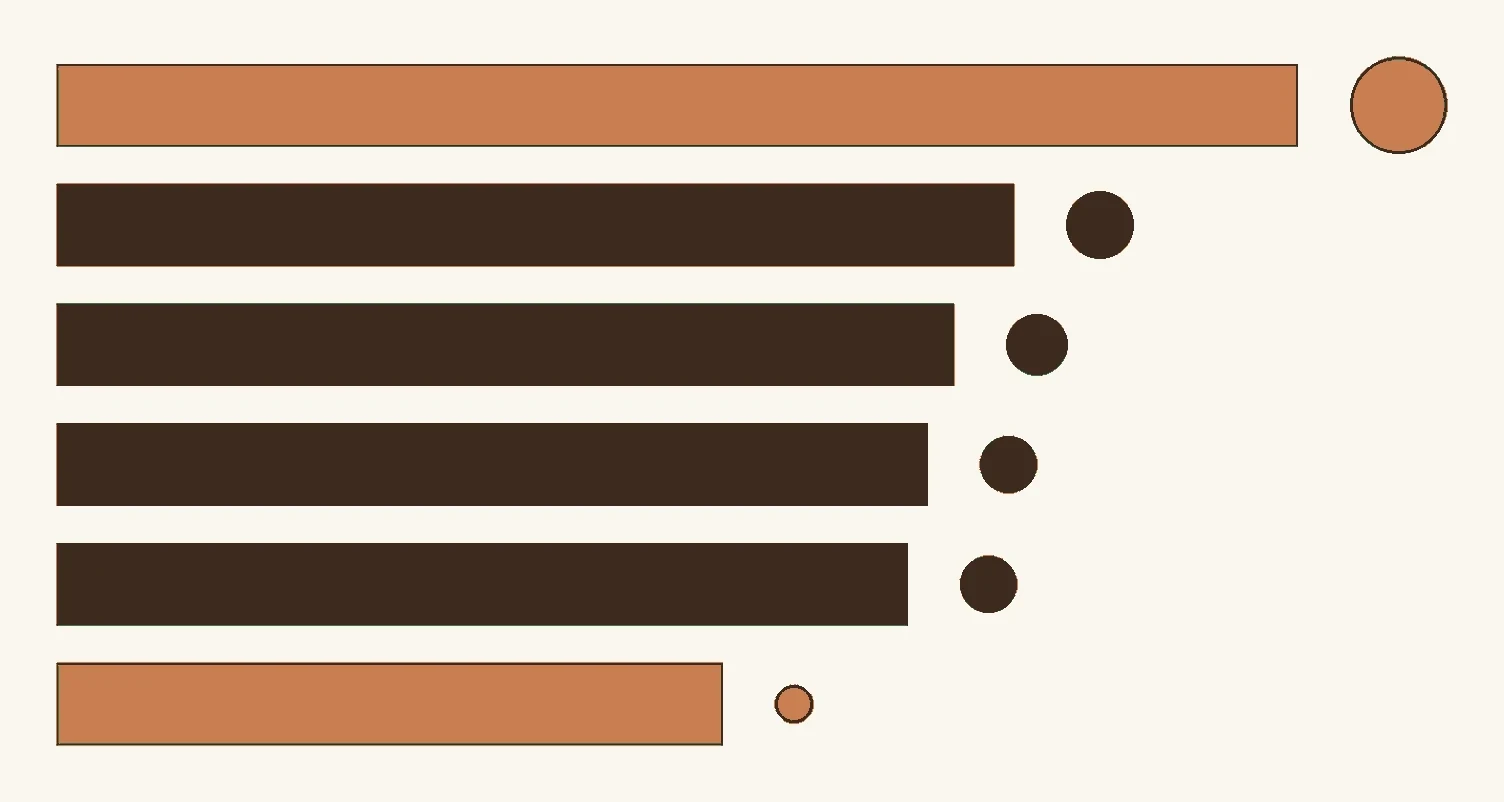
- 1,880 lbf for shagbark hickory — the hardest of the six (USDA Forest Products Laboratory, Wood Handbook Table 5-3b)
- Ontario range
- Southern Ontario, including along the St. Lawrence River and into Quebec (Ontario Tree Atlas)
- Ontario commercial status
- Not among the seven principal tolerant hardwoods named by the Ministry of Natural Resources, and not a separate line in the 2021 growing-stock table
- US growing stock
- 5.1% of the US total, 742.3 million m³ (American Hardwood Export Council)
- US annual growth against harvest
- 14.6 million m³ grown against 6.0 million m³ harvested per year
- Milled in Ontario
- Superior Flooring / Herwynen Sawmill, Rockwood, Ontario, lists hickory among its five species
- Flooring grades published
- Special Clear, Select, No. 1 Common, No. 2 Common (NWFA/NOFMA hickory-pecan rules)
Failure modes
Where this goes wrong
- The American Hardwood Export Council declines to publish a single hardness figure for hickory, noting that mechanical properties vary within the group. The 1,880 lbf figure is specifically shagbark. A board sold as "hickory" is not guaranteed to be that species.
- Hickory’s colour range within one board — pale sapwood against dark heartwood — is its defining character. Clients who have only seen a single sample board are frequently surprised by the assembled floor. Show a laid-out area, not a plank.
- It is hard on tooling and hard on the sanding sequence. A refinishing quote priced as though it were oak is a quote that has not read the species.
Answer
What we recommend
Hickory is the right specification where maximum dent resistance and strong visual character are both wanted — a busy family floor, a rural or transitional interior, a rental that has to survive tenants. It is the wrong specification where a quiet, uniform floor is the goal, unless the Special Clear grade is being bought deliberately.
- View a laid-out area before ordering, never a single board.
- Confirm the grade in writing; the character range between Special Clear and No. 2 Common is larger in hickory than in any other species here.
Also asked
Related questions this guide answers
- Is hickory the hardest hardwood flooring?
- Among the species commonly installed in the Greater Toronto Area, yes. The USDA Forest Products Laboratory publishes shagbark hickory at 1,880 lbf side hardness at 12% moisture content, against hard maple at 1,450, white oak at 1,360, white ash at 1,320, red oak at 1,290 and black walnut at 1,010. Note that the American Hardwood Export Council publishes no single figure for hickory because properties vary within the group.
- Is hickory flooring too busy for a small room?
- That is an aesthetic judgement, and it depends on grade rather than species. The NWFA/NOFMA hickory-pecan rules publish a Special Clear grade for a far more uniform face, alongside Select, No. 1 Common and No. 2 Common with progressively more colour contrast. Specify the grade rather than arguing about the species.
- Can hickory be sourced in Ontario?
- Shagbark hickory grows in Southern Ontario according to the province’s own tree atlas, and Superior Flooring at Rockwood, Ontario lists hickory among the five species it mills. What Ontario does not publish is whether hickory is commercially harvested in the province at any scale — it is not among the seven principal tolerant hardwoods and does not appear as a separate line in the growing-stock inventory. We treat that as evidence of non-prominence, not evidence of zero harvest.
Most searched in Toronto
Hardwood flooring in Toronto
Installation and refinishing, with the price bands published before you call. New hardwood installed runs $11.00–$18.00 per square foot.
Hardwood floor refinishing in Toronto
Dust-free sanding in an occupied home. A full sand and finish runs $4.75–$7.50 per square foot; a screen and recoat $2.50–$4.00 where the existing finish is sound.
Hardwood stairs in Toronto
Refinishing, carpet removal and new treads, matched to the floor they meet. Quoted per tread rather than per square foot, and itemised in the written price rather than added to it later.
Floor already cupping, gapping or lifting? What your floor is telling you gives each symptom its cause and an honest prognosis — including the two where the answer is to do nothing yet.
Judging quotes rather than buying yet? The Well-Installed Framework sets out 27 criteria, published free to use on any contractor in the GTA — including us — or score a quote you already have.
Provenance
Where every claim on this page comes from
- Provenance — tolerant hardwoods
- Provenance — manufacturing
- Provenance — not published
- Grade — nwfa appearance
Framework pillars this bears on
Once this is decided
What the work actually is
Hardwood Flooring Installation · Hardwood Floor Refinishing · Dust-Free Floor Sanding · Hardwood Floor Restoration · Custom Inlays & Borders · Stair Refinishing
Prices for all three bands are published before you call — hardwood flooring in Toronto for a new floor, refinishing for an existing one, stairs for the part usually left out of the quote. If the floor is already cupping, gapping or lifting, this is a diagnosis rather than a decision: what your floor is telling you.
Proof, with the numbers
Where these decisions were made on real jobs
Each publishes the readings and the reasoning, not only the result — which is what makes them worth reading next to a guide rather than instead of one.
Distillery District, over concrete
Over a concrete slab: the moisture test decided the assembly before a species was chosen.
Rosedale estate, stairs over radiant heat
Radiant heat under a main floor and a staircase, with the thermal range designed for.
Forest Hill, wide-plank walnut
Wide-plank walnut, and keeping the colour uniform across boards that age photochemically.
Every case study publishes what was measured, not only what was achieved — all of them are here, and each one names the substrate, the species, the readings and the protocol it followed.
Next
More reference installations
Condominium over concrete slab
What does a correct hardwood installation over a Toronto condo slab look like, end to end?
Reference installationRadiant heat main floor
What does a correct hardwood installation over radiant heat look like, end to end?
Reference installationRefinishing an existing hardwood floor
What is the correct machine sequence for refinishing a hardwood floor?
Reference installationDustless hardwood refinishing in Toronto
What does dustless hardwood refinishing actually mean in an occupied Toronto home?
Reference installationRed oak
Is red oak the right hardwood floor for a Toronto home?
Reference installationHard maple
Is hard maple the right hardwood floor for a Toronto home?
Reference installationWhite ash
Should I choose white ash flooring in Toronto, given the emerald ash borer?
Reference installationBlack walnut
Is black walnut flooring a good idea in a Toronto home?
Reference installationStair, railing and trim colour matching
How do stairs, railings and trim get colour-matched to a hardwood floor?
Reference installationDoor and interior woodwork finish coordination
How do interior doors and woodwork get their finish coordinated with a hardwood floor?
Reference installationSpecies and undertone guide for colour matching
How does hardwood species change what a colour match actually looks like?