
PROOF
Same flight. Same window. Different stairs.
Quoted per tread, not per square foot. The nosing is where cheap work shows.
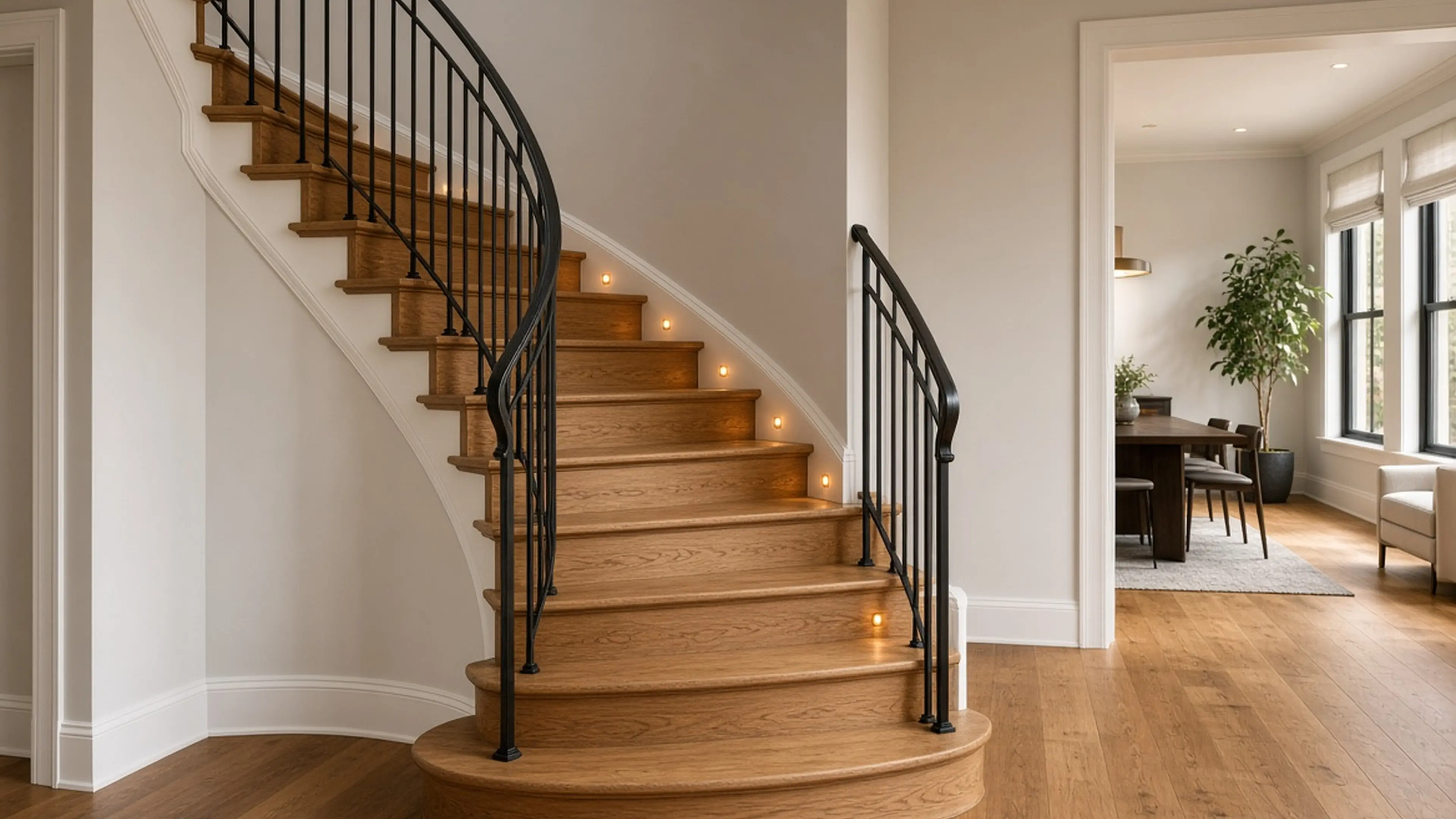
 The same flight after refinishing: white oak treads, painted risers, new oak handrail and newel, landing window unchanged.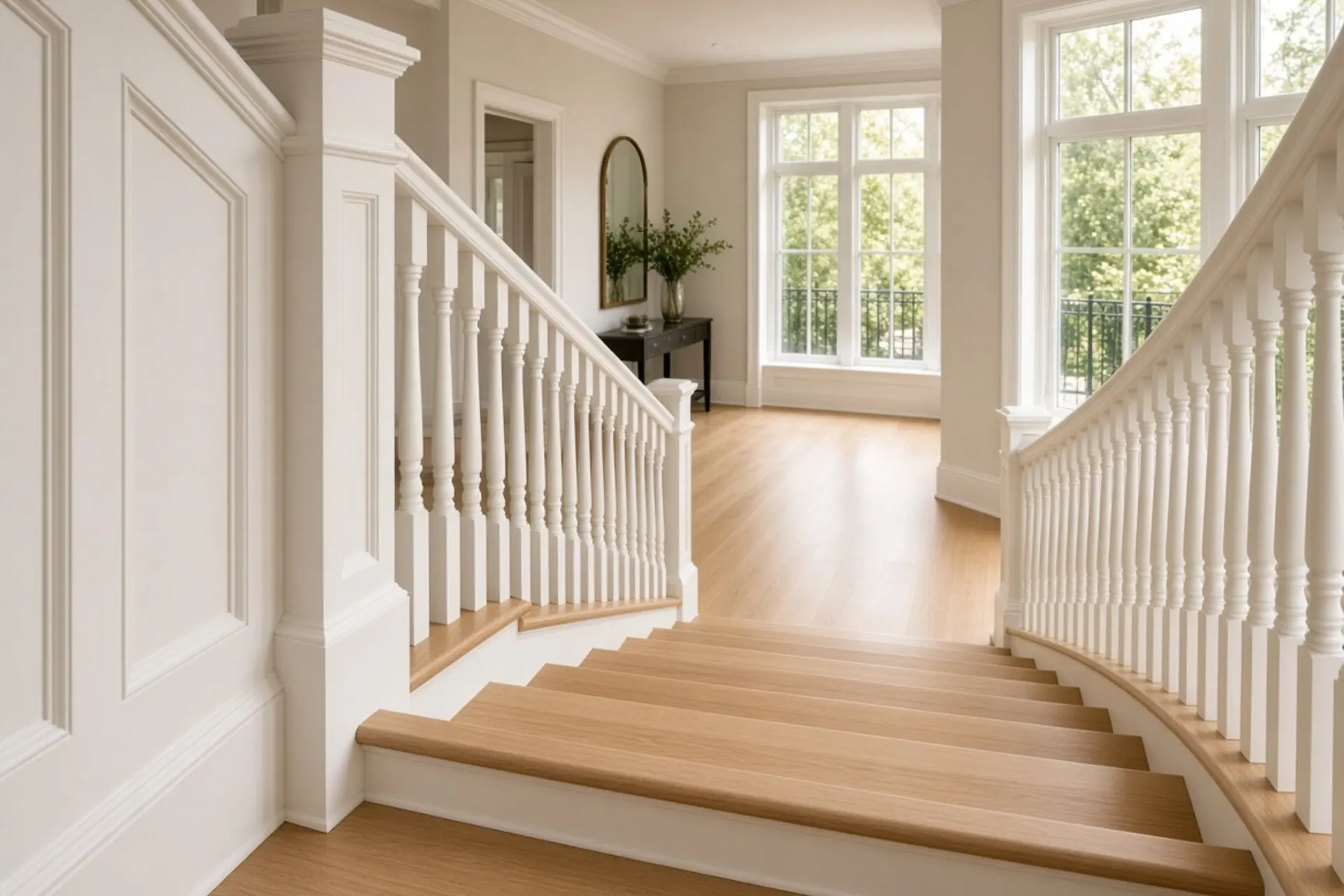
PROOF
Three levels. One continuous floor.
Midtown townhouse. Ground-floor maple meeting white oak treads and a walnut stringer. The join is the job.
 The same landing after work: continuous hardwood into white oak treads with a walnut stringer and no cheap transition strip.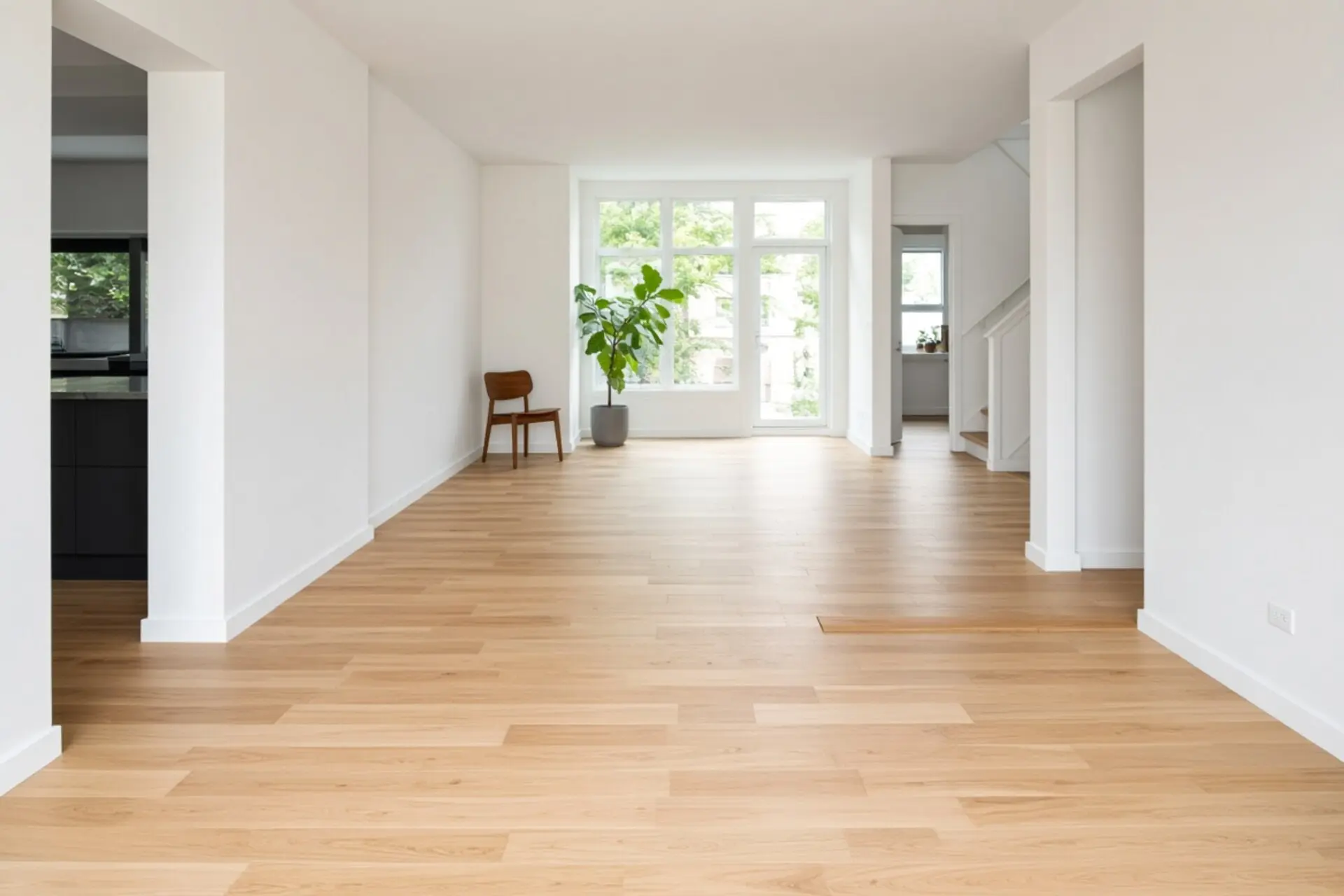
Hardwood stairs in Toronto
Refinishing, carpet removal, new treads and risers — matched to the floor they meet, by salaried crews, at a price fixed in writing before any deposit. Stairs are quoted per tread rather than per square foot, and this page explains why that is and what moves the number.
Get a fixed written price for your stairs
Stairs are quoted per tread and per flight, because the work is geometry rather than area. Tell us the flight and we come and count it.
Three distances.
The room. The approach. The touch.
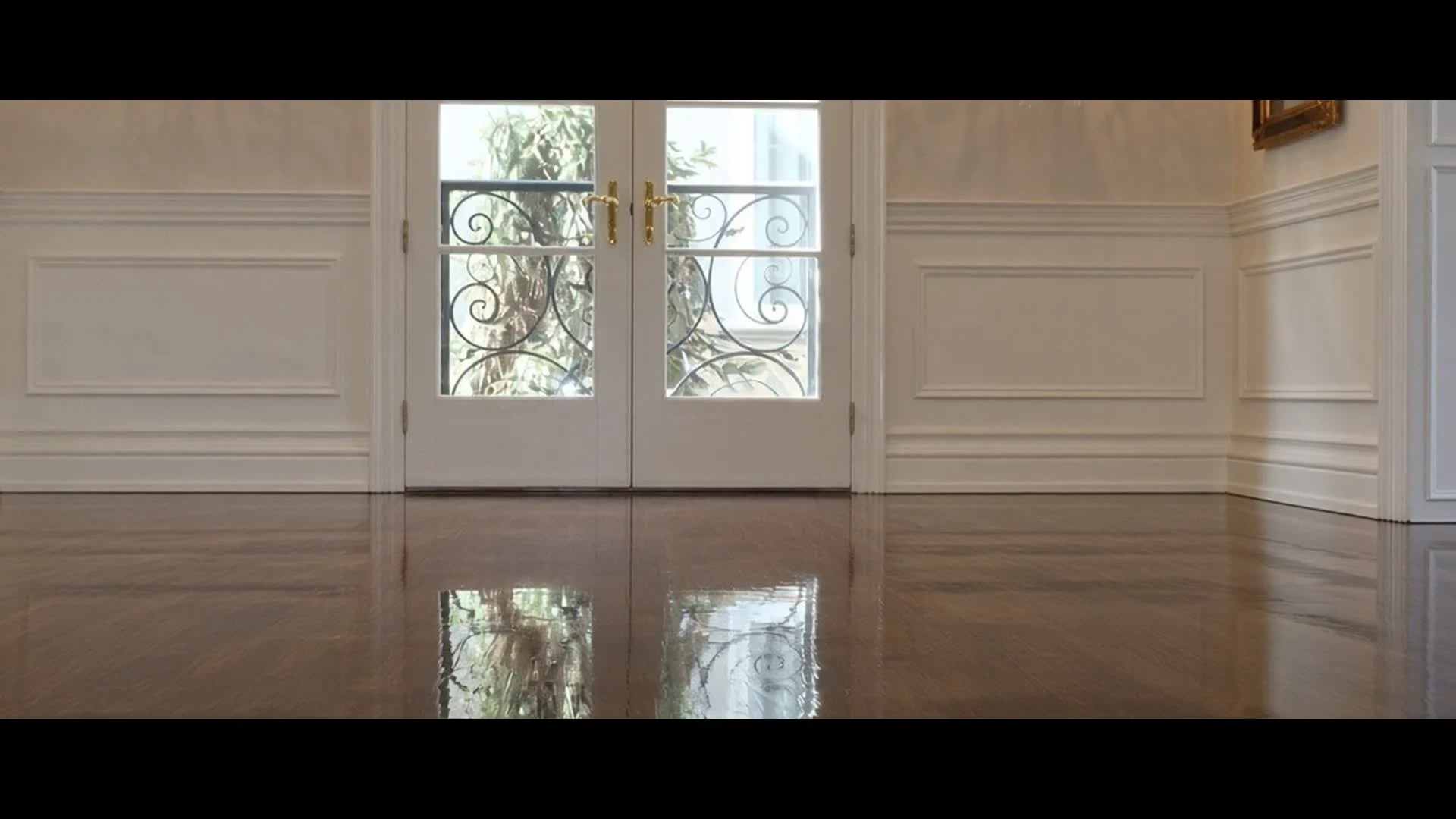
The same floors and stairs, seen standing, then closer, then at the joint.
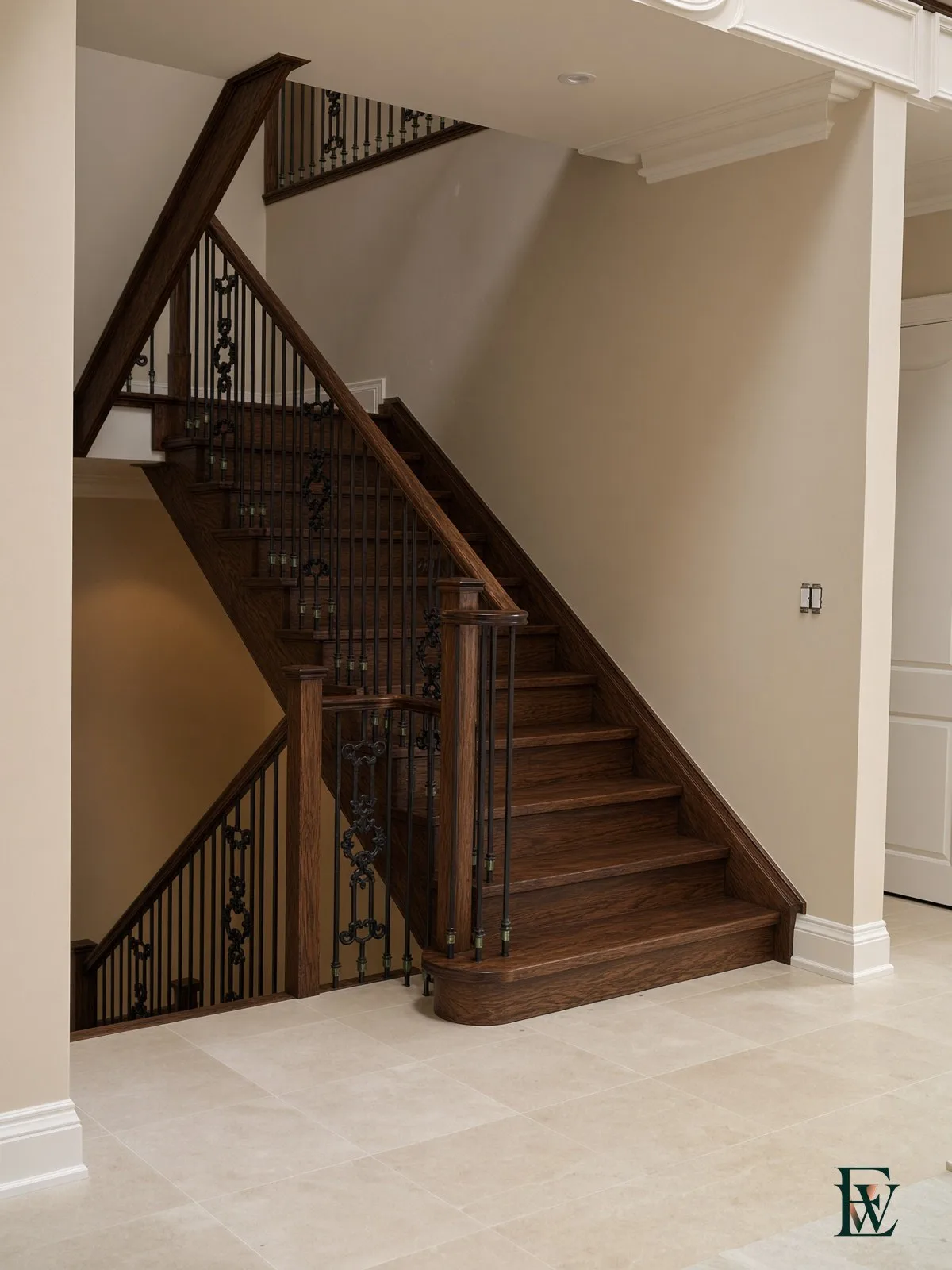
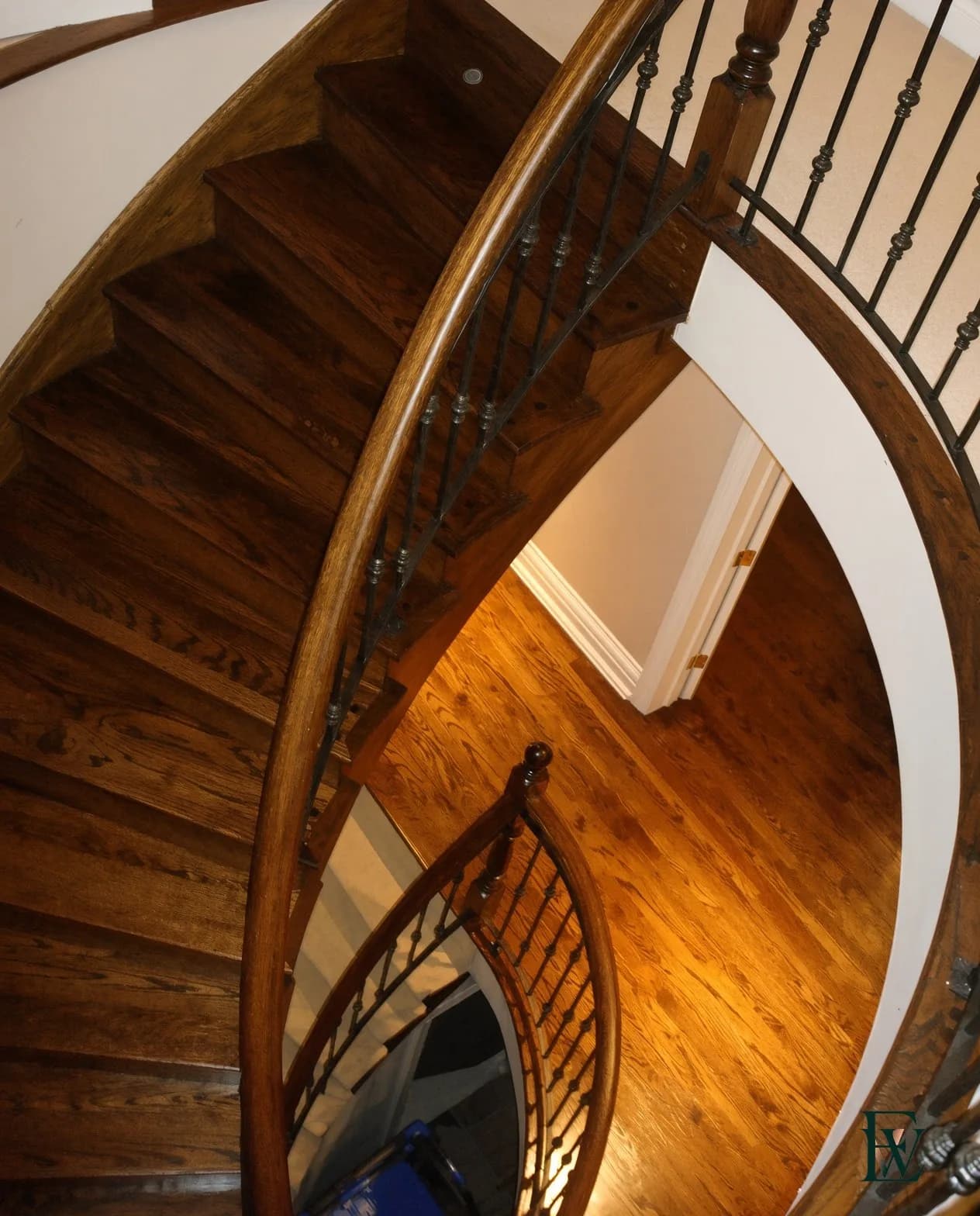
Curved oak stair
The rail starts before the first riser finishes.
Oak treads, a bent rail, twisted iron. The stair is a piece of furniture the house has to live with.
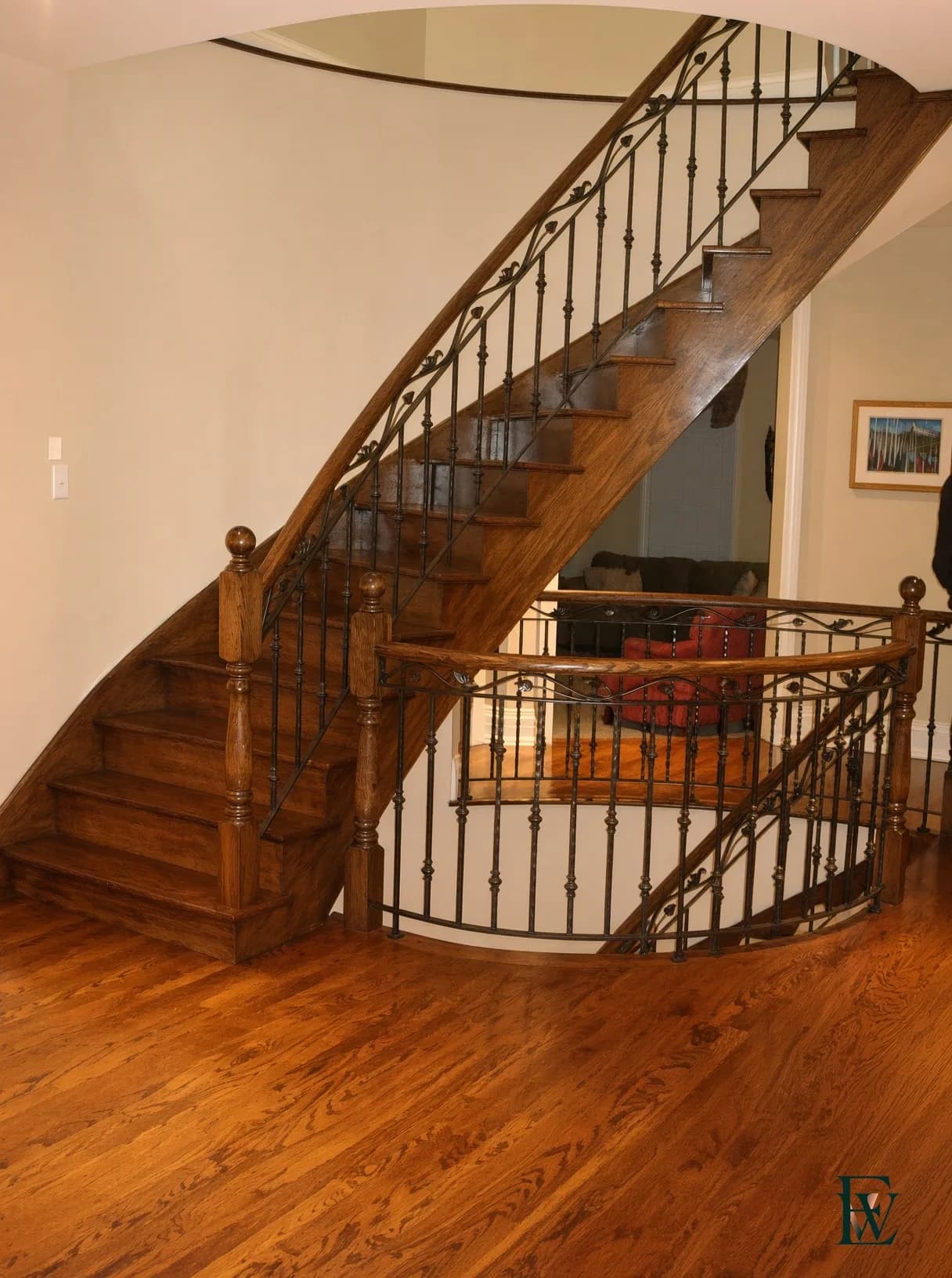
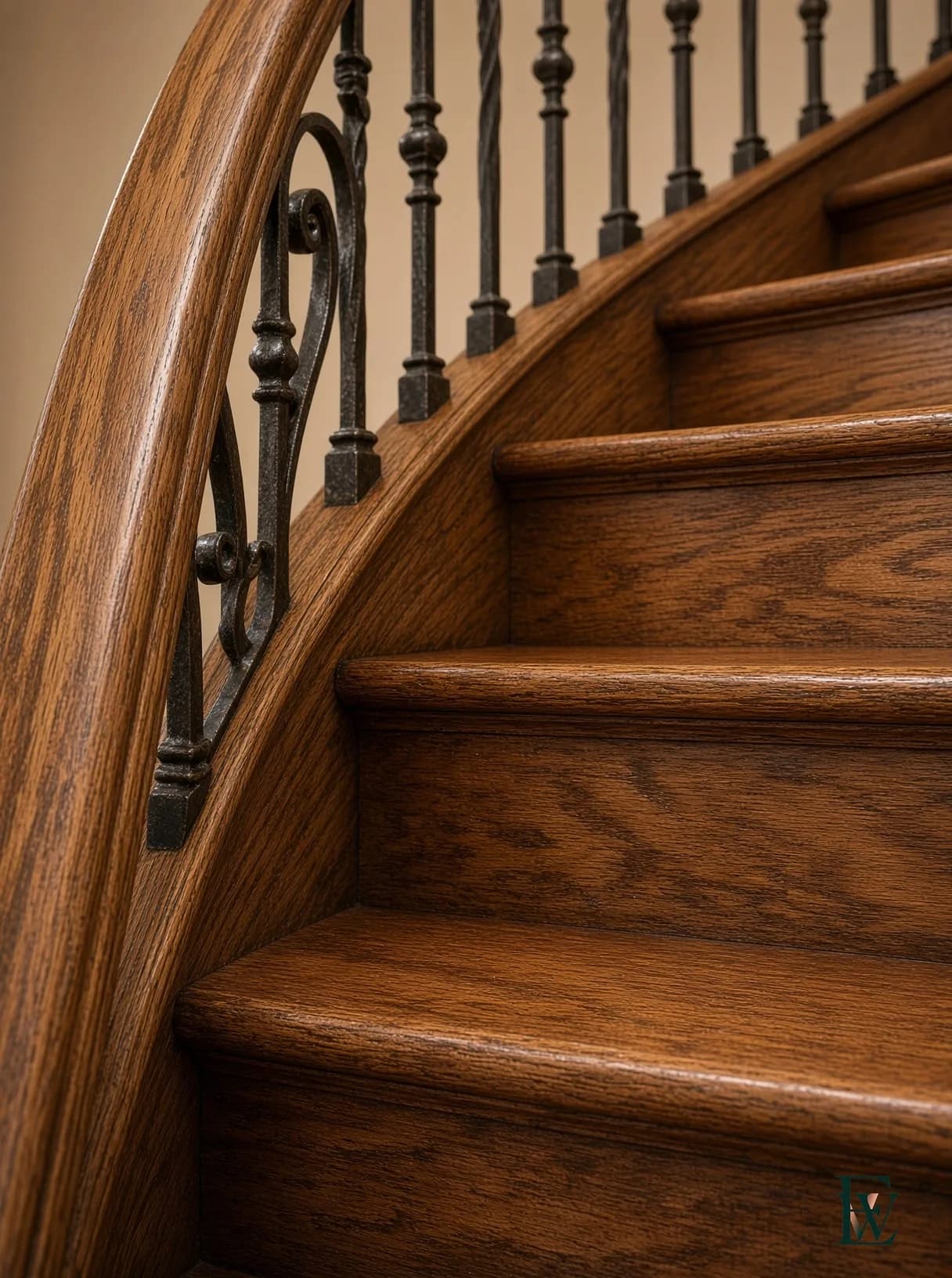
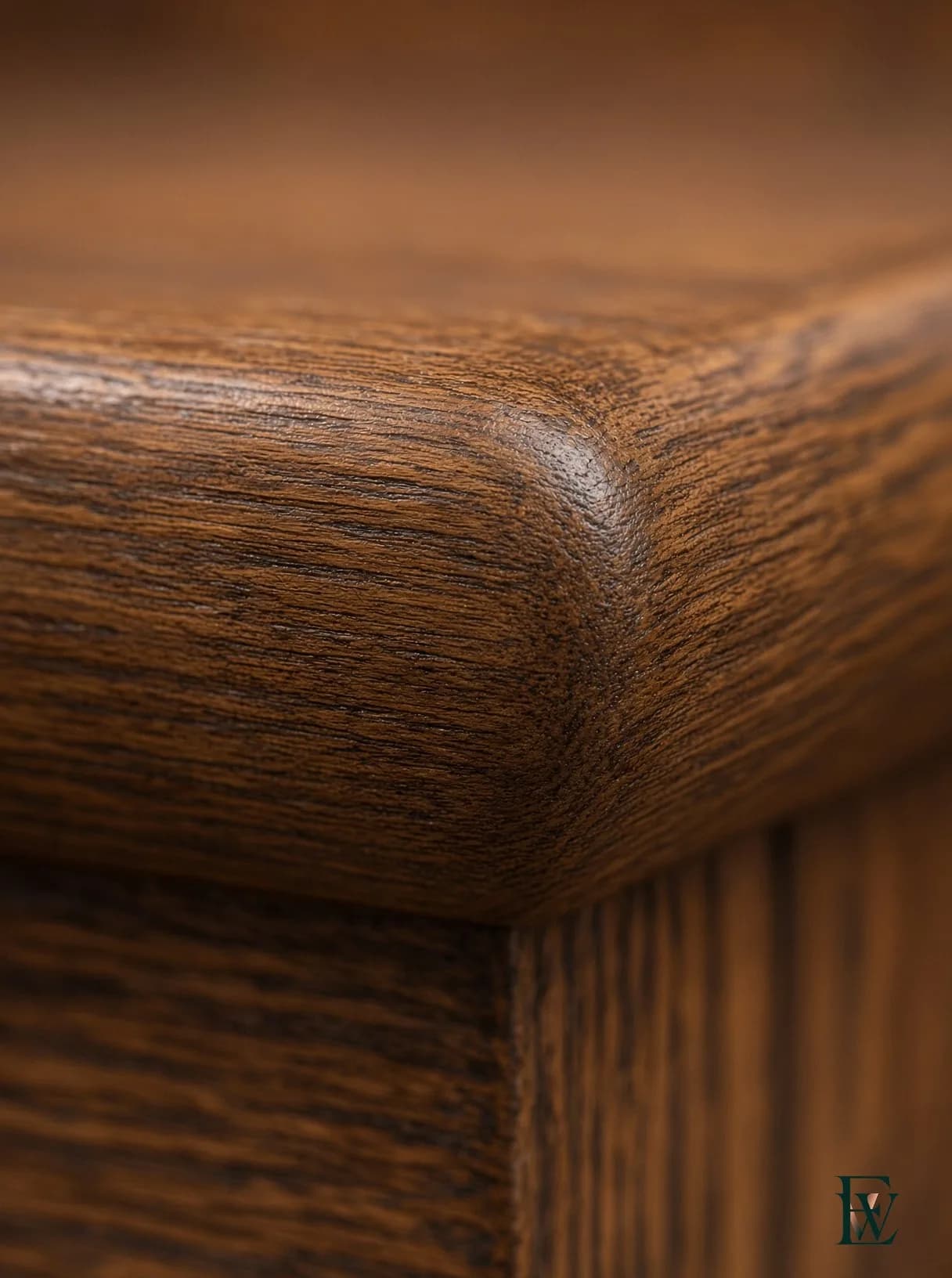
Ecowoods builds the stair as one assembly: nosing, riser, rail, newel. Frame one is the climb. Frame two is the first steps. Frame three is the edge a hand and a foot both find.
Steam-bent oak rail
The part you actually touch.
A continuous oak rail on the curve. Finish and grain have to survive a hand every day.
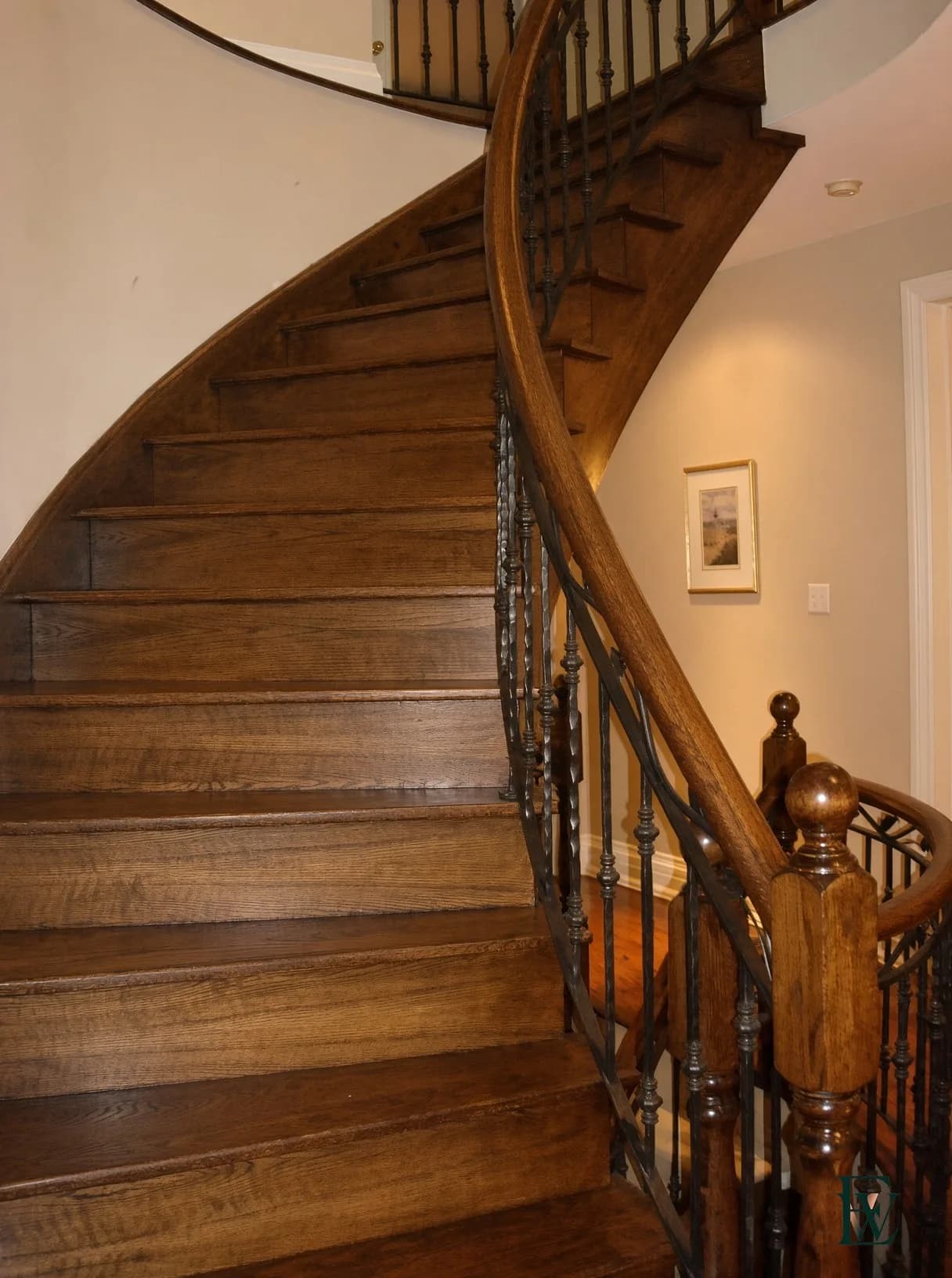
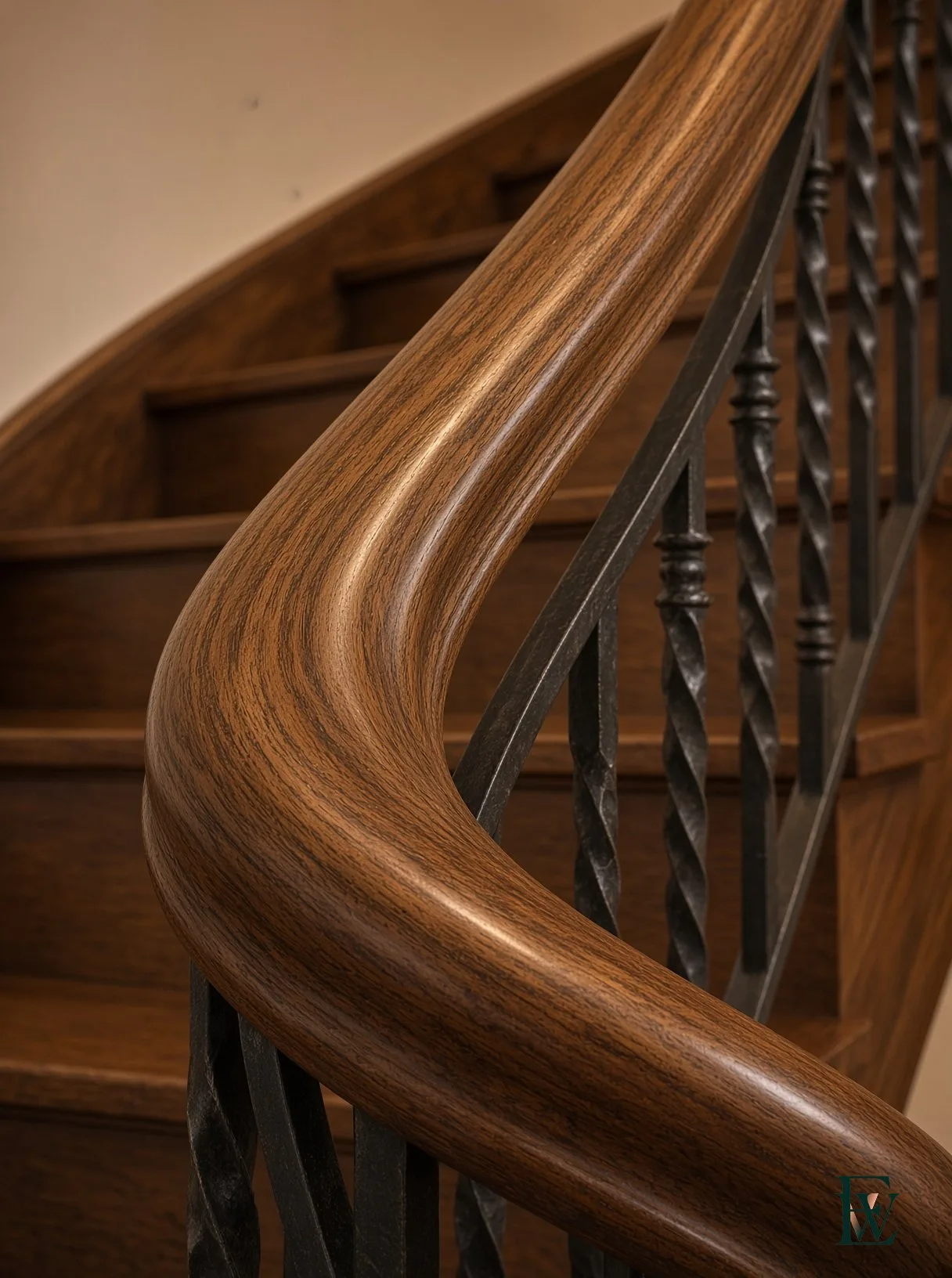
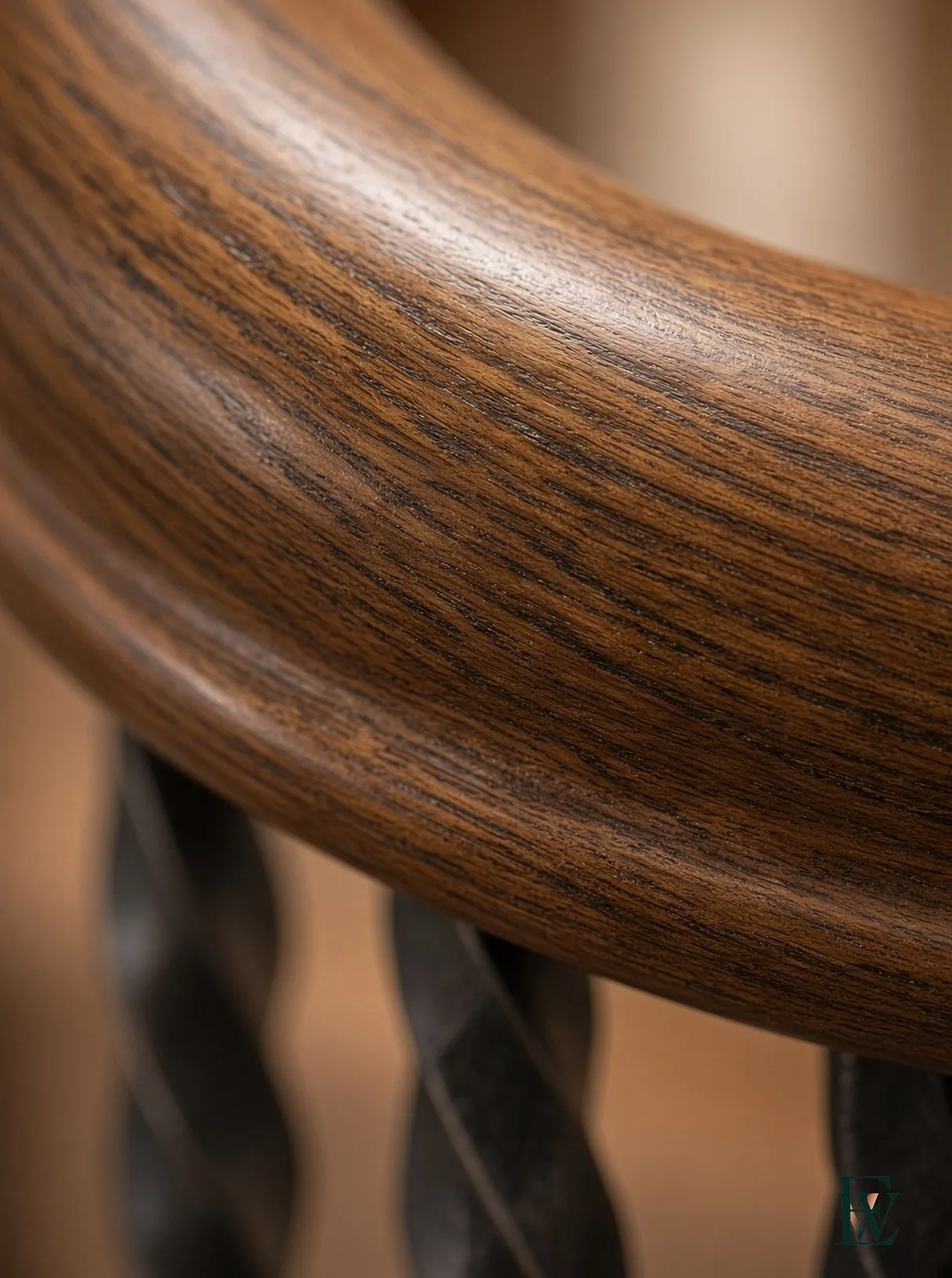
Stairs are judged at the rail. If the curve is fair and the finish is even, the rest of the flight can be quiet.
Oak on stone
Wood has to meet tile without an argument.
Bullnose oak sitting on cream stone. The foyer is two materials and one joint.
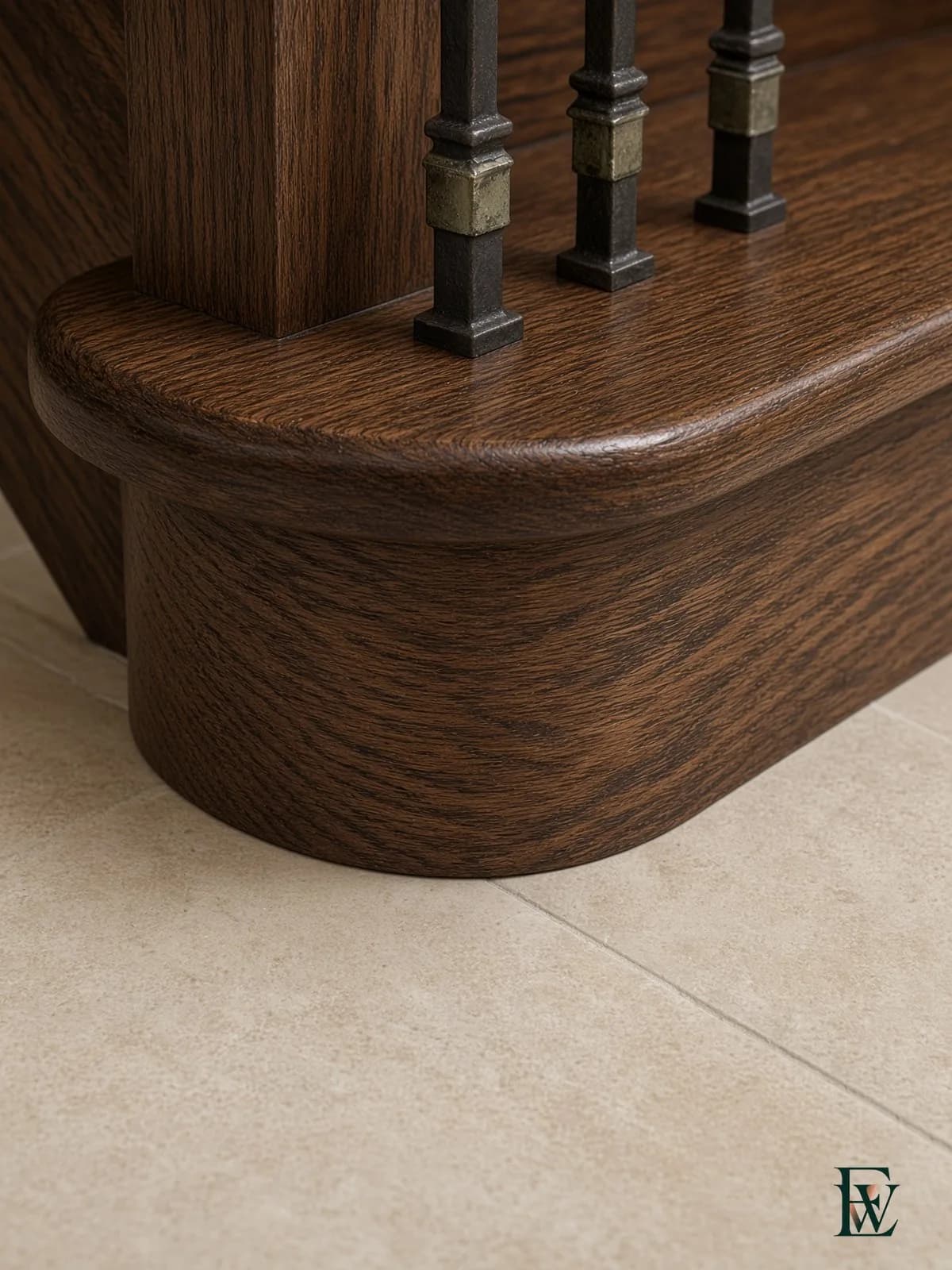
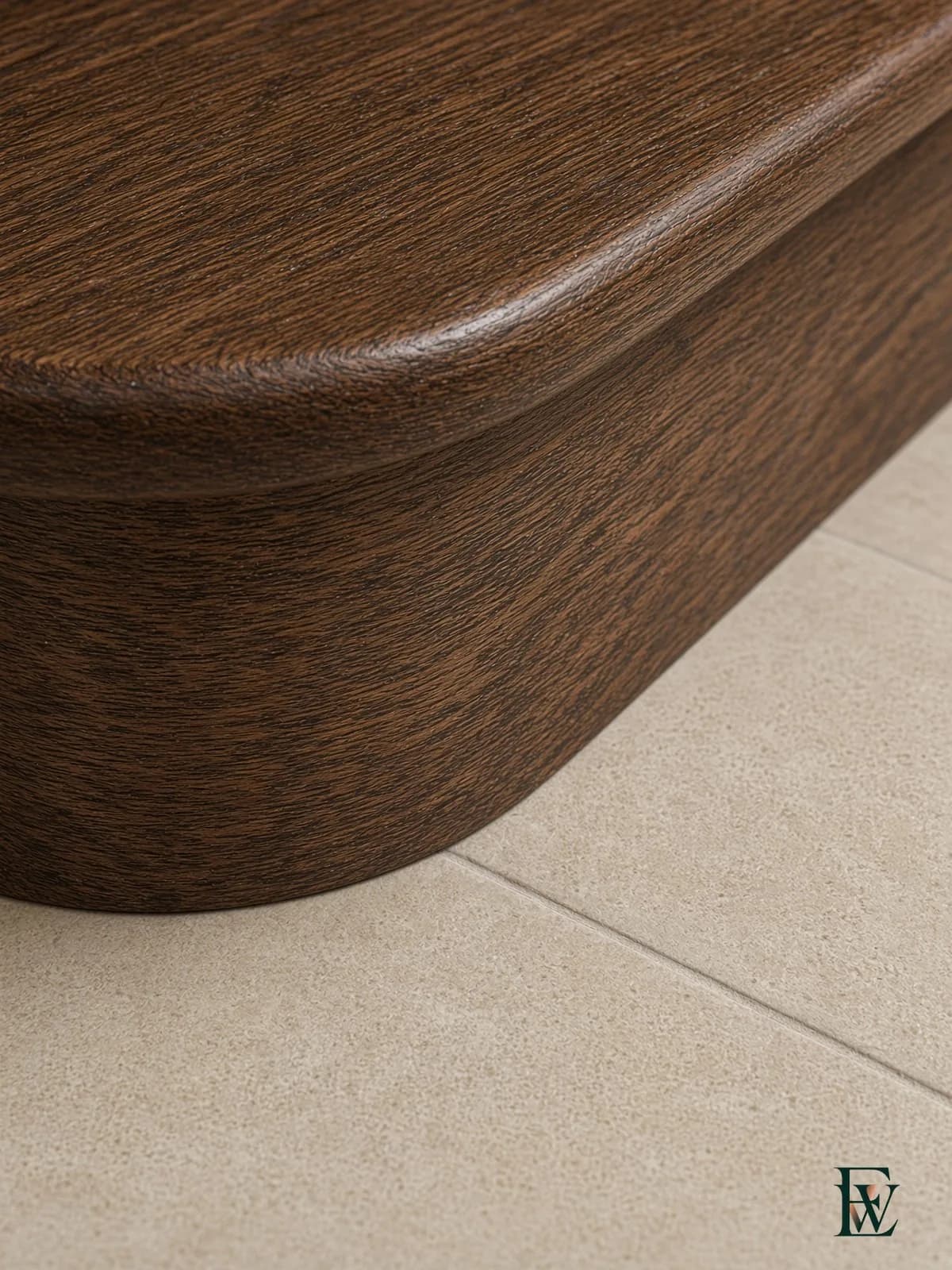
This is the detail clients notice when they take their shoes off. Frame three is the joint.
Spiral oak
Wedge treads around a single centre.
Looking down the well. Each tread is a pie. The rail is the circle that keeps them honest.
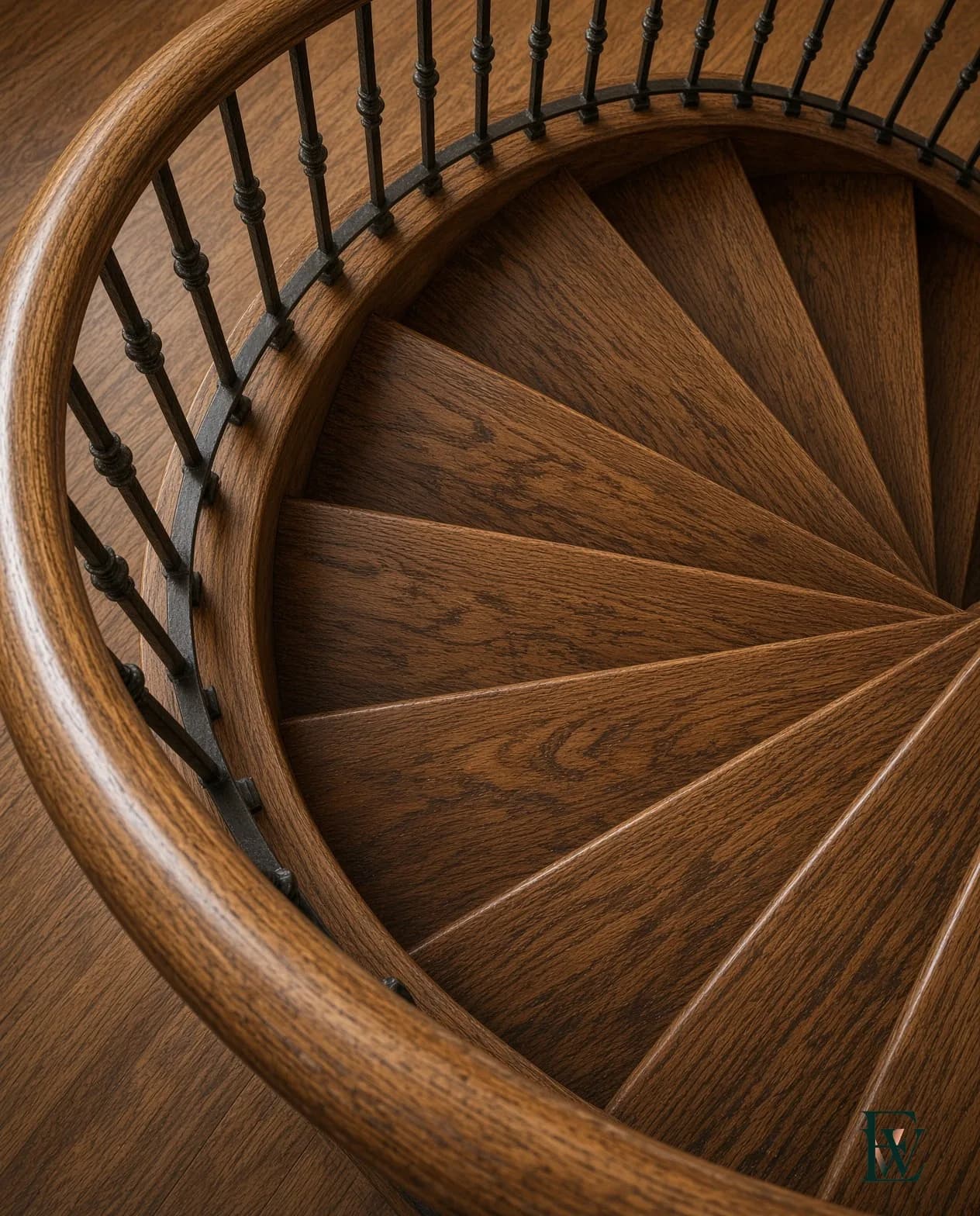
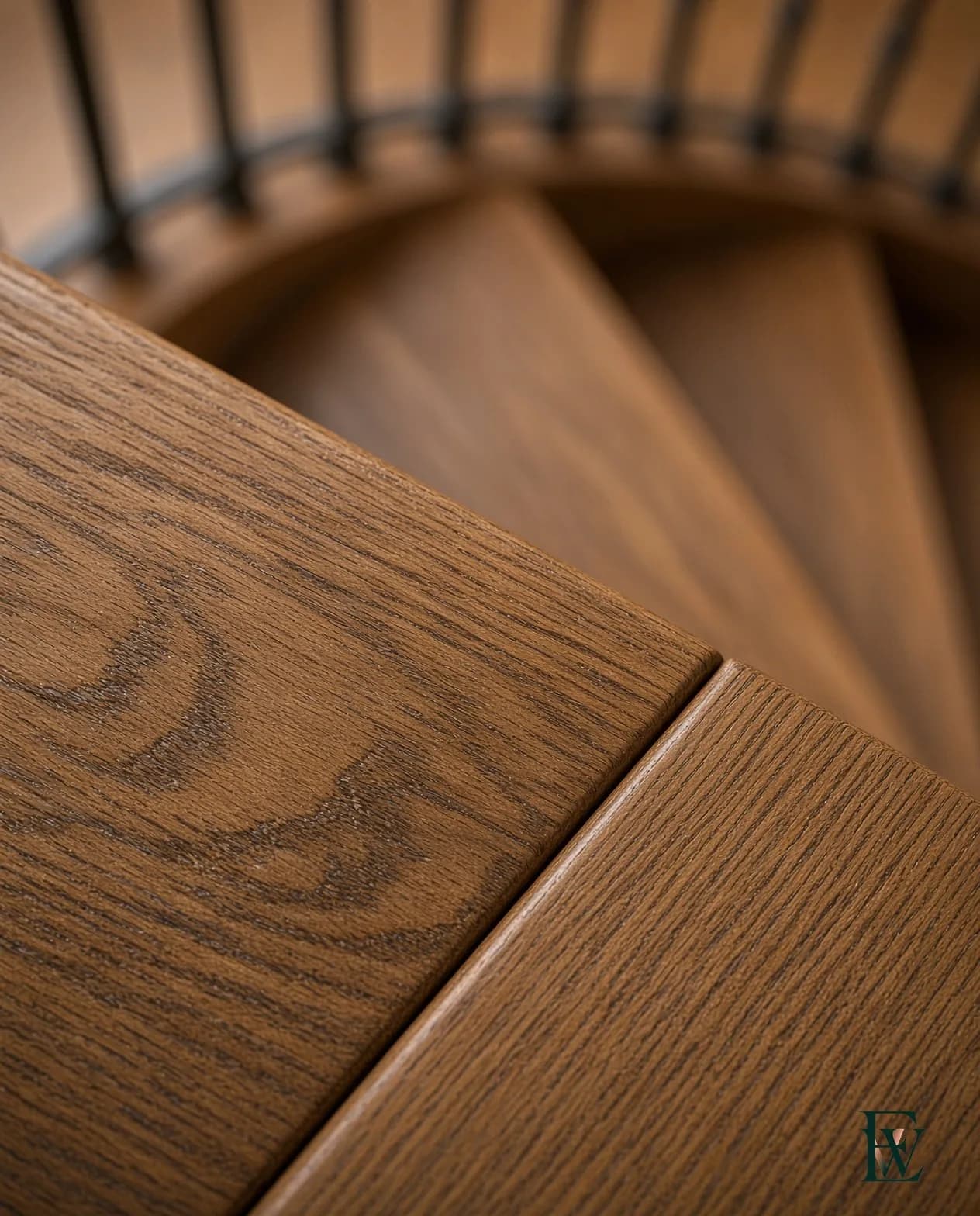
A spiral is geometry first. Frame three is two wedges and the seam between them.
What the shop does
The ascent
Treads, risers, nosings. Quoted per tread. Matched to the floor they meet.
Before you call anyone
Stairs are not priced by the square foot
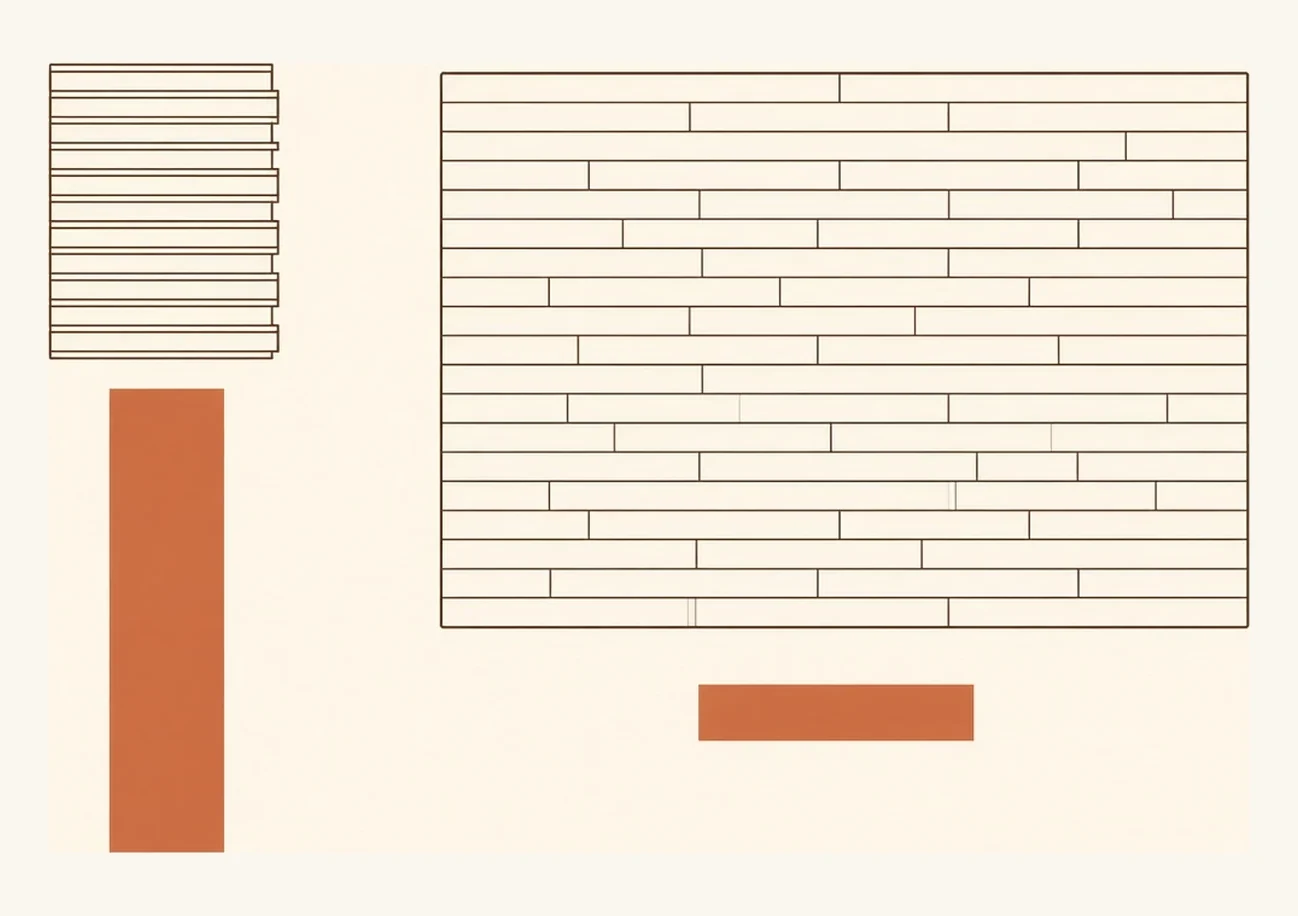
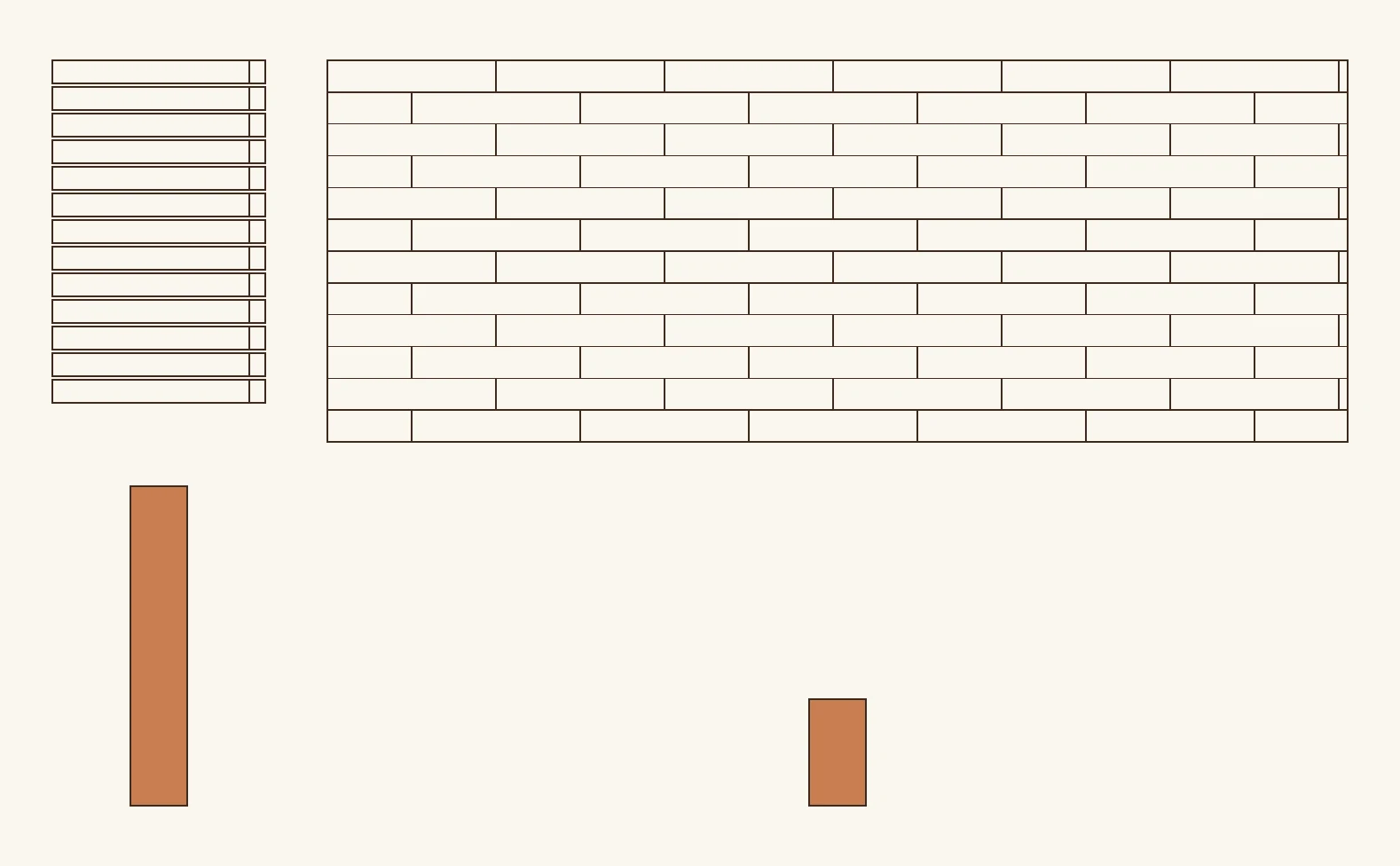
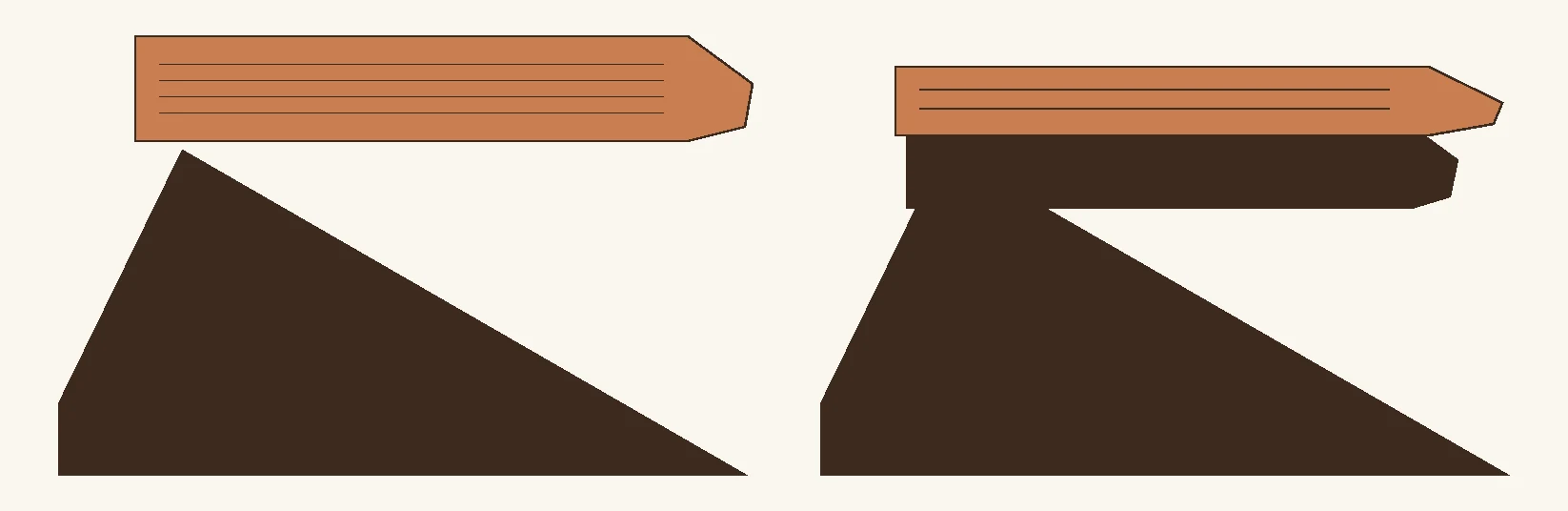
A flight of thirteen treads is roughly forty square feet of surface and roughly three times the labour of four hundred square feet of open floor. Stairs are priced per tread because area is the wrong unit for them.View full size — A flight of thirteen treads shown beside a large rectangle of open floor, with the small surface area of the stairs set against a labour bar three times the height of the floor's.
A flight of thirteen treads is roughly forty square feet of surface and roughly three times the labour of the four hundred square feet of floor it leads to. Every tread has a nosing to profile, two return edges, a riser behind it and a stringer beside it, and none of that is reachable by the belt sander that does the floor — it is edger, corner sander and hand work, tread by tread. That is why a quote that prices stairs by area is a quote that has not measured them.
The published bands below are for the floor. Fixed price in writing. It never moves after the free in-home estimate. The stair number is given per tread and per flight after the same in-home measure, and it is itemised separately in the written price rather than folded into a square-foot rate.
| Scope | Per square foot | When this is the right scope |
|---|---|---|
| Screen & Recoat | $2.50–$4.00 | The finish is worn but sound and the wood beneath is undamaged. |
| Full Sand & Finish | $4.75–$7.50 | Back to bare wood. What a stair refinish is matched against. |
| New Hardwood Install | $11.00–$18.00 | New material over a prepared substrate, including transitions. |
The stairs usually arrive attached to a floor, and which service that floor needs changes the stair scope with it: stair refinishing where the treads are sound, floor refinishing for the run they meet, and restoration where treads have to be replaced rather than sanded. Worth reading first: what refinishing an existing floor involves and what moves a quote inside the published bands.
What moves a stair number: the tread count, whether the treads are solid or capped, the nosing profile, what is on them now (carpet, paint, an existing finish), whether the risers are being painted or finished, and whether there is a landing. The cost guide sets out the same variables for the floor.
What people actually mean
Four different jobs, all called “stairs”
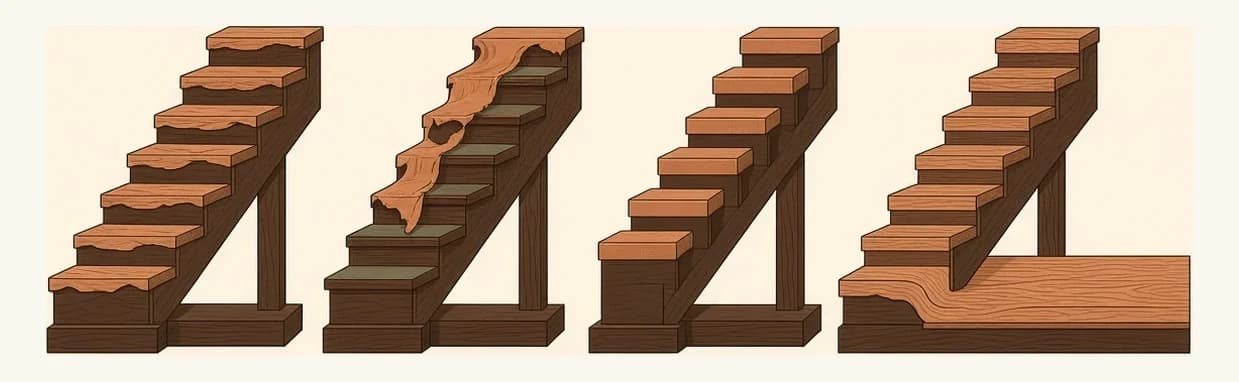
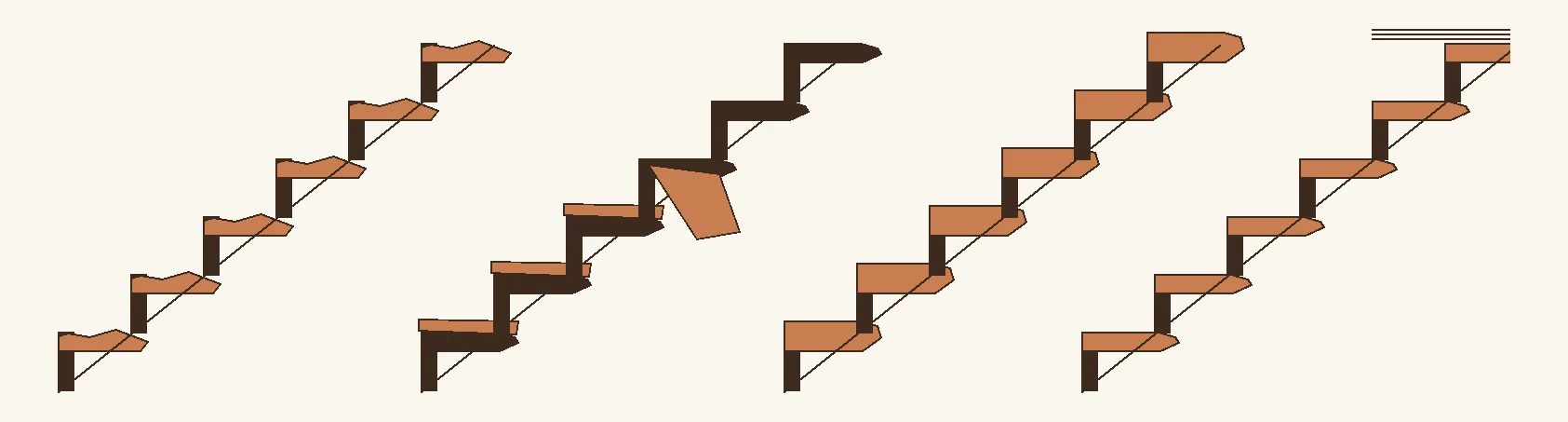
Four different jobs, all called “stairs”. They share a word and almost nothing else — which is why a stair line on a quote that does not say which one it is, is not a price.View full size — Four staircases drawn side by side showing four different scopes of stair work — refinishing the existing treads, removing carpet and finishing what is underneath, fitting new solid treads, and matching stairs to a newly installed floor.
- Refinishing existing hardwood stairs
- Sand to bare wood, fill, stain to match the floor, finish. The work is in the nosings and the returns. Detail and sequence are at stair refinishing.
- Carpet off, hardwood underneath
- Common in Toronto houses built before the 1970s, where solid oak treads sit under carpet that has protected them for fifty years. Several hundred staple holes per flight, each filled before sanding. Whether this is possible is decided by lifting one tread’s worth of carpet at the estimate, not guessed at afterwards.
- New treads and risers
- Where the existing stairs were never meant to be seen — construction-grade pine or plywood under carpet. New solid treads, either full-depth or retrofit caps over the existing structure, finished to match the floor.
- Matching stairs to a floor that is already finished
- The hardest colour match there is, and the most common standalone stair job, because it is what happens after a contractor priced only the floor. Stain is mixed on site against the actual floor.
Proof, with the numbers
Two staircases, written up in full
Both are the hard version of this job — a staircase that had to match a floor built on a different assembly — and both publish the measurements rather than only the photograph.
Rosedale estate, stairs over radiant heat
A grand staircase and a main floor over radiant heat: two assemblies that move differently, finished to one colour.
Midtown townhouse, three levels
A custom staircase joining three storeys on three substrates, with white oak treads and walnut stringers.
Every case study publishes what was measured, not only what was achieved — all of them are here, and each one names the substrate, the species, the readings and the protocol it followed.
The method behind them
Why stairs are the part that gives a job away
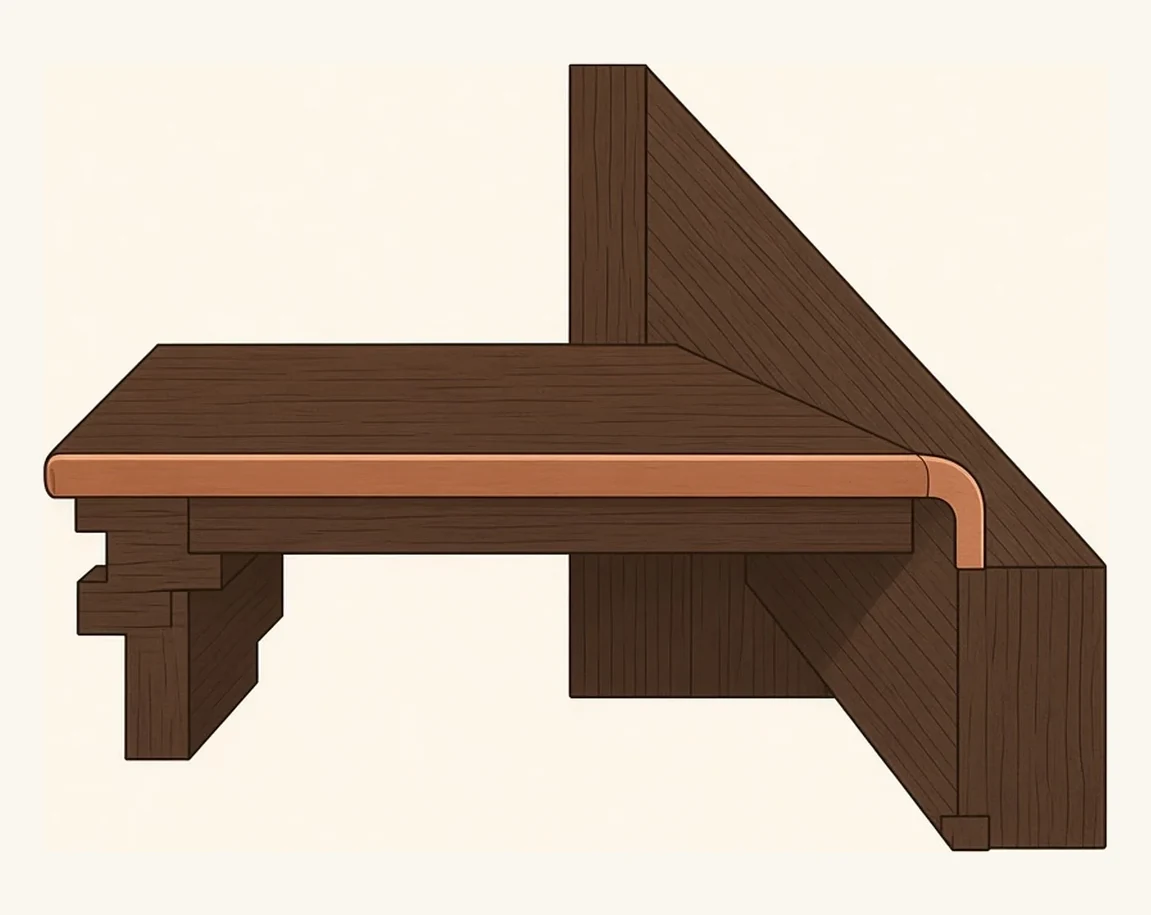
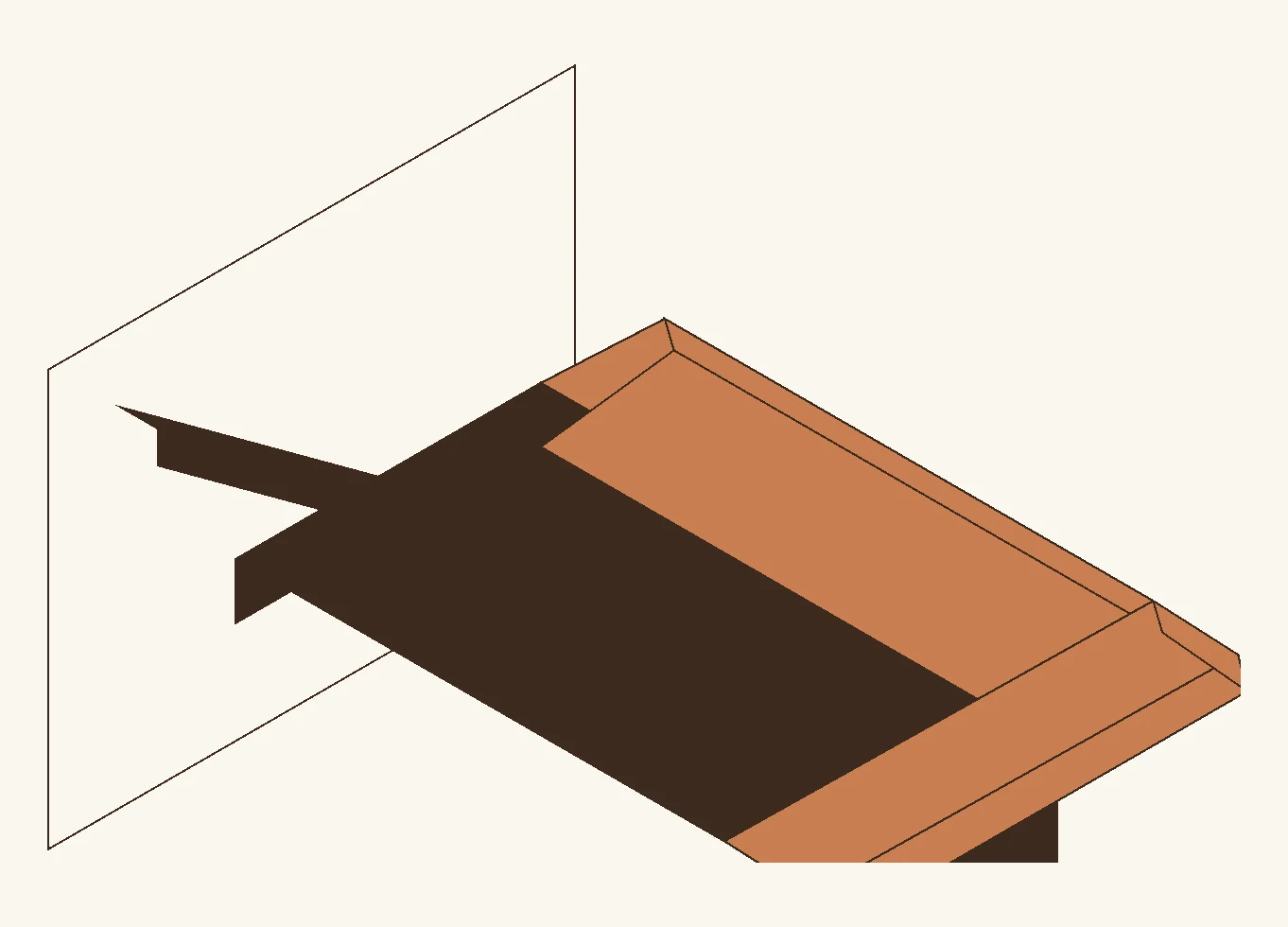
The parts of a stair a quote should name. The nosing is the leading edge, the return is the finished side where the tread meets open air, and both are where a rushed job shows first.View full size — A single stair tread drawn in section, with the nosing, the return, the riser and the skirt board each picked out as a separate part of the assembly.
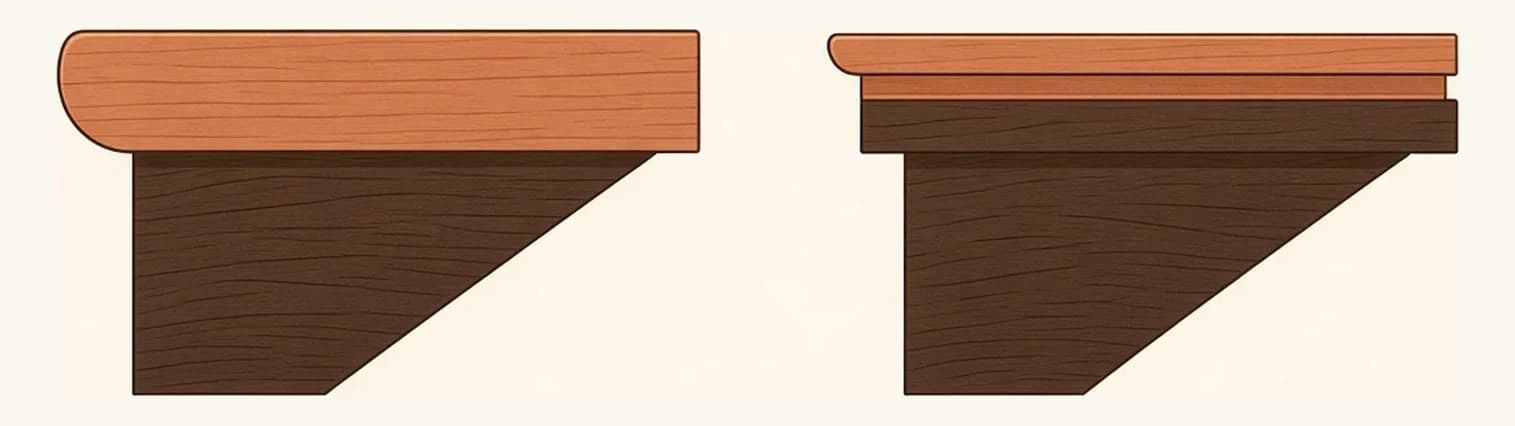
Full-depth tread or retrofit cap. Both are “new stairs” on a quote and they are different pieces of work with different consequences for the nosing height and the finished rise.View full size — Two stair treads drawn in section side by side — one a full-thickness solid tread replacing the original, the other a thin retrofit cap fitted over the existing structure.
The mechanism behind the moisture and movement decisions in that job is set out in the climate and moisture protocol, and the machine sequence in the refinishing machines paper — the edger section is the one that covers stairs.
What a curved stair actually looks like at each stage — sanded to bare, then stained — is the same flight and the same open well, in Maple, Vaughan:


No species, square footage, price or schedule is published with it — none were recorded with the photographs. Full chapters and the honest before/after pairs are on the photo record.
Hold us to it
Put any stair quote against The Ecowoods Well-Installed Framework
27 criteria, version 1.0, published under CC BY so you can apply it to every quote you are holding — ours included. For stairs the criteria that bite hardest are the ones about specification and accountability: is the tread count in the written price, is the nosing profile specified, and is the colour match being made on site or from a card. Any critical criterion answered “no” is an unresolved defect in that quote, whatever the price says.
Straight answers
Questions people actually ask about stairs
- How much does it cost to refinish hardwood stairs in Toronto?
- Stairs are quoted per tread and per flight, not per square foot, because the work is geometry rather than area — every tread has a nosing, two return edges and a riser, and none of it can be reached by the machine that does the floor. Ecowoods does not publish a per-tread band, because a stair price that is honest depends on the count, the profile of the nosing, whether the treads are solid or capped, and what is on them now. Fixed price in writing. It never moves after the free in-home estimate. The floor those stairs meet is published: $4.75–$7.50 per square foot for a full sand and finish, $2.50–$4.00 for a screen and recoat.
- Can carpeted stairs be converted to hardwood?
- Usually, and what decides it is what is under the carpet. Builder-grade stairs are often construction-grade pine or plywood stringers never meant to be seen, in which case the answer is new treads and risers rather than refinishing. Where the treads are solid oak — common in Toronto houses built before the 1970s — the carpet has usually protected them, and they refinish to better condition than the floor around them. The staple holes are the work: several hundred per flight, each one filled before sanding.
- Will refinished stairs match my floor exactly?
- They will match if the stain is mixed against the finished floor rather than against a sample card, and they will not if it is not. Stair treads are usually a different cut of the same species and take stain at a different rate, so the same formula produces a visibly different colour. The join between the top tread and the landing is where this shows, and it is the detail that gives a refinish away.
- How long do stairs take, and can we use them?
- A single flight is typically a day of sanding and filling plus the finish schedule. The constraint is not the work, it is that a staircase is often the only route between floors — so the sequence is planned around that before the first machine arrives, rather than discovered on the second morning. Where a house has one staircase, the flight is usually run in halves so one side stays walkable.
- Are stairs included in a hardwood flooring quote?
- They should be itemised in it, and the most common defect in a Toronto flooring quote is that they are not — the floor is priced per square foot, the stairs are mentioned, and the number for them appears later. The Ecowoods Well-Installed Framework v1.0 is published free for exactly this: 27 criteria to put to any quote you are holding, including one of ours.
- Do you do stairs without doing the floor?
- Yes. Stairs on their own are a common job — most often when a floor was refinished by someone who priced only the floor. The colour match to an existing finished floor is harder than matching two new surfaces to each other, and it is done on site against the actual floor rather than from a record of what was used.
- Who does the work?
- Salaried employees of Ecowoods Hardwood Flooring Inc.. No subcontractors. Stairs are where that matters most: they are the slowest, most detailed and least profitable part of a flooring job per hour spent, which is precisely why they are the part a subcontracted crew rushes.
Most searched in Toronto
Hardwood flooring in Toronto
Installation and refinishing, with the price bands published before you call. New hardwood installed runs $11.00–$18.00 per square foot.
Hardwood floor refinishing in Toronto
Dust-free sanding in an occupied home. A full sand and finish runs $4.75–$7.50 per square foot; a screen and recoat $2.50–$4.00 where the existing finish is sound.
Hardwood stairs in Toronto
Refinishing, carpet removal and new treads, matched to the floor they meet. Quoted per tread rather than per square foot, and itemised in the written price rather than added to it later.
Floor already cupping, gapping or lifting? What your floor is telling you gives each symptom its cause and an honest prognosis — including the two where the answer is to do nothing yet.
Judging quotes rather than buying yet? The Well-Installed Framework sets out 27 criteria, published free to use on any contractor in the GTA — including us — or score a quote you already have.
Coverage
100 areas across Ontario and New York State
Stair stock tracks house stock: pre-war semis in Leslieville and Riverdale usually have solid oak under the carpet, post-war bungalows in Etobicoke and North York often do not, and a downtown slab condo has no stairs at all until someone builds them.
Field catalogue
Take the catalogue with you
The same facts as this page, in a document you can print or forward. Not a quote, and nothing on it asks for your email.
Every field catalogue — the company, the services, the stair case, the framework and the decisions, indexed by series.