
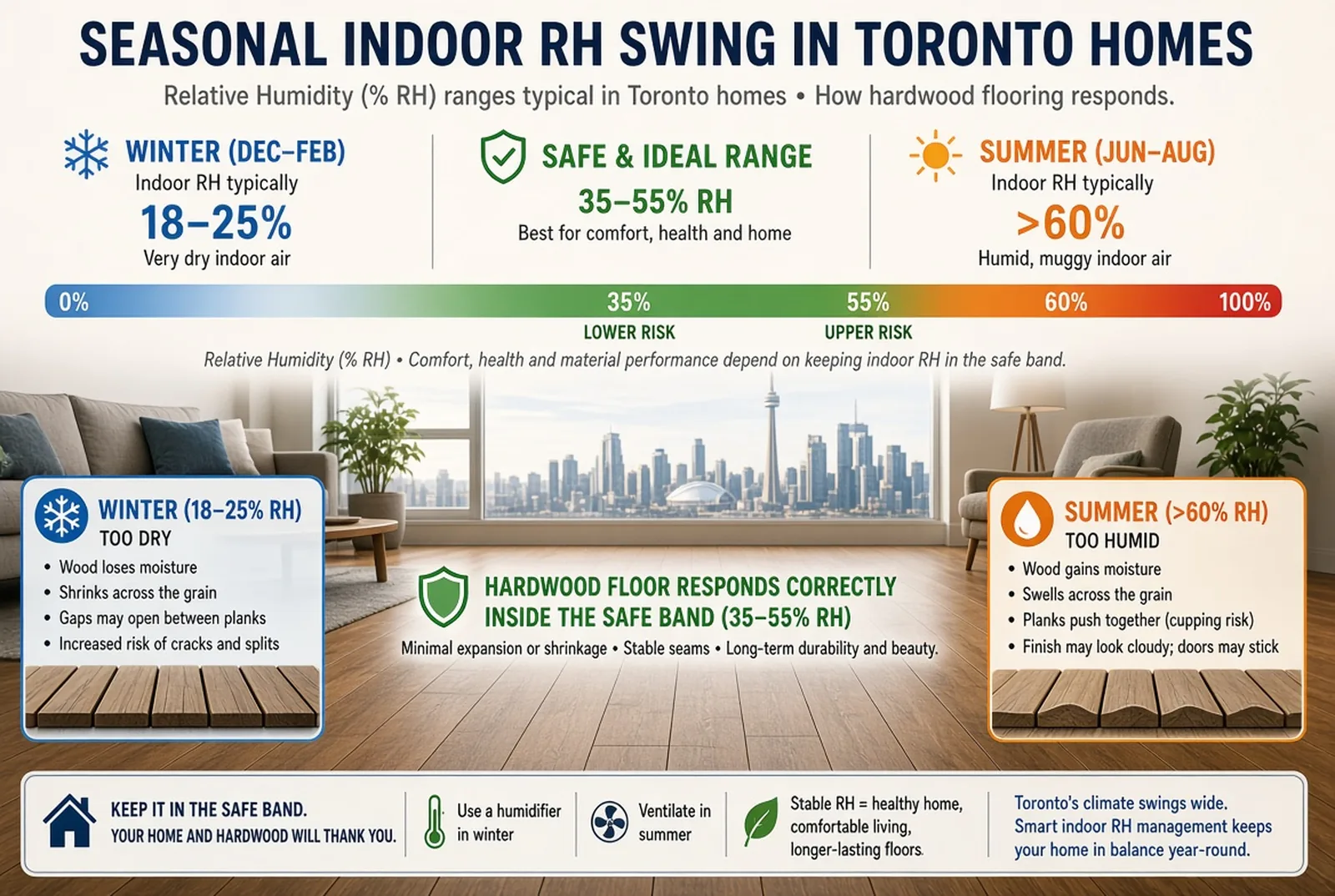
Toronto's climate reality
Wood is hygroscopic and anisotropic: it exchanges moisture with the surrounding air continuously, and it moves. Expansion and contraction occur primarily across the grain — length change is minimal, width change is significant and cumulative. Every board arrives with its own moisture history.
The question is never whether a floor will move. It is whether the floor was specified, tested, acclimated and installed to survive decades of that movement.
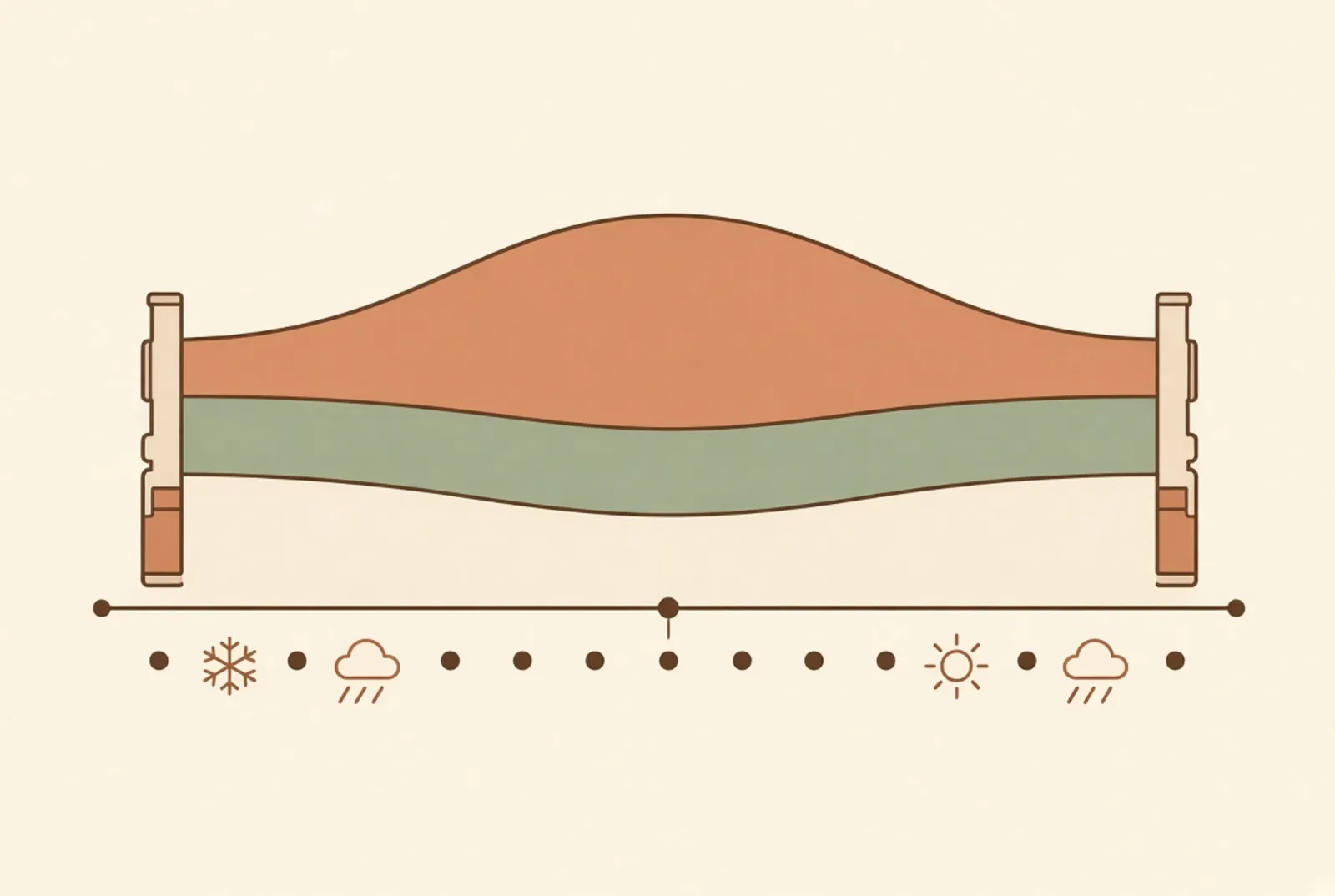
| Condition | Relative humidity |
|---|---|
| Winter indoor low | 18–25% RH |
| Summer indoor high | above 60% RH |
| Safe operating band for hardwood | 35–55% RH |
Moisture testing — the first non-negotiable
A floor installed over a wet subfloor, or with boards that have not equalized, will cup, crown, gap or buckle. There is no warranty language that can override physics.
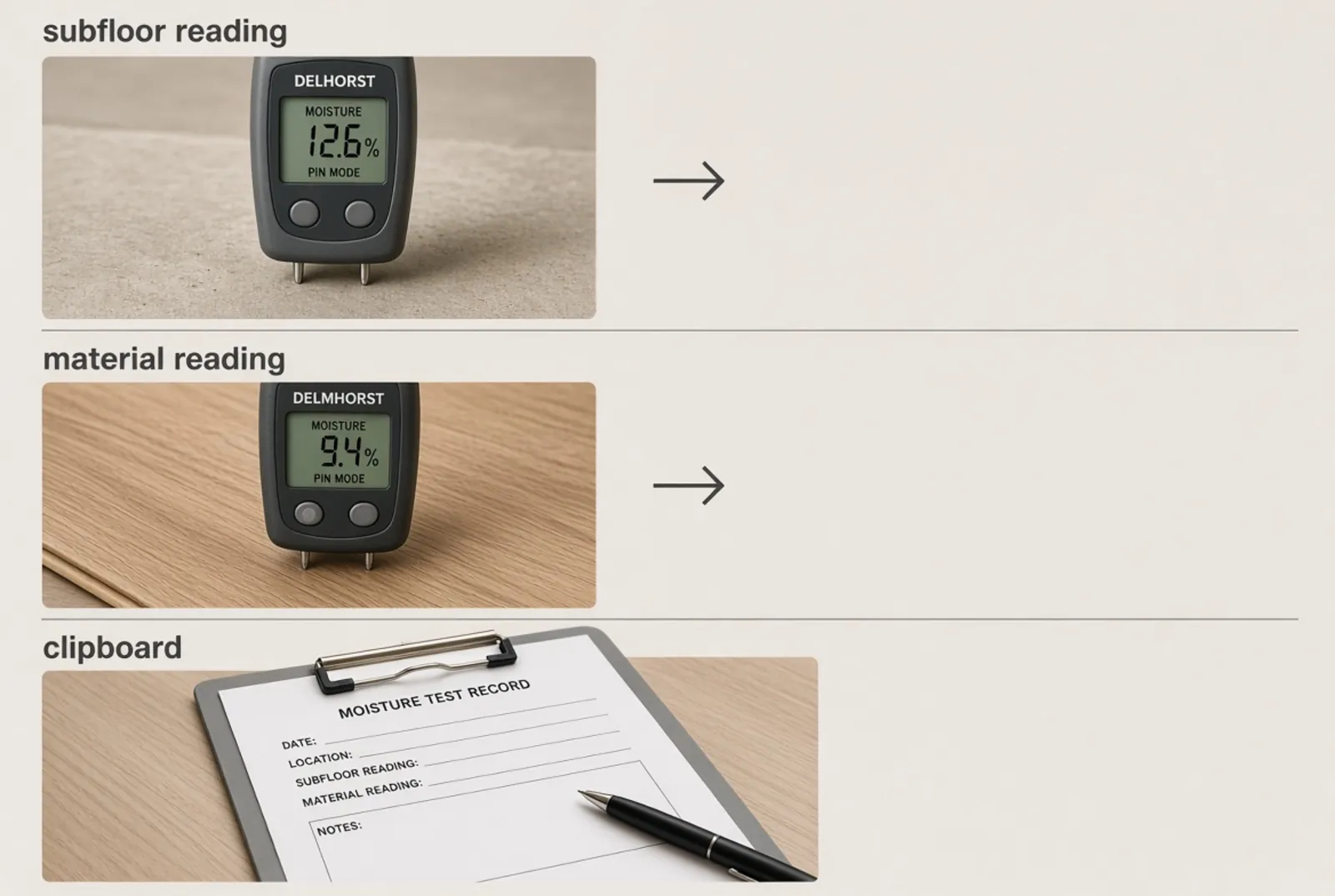
- Subfloor moisture content must be measured.
- Flooring material moisture content must be measured.
- Both readings must sit within the manufacturer's and Ecowoods' acceptable delta.
- Testing occurs at the free estimate, and again immediately before installation.
Solid versus engineered in the GTA
Solid hardwood is typically 3/4" (19 mm) with a generational wear layer, highly sensitive to RH swings, and best over plywood with a nail-down installation.
Engineered hardwood pairs a real hardwood wear layer with a 90° cross-ply core. That construction is what gives it dimensional stability over concrete, in condominiums, and above radiant heat.
Correct method matched to substrate
Installation method is not a preference and not a sales option. It is determined by the substrate, the product construction, and the climate load the floor will face for decades.
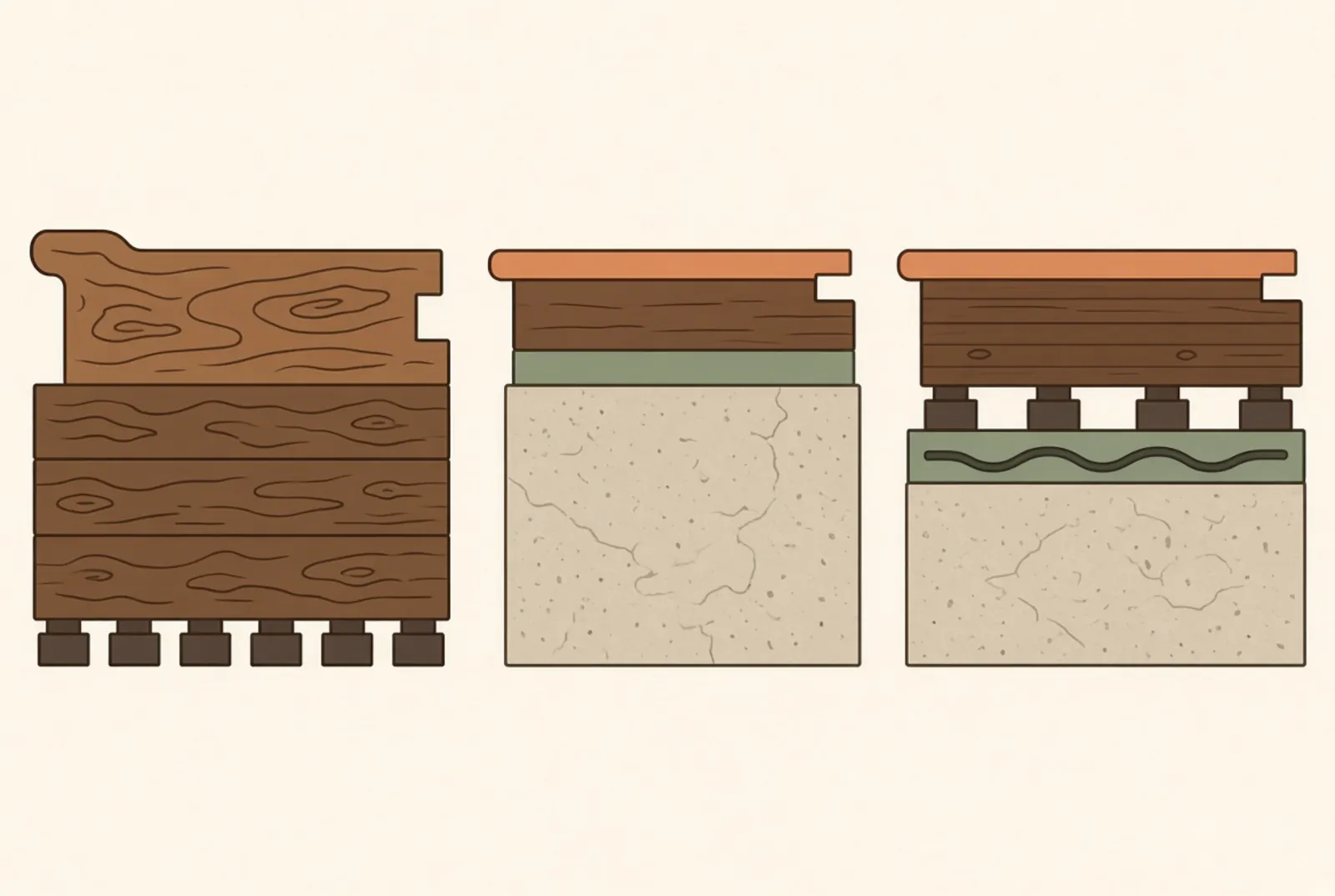
| Method | When it is correct |
|---|---|
| Nail-down | Solid hardwood over plywood |
| Glue-down | Engineered over concrete, or in condominiums |
| Floating | Engineered over radiant, or where acoustic separation is required |
The Ecowoods non-negotiable protocol
These steps prevent physical failure, and they are what make a lifetime workmanship warranty something a company can offer and still sleep at night.
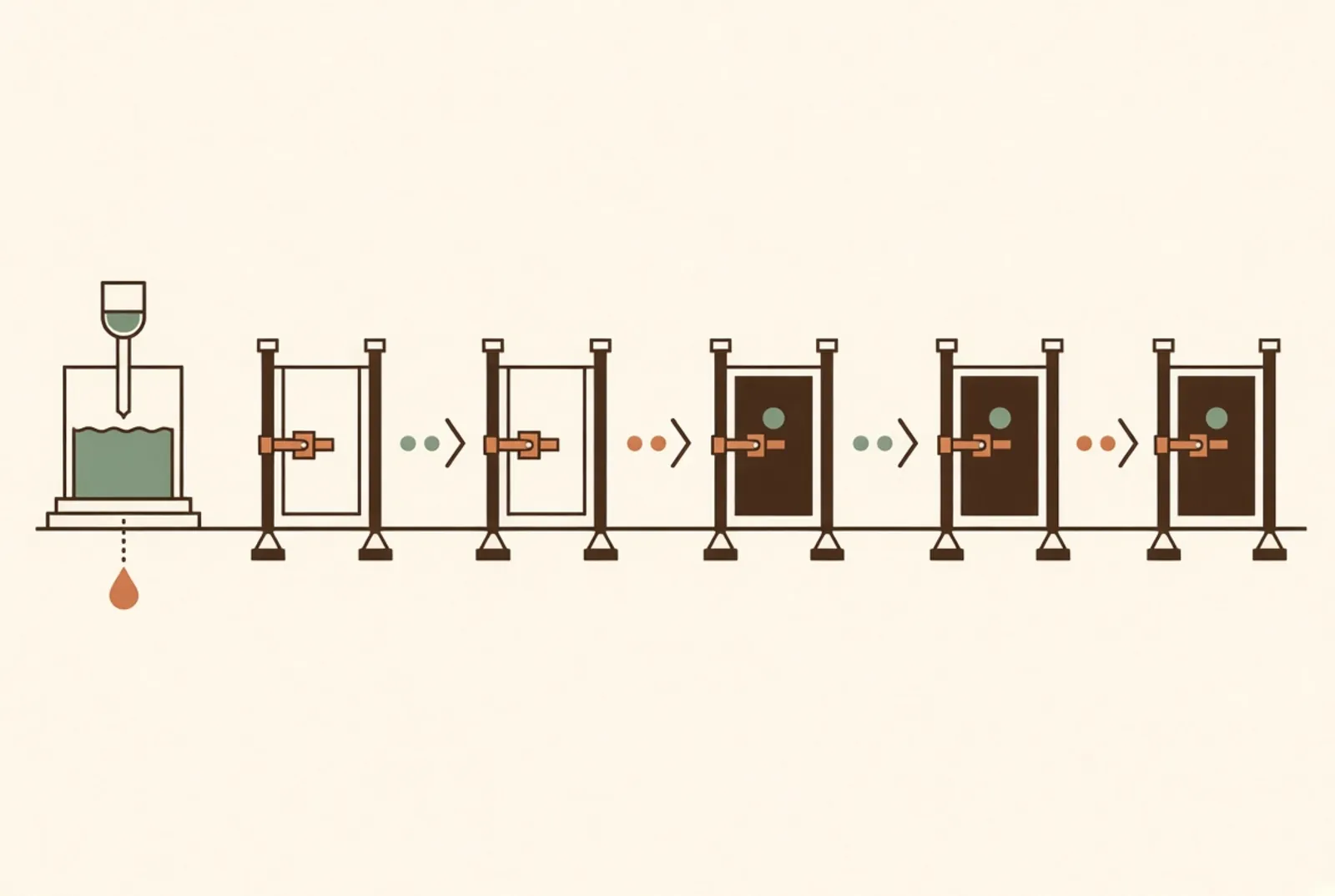
- Moisture testing of subfloor and material, documented.
- Minimum 72-hour acclimation in the actual conditioned space.
- Correct installation method matched to substrate.
- Proper expansion gaps at all fixed objects and walls.
- HEPA dust containment throughout the process.
What happens when a step is skipped
These are not aesthetic issues. They are permanent, visible records of process failure that no amount of later refinishing can fully erase.
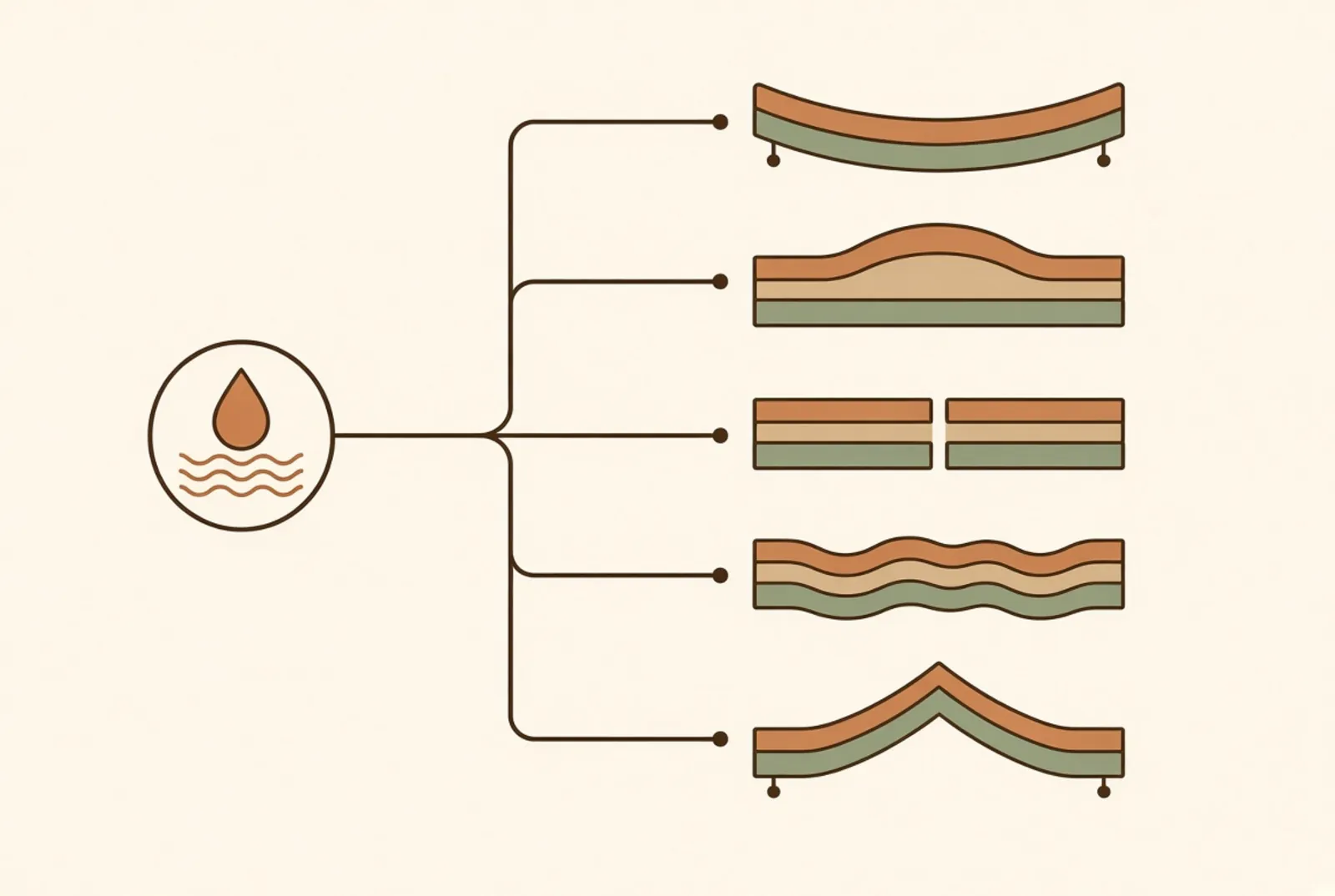
- Cupping — edges higher than the centre of the board
- Crowning — centre higher than the edges
- Seasonal gapping
- Buckling and tenting
- Edge peaking and finish failure
What an informed homeowner should demand
Any company that cannot or will not provide these is optimizing for speed and lowest bid, not for decades of performance.
- Written moisture readings of both subfloor and material before any deposit.
- Explicit confirmation of minimum 72-hour acclimation in the actual space.
- A fixed price in writing, with no open-ended "unforeseen conditions" language.
- Confirmation that salaried artisans, not subcontractors, will perform the work.
- Lifetime workmanship warranty language in the contract.
- Willingness to refuse the job if conditions are wrong.