
PROOF
Same maple. Same condo. Different floor.
Occupied Richmond Hill unit, dust-contained sand, waterborne two-component finish. The owner slept there.
 The same condo after a dust-contained maple refinish: honey satin waterborne finish, sheer curtains, one walnut chair.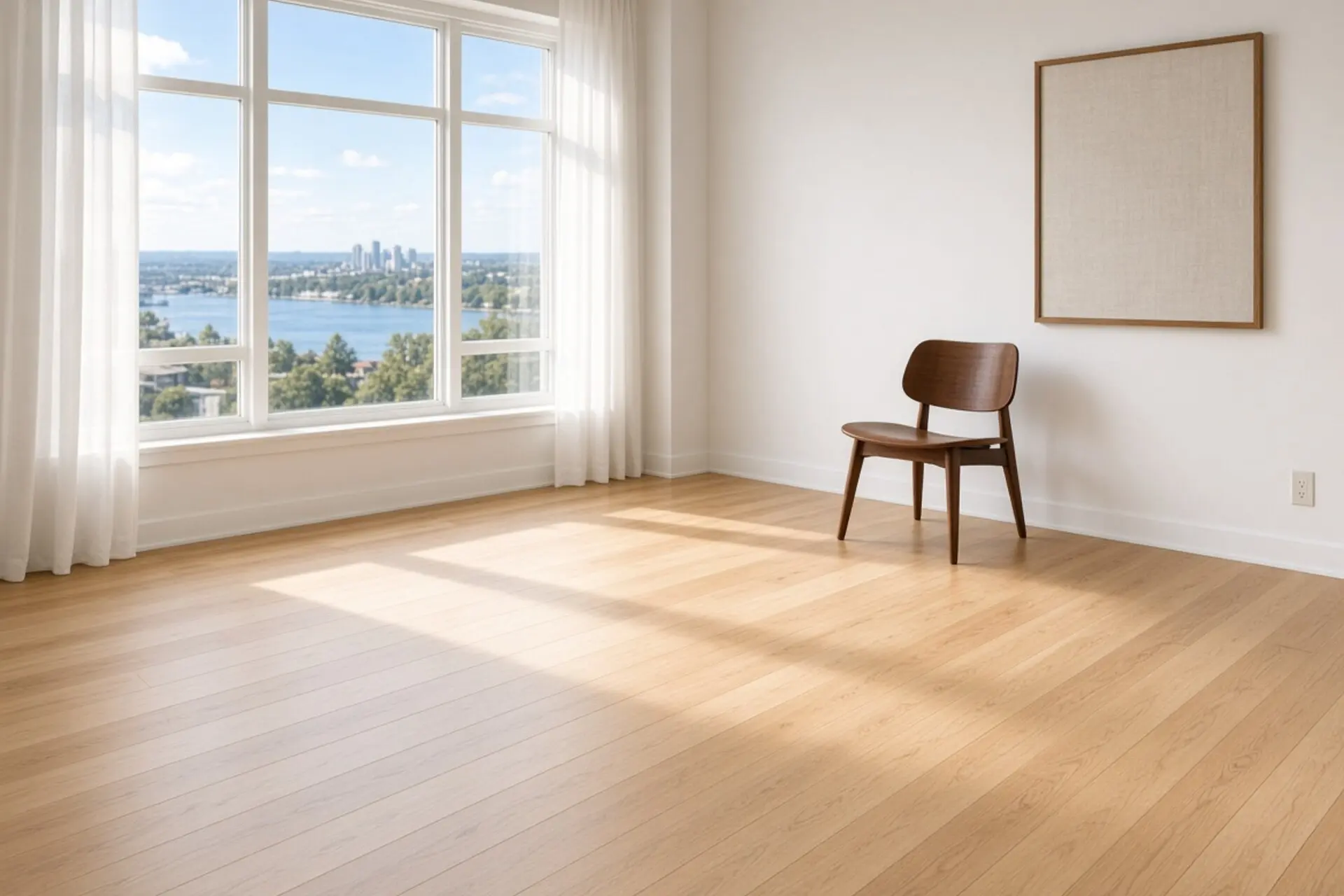
PROOF
Same colour. New skin.
Screen and recoat only — $2.50–$4.00 per sq ft. Light abrasion, fresh topcoat, no full sand, no colour change.
 The same maple floor after a screen and recoat: even satin sheen, traffic lanes gone, colour unchanged.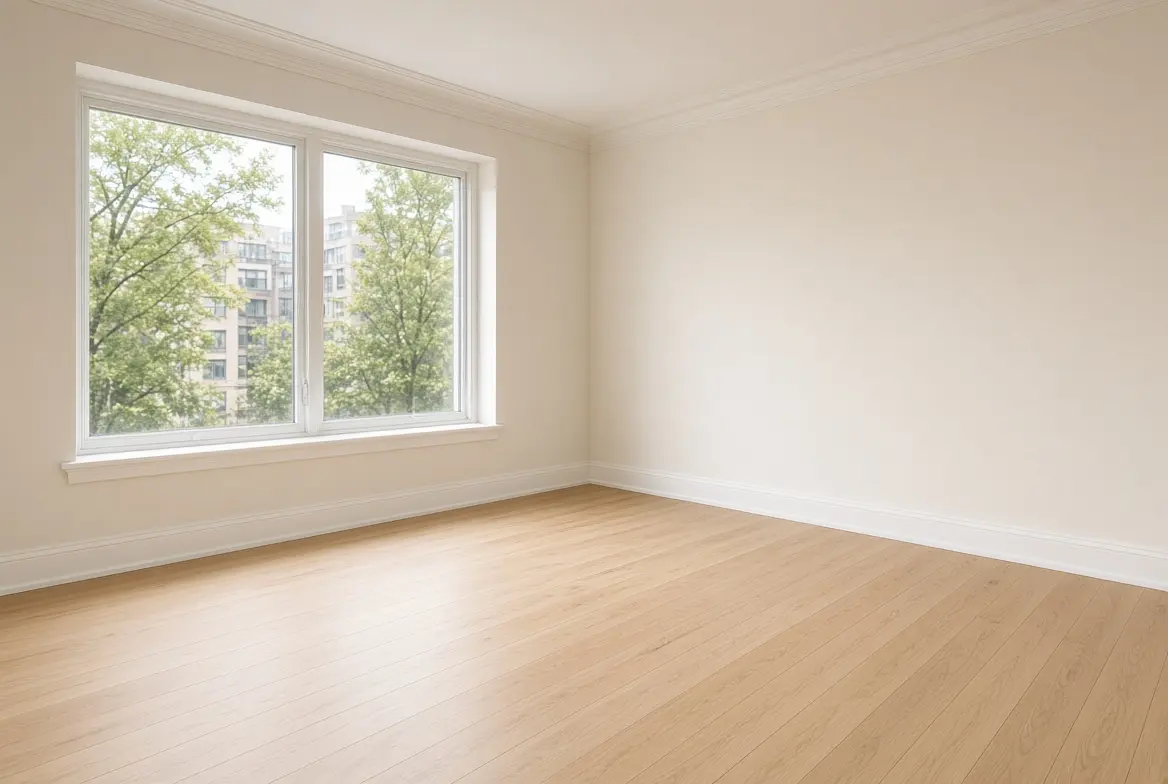
PROOF
The black boards do not get sanded over.
Water-damaged ends replaced, then the whole floor sanded and finished. Restoration is not a refinish with hope.
 The same room after board replacement, full sand and satin finish. Damage gone, floor continuous.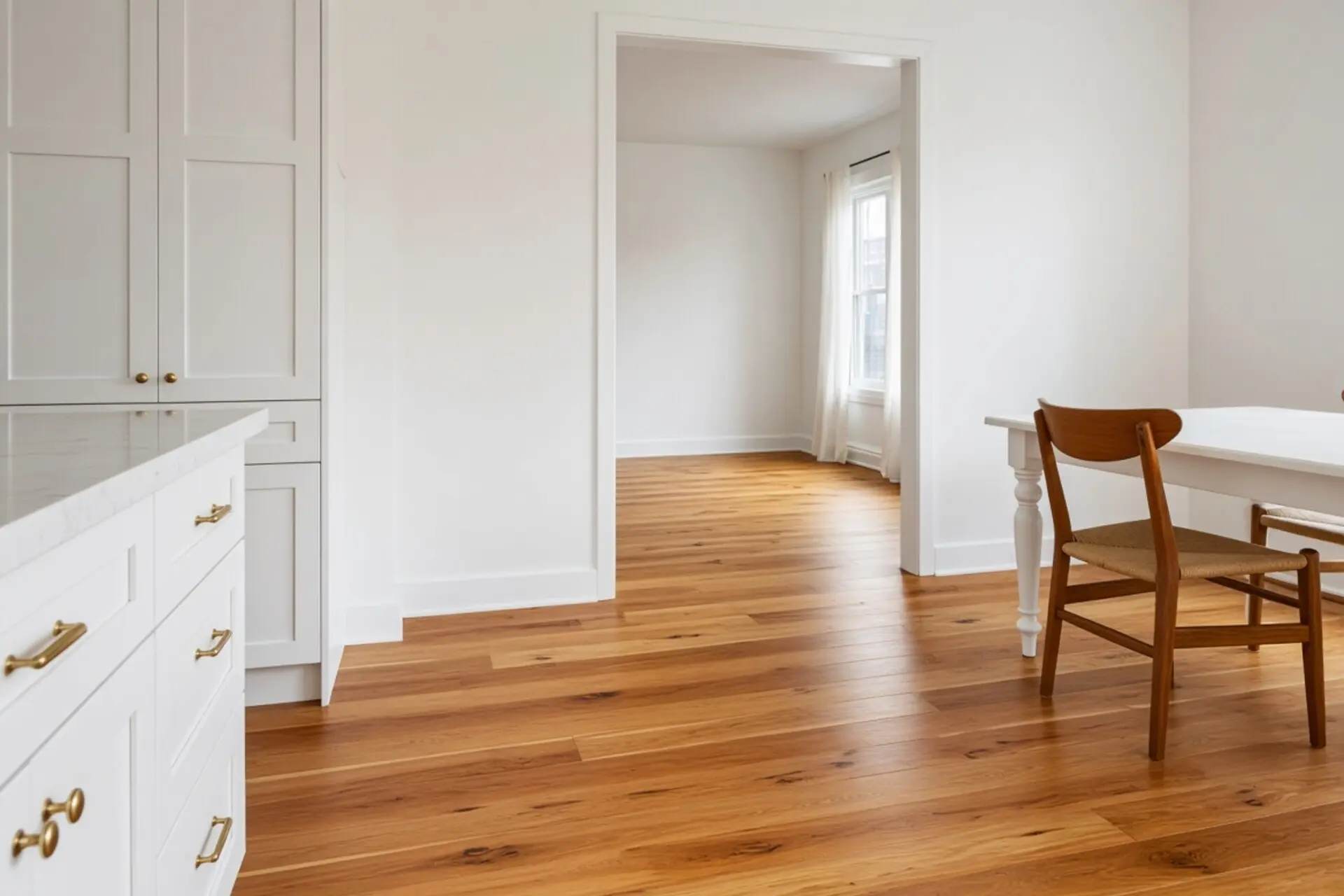
Hardwood floor refinishing in Toronto
Your floor is already there. The two questions are whether the house will be livable while the work happens, and whether it will look right afterwards. Both are decided by the machine sequence, and ours is published.
Get a fixed written price for your refinish
Whether a screen and recoat will do, or the floor needs a full sand, is decided by looking at it. The measurement is free and the written price does not move afterwards.
Wide oak plank
Boards aimed at the window.
Dark oak running the length of the living rooms. The finish is how the daylight arrives.
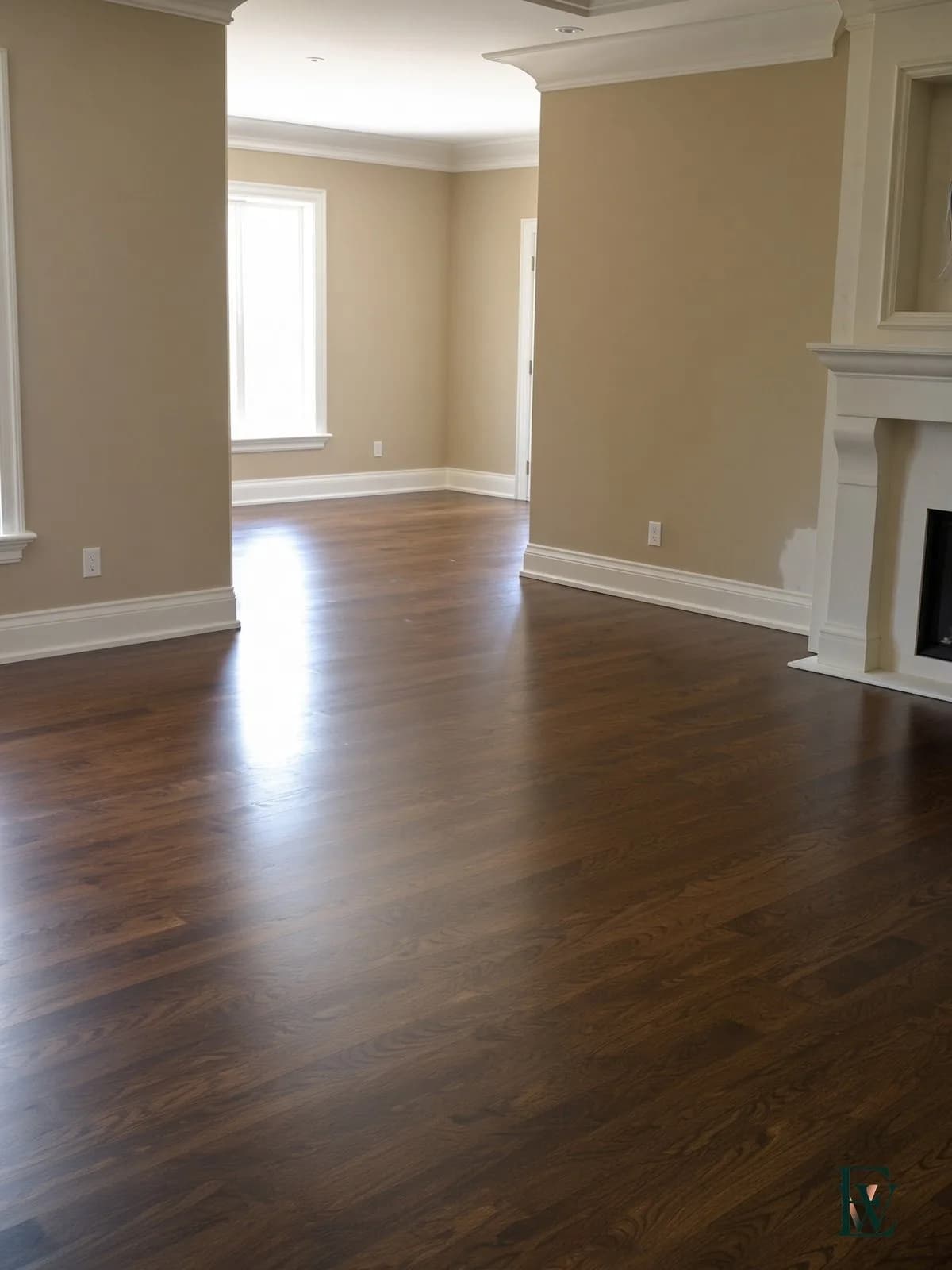
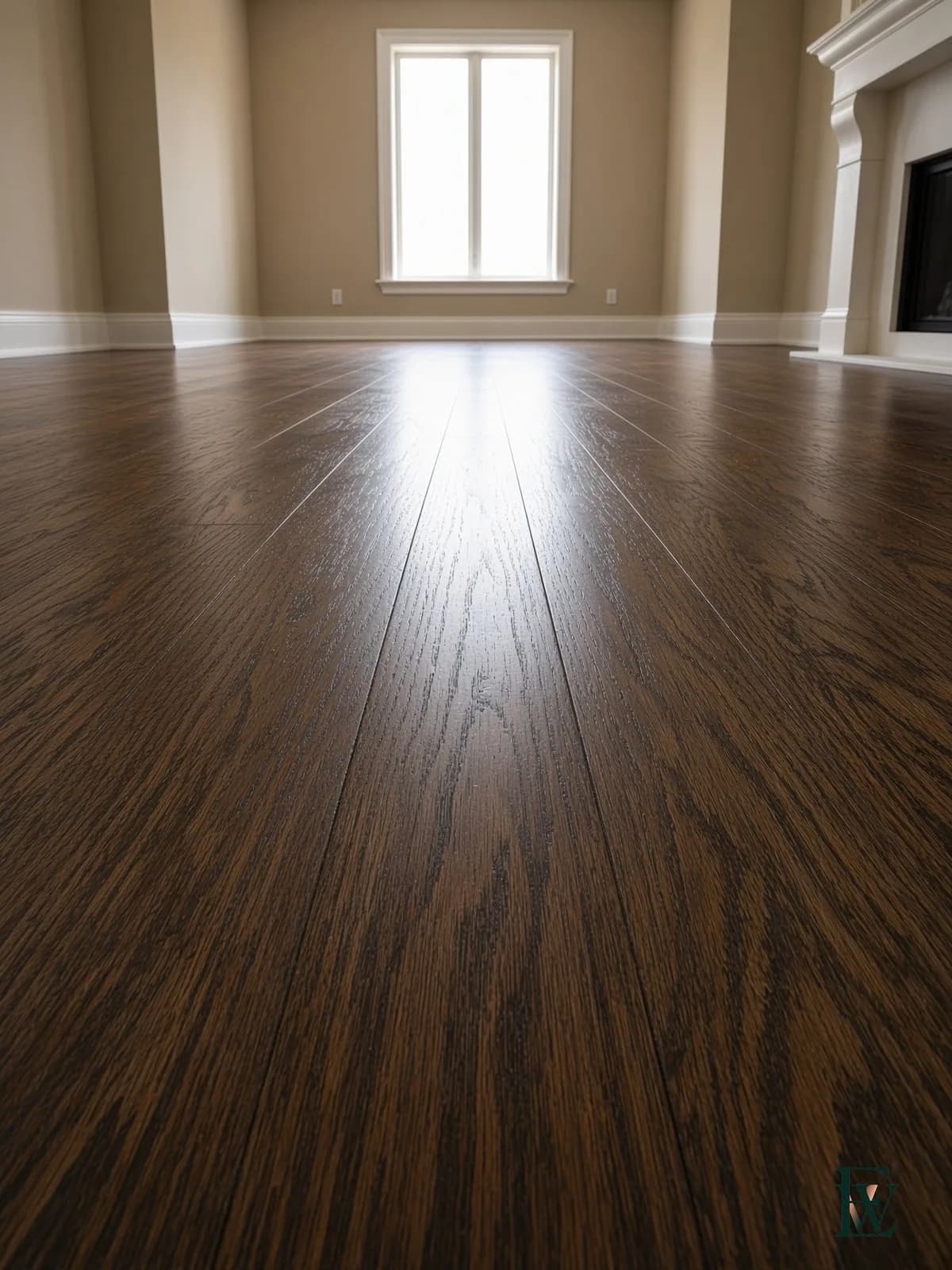
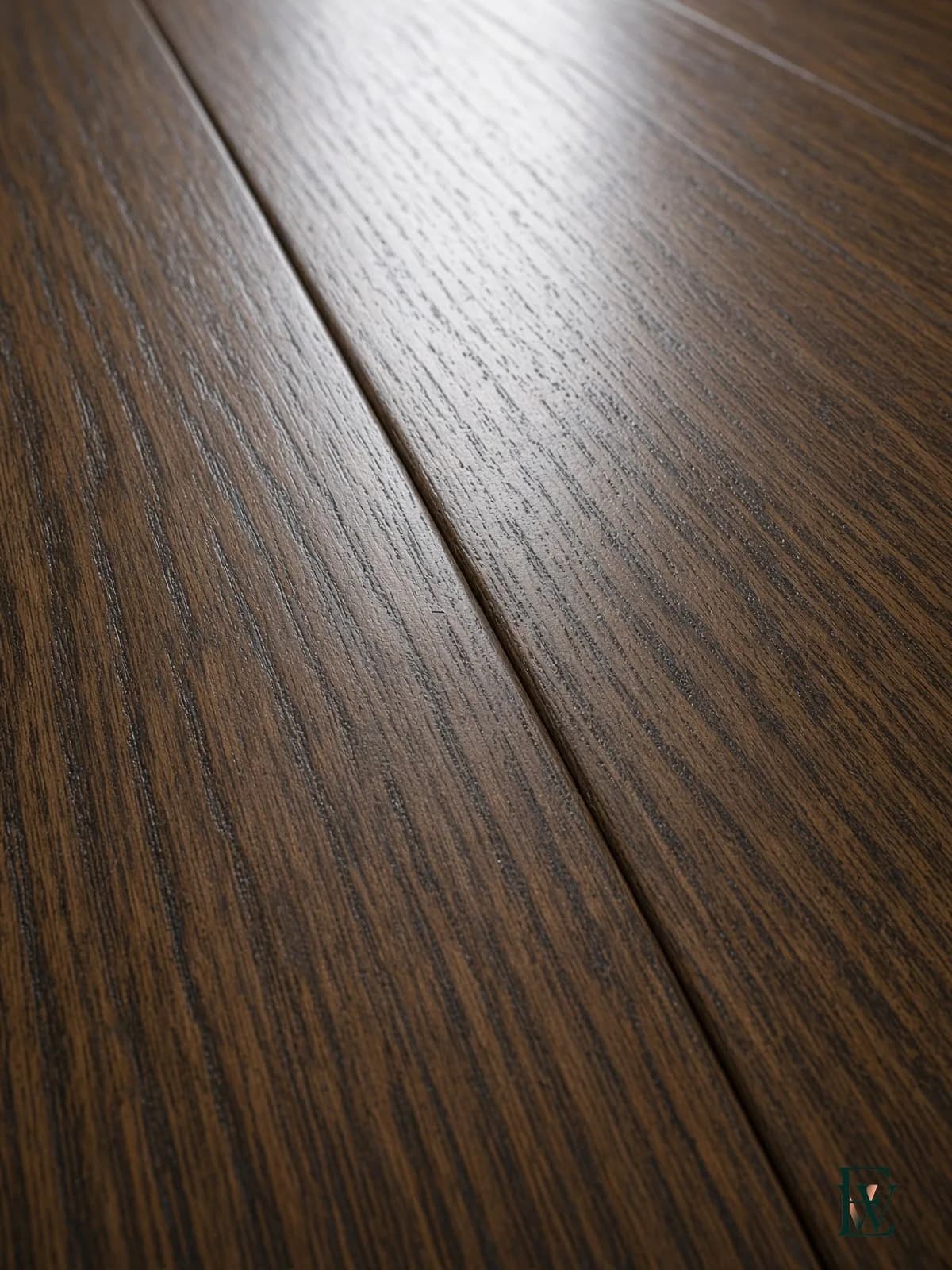
A plank floor is only as good as the last seam and the last coat. That is frame three.
The whole job, in order
Four machines, and why the order is not a preference
The belt sander levels the open field. The edger reaches walls, baseboards, closets and stairs. The planetary sander blends the two together. The buffer prepares the surface and abrades between coats. Each removes what the one before it could not reach.
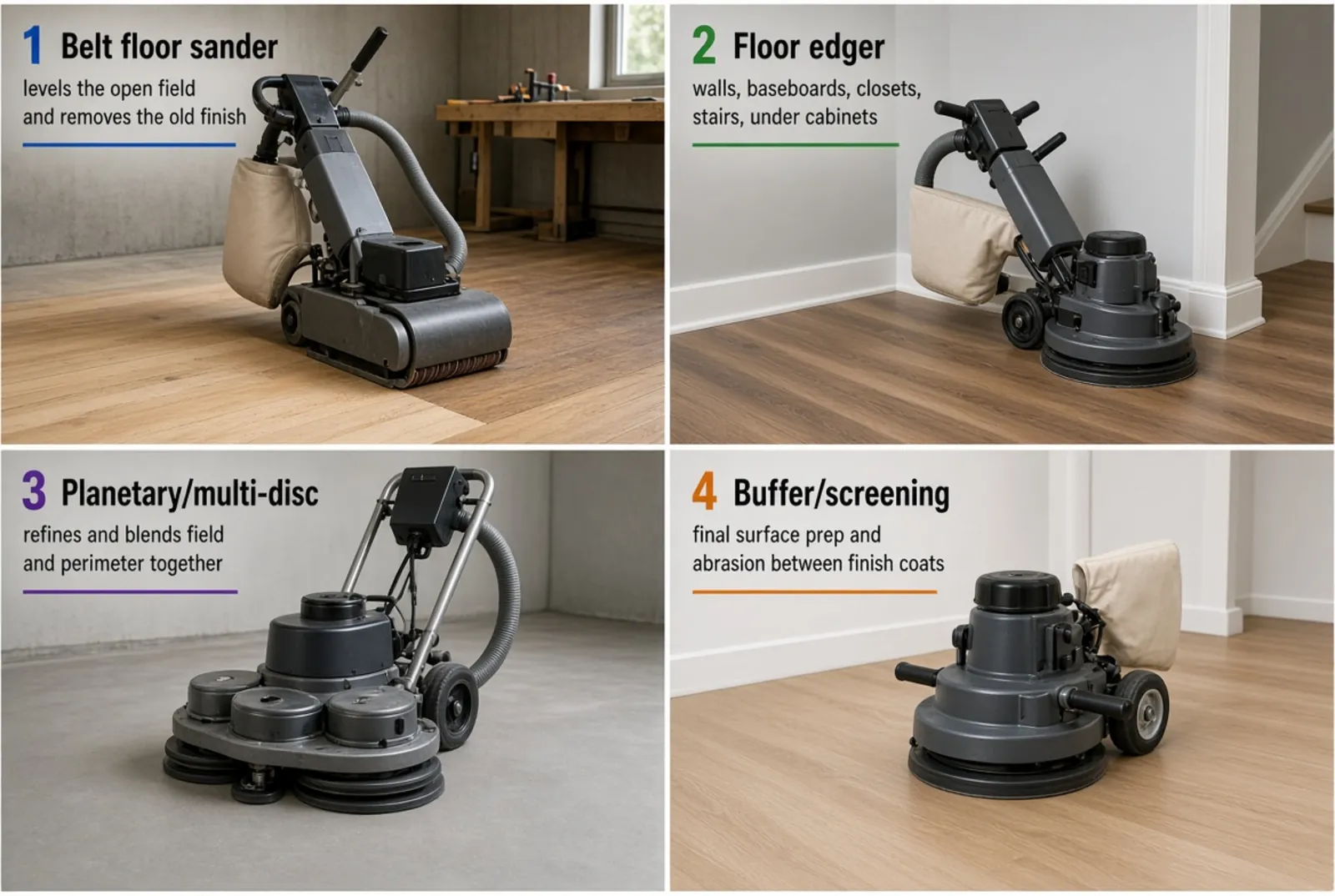
Set out in full, with the grit progression, in The Craft.
What to look for in someone else’s work
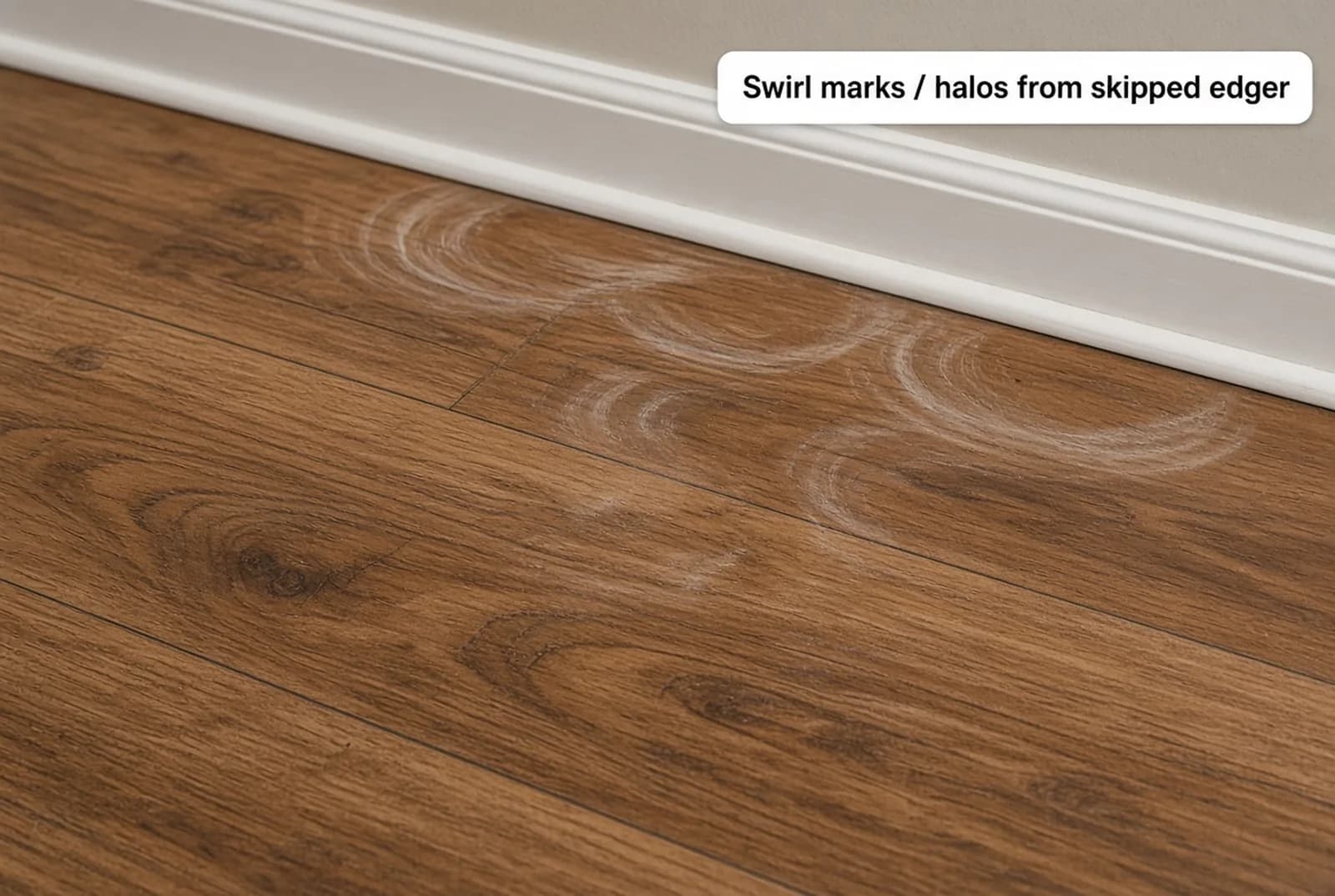
The edger halo
Skip the planetary pass and a band the width of a small machine runs around the whole room, reading as a different tone once the finish goes on. It is invisible on bare wood, which is exactly why it survives inspection, and permanent once coated. Ask any contractor which machines they use and in what order — the answer is short, and it tells you most of what you need to know.
Living in the house
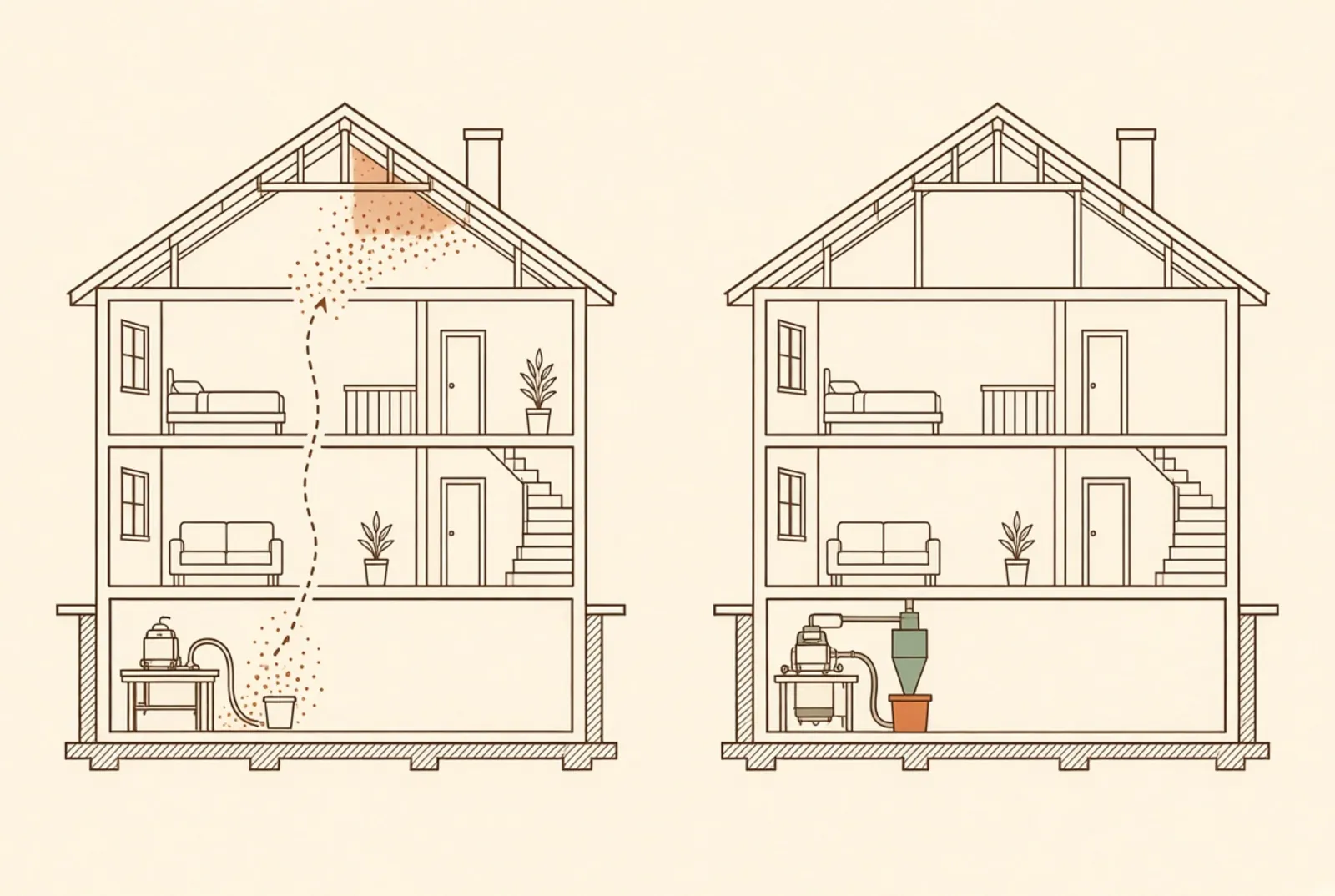
What dust-free actually means
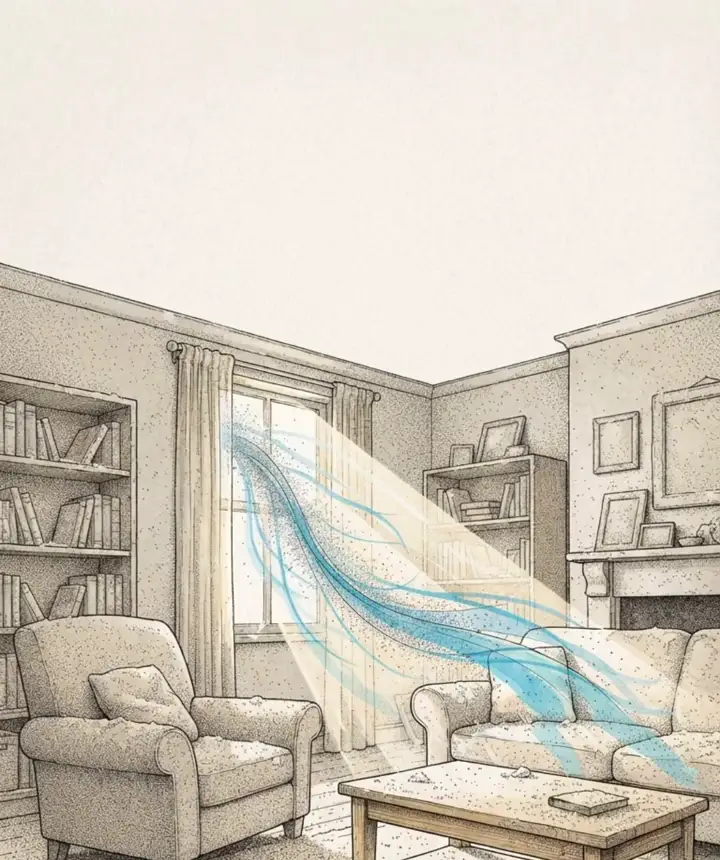
Extraction at the tool, a sealed collector, and a barrier at the opening. Dust generated during sanding is respirable and travels through the whole building; cleanup afterwards addresses what settled, not what was breathed. Containment is a system, not a vacuum.
Three services, one decision
Which of these your floor needs
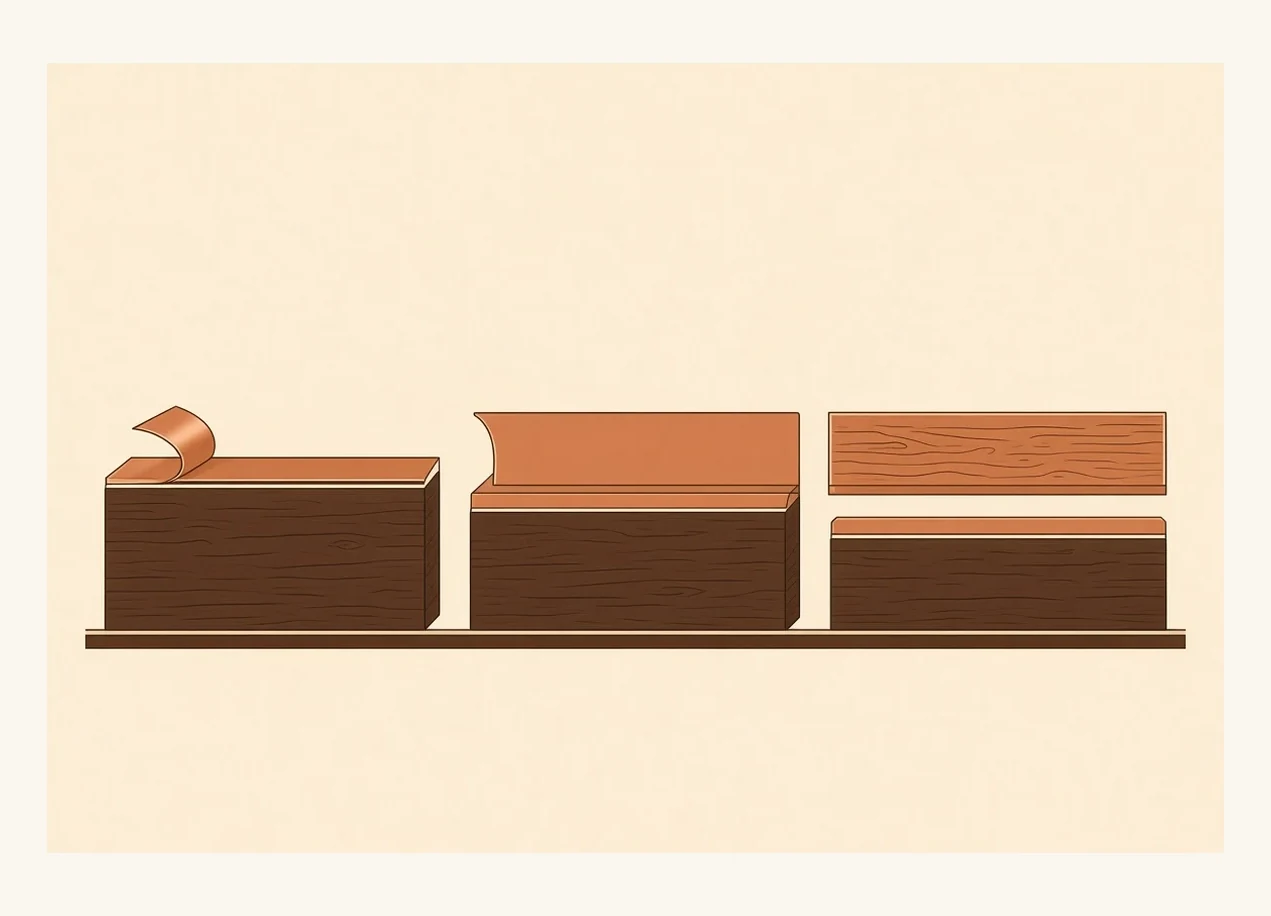
The difference between the three services is a depth. A screen and recoat abrades the existing finish and adds a new coat; a full sand goes to bare wood; replacement is a different job altogether.View full size — Three identical boards in section showing how much material each service removes — a screen and recoat taking only the finish, a full sand and finish going to bare wood, and replacement removing the board entirely.
Refinishing is the whole job: sand to bare wood, re-stain if the colour is changing, re-finish. Dust-free sanding is the containment that decides whether you can stay in the house while it happens. And restoration is what the job becomes when boards have to be replaced or a water event has to be undone first — a different scope, priced differently, and the reason the moisture readings are taken before the price is given rather than after. Stairs come with the floor more often than they are quoted with it: how stairs are priced.
The two questions worth settling before anyone quotes: what refinishing an existing floor actually involves — including how many sands a floor has left in it — and what “dustless” is and is not. If the floor is cupping, gapping or lifting, it is not a refinishing job yet: start with the diagnosis.
Photographed, not modelled
A whole-home refinish, worn film to finished floor
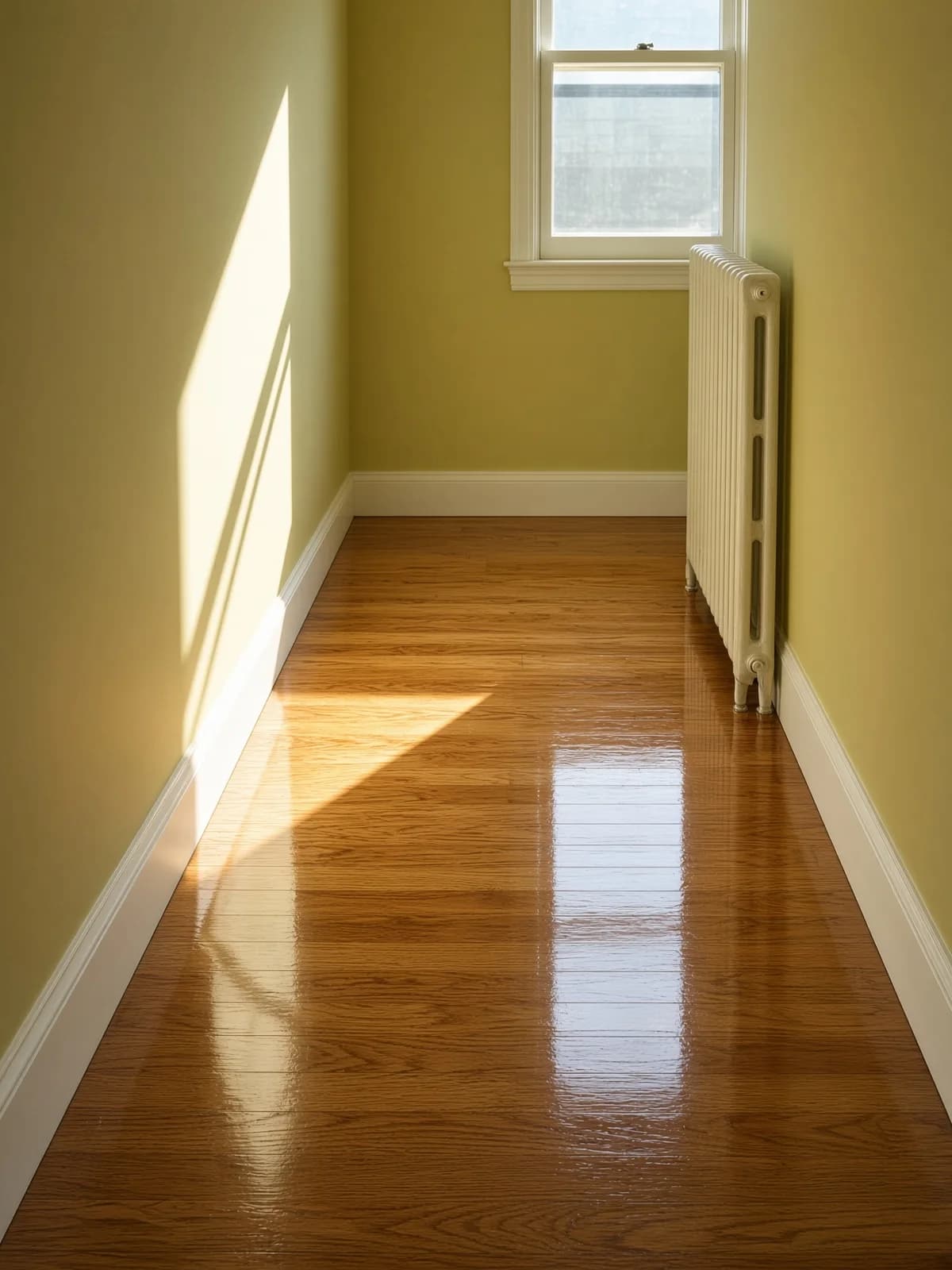
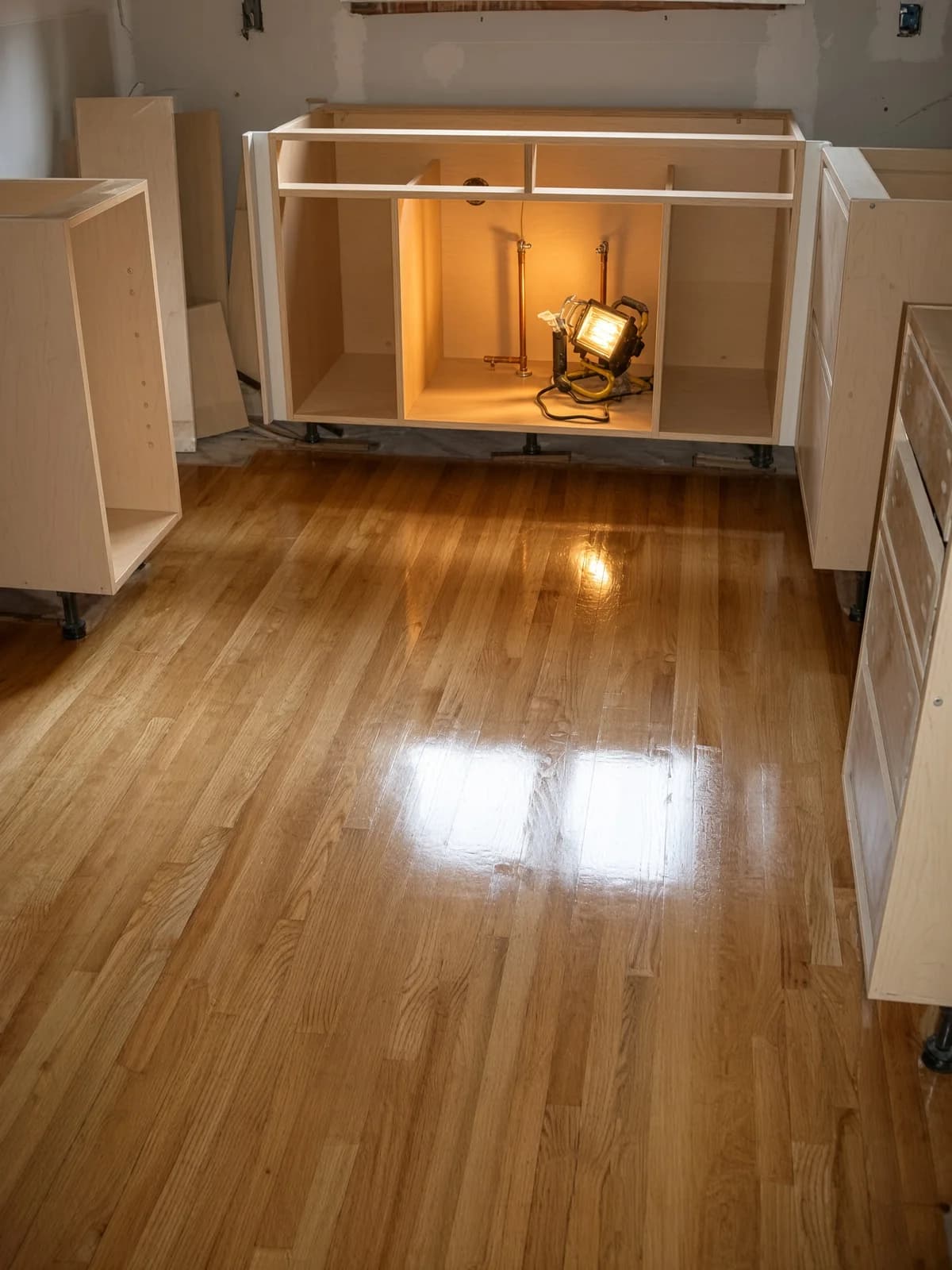
A full sand and finish, photographed room by room — the kitchen boxes arrived on a floor already done. The full chapters and the honest before/after pairs are on the photo record.
Proof, with the numbers
Where this protocol has been run
Refinishing and installation share the same first step, which is why these jobs are the evidence for both: each one publishes what was measured before anything was sanded.
Yorkville loft, below grade
A below-grade slab at a critical moisture reading, and the mitigation that made the floor possible at all.
Distillery District, over concrete
Historic loft over concrete. The dust containment and the finish chemistry were chosen together, not separately.
Midtown townhouse, three levels
Three substrates in one house, matched across levels — the case where sanding sequence decides whether the join is visible.
Every case study publishes what was measured, not only what was achieved — all of them are here, and each one names the substrate, the species, the readings and the protocol it followed.
Before you sign anything
Put any refinishing quote against the published standard
The Well-Installed Framework is published free to use on any contractor in the GTA, including us. For a refinish the criteria that decide the outcome are which machines run in which order, whether the floor was measured before it was quoted, and whether depth above the tongue was checked at all — score a quote you already have.
Straight answers
Questions people actually ask
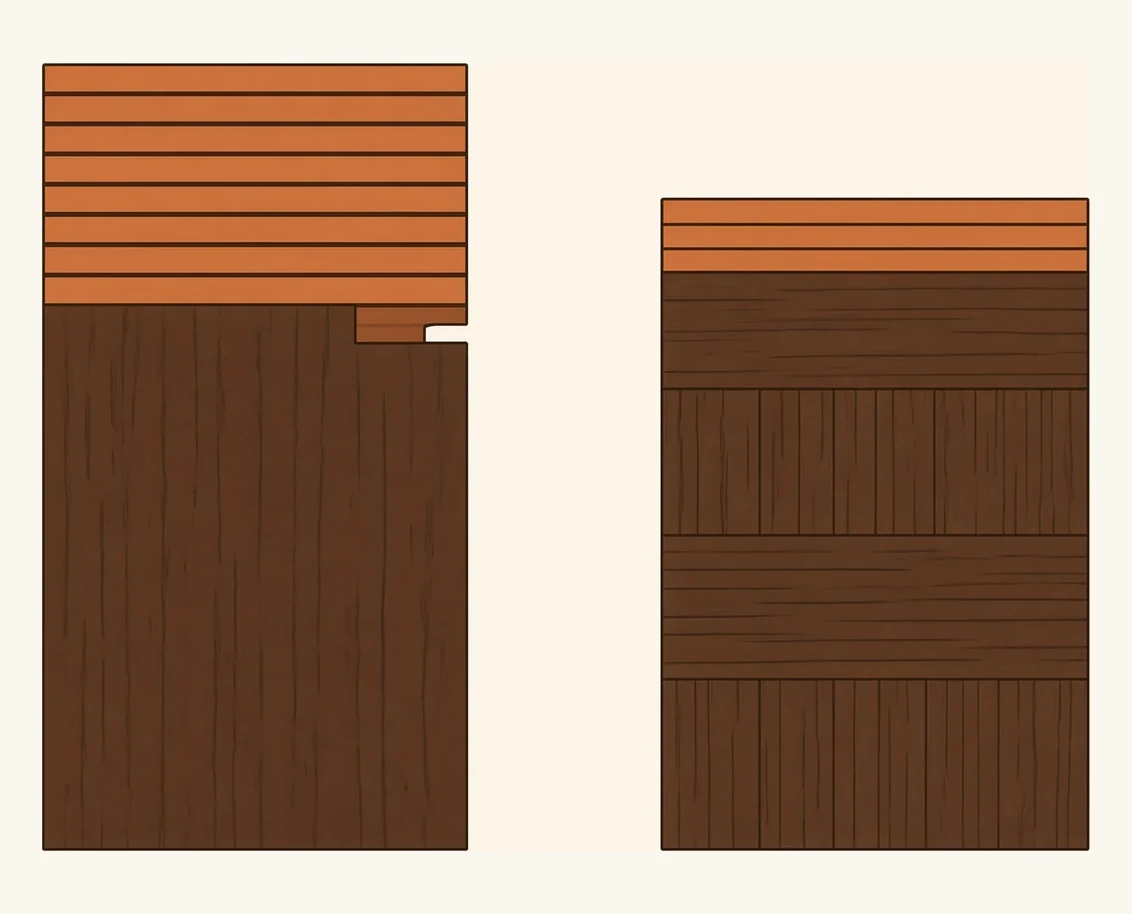
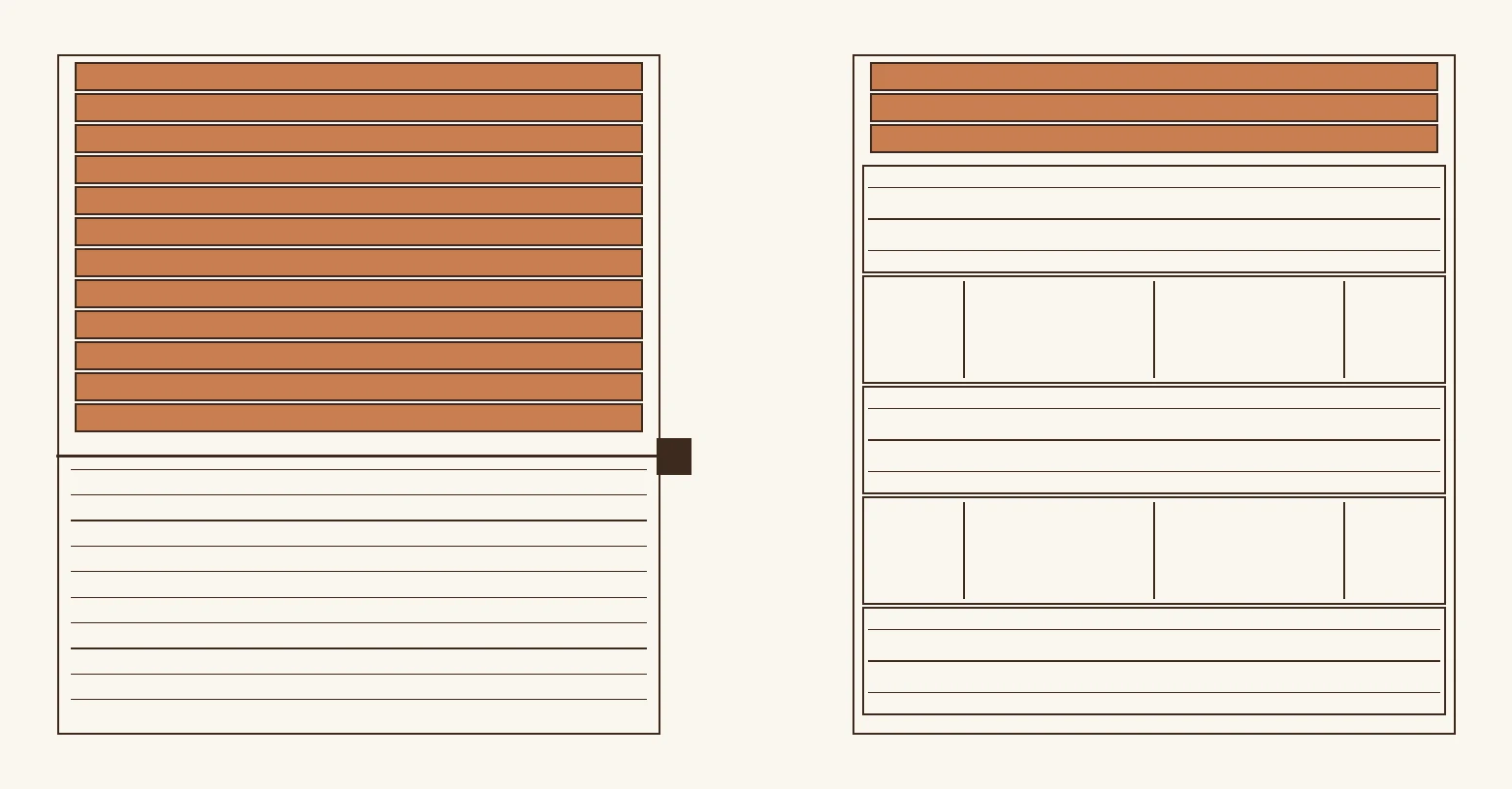
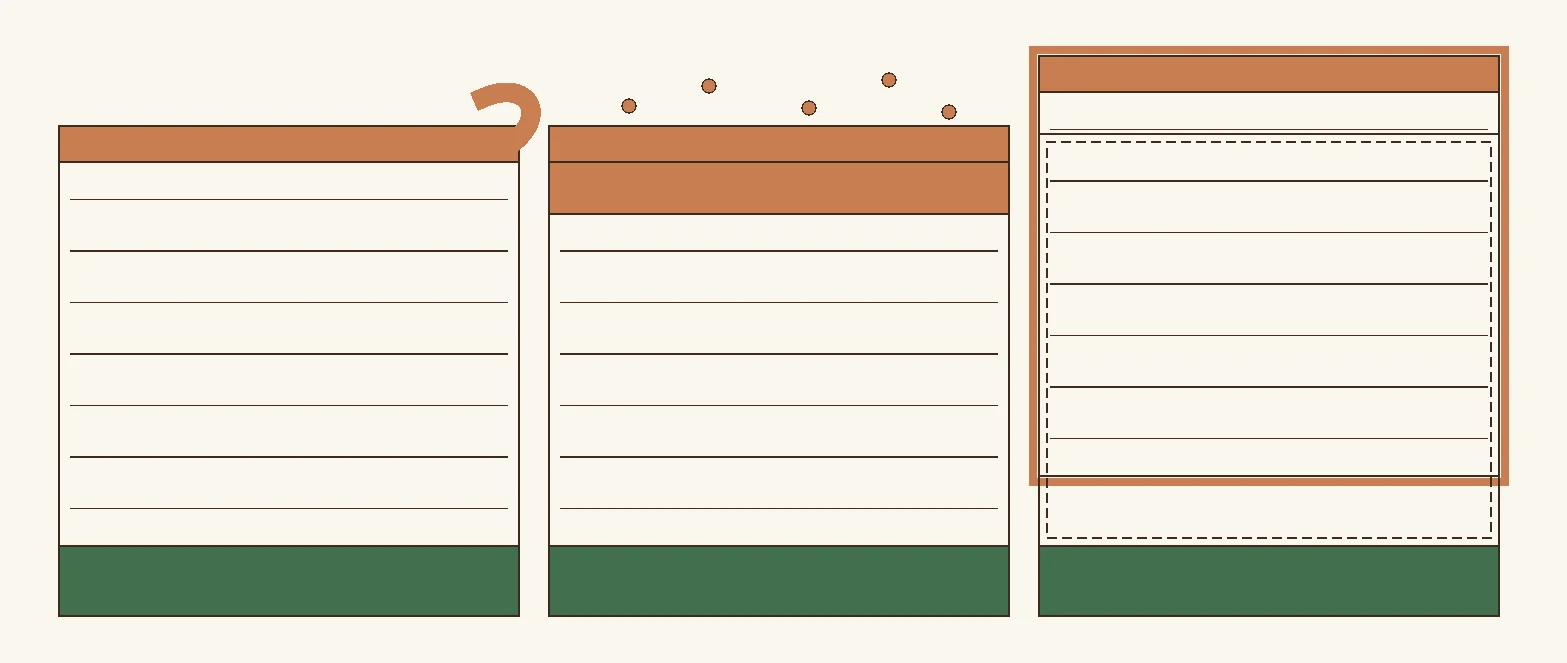
How many times a floor can be refinished is a thickness budget. A solid board carries a generational wear layer above the tongue; an engineered board carries a specified wear-layer thickness and no more.View full size — A solid board and an engineered board drawn in section, each marked with how much thickness a refinishing cycle consumes and how many cycles the remaining material allows.
- How much does it cost to refinish hardwood floors in Toronto?
- A full sand and finish runs $4.75–$7.50 per square foot. A screen and recoat — where the existing finish is worn but sound and the wood beneath is undamaged — runs $2.50–$4.00. Fixed price in writing. It never moves after the free in-home estimate.
- What does dust-free sanding actually mean?
- That the dust is captured at the tool and kept behind a barrier, not that no dust exists. Extraction runs from each machine to a sealed collector and the work area is separated from the rest of the house, which is what makes it possible to stay in the house while the floors are done. Cleanup afterwards addresses what settled; containment addresses what was breathed.
- Can I stay in my home during refinishing?
- In most cases yes, with containment in place. The constraint is not dust but cure time on the finished rooms — a floor that has been walked on before its coat has cured is a floor that will be refinished again sooner than it should be.
- How many times can a hardwood floor be refinished?
- Solid hardwood carries a generational wear layer and takes many cycles. Engineered flooring has a specified wear-layer thickness above its cross-ply core, and that thickness sets a hard limit. Which one you have is the first thing to establish, and it is visible in the board's edge.
- Why do refinished floors sometimes show a ring around the room?
- Because the planetary pass was skipped. The belt sander levels the open field and the edger reaches the walls, and the two leave different surfaces. A third machine blends the boundary. Without it the difference is invisible on bare wood and permanent once the finish goes on — the edger halo. It is the single most common defect in this market.
- What reviews does Ecowoods have?
- 177 reviews at 5.0 out of 5 on HomeStars, read from the live profile on 2026-08-22.
Ecowoods Hardwood Flooring Inc. works across 100 areas in Toronto and the GTA, Barrie, Innisfil, Hamilton, Niagara, Guelph, Cambridge, Kitchener and Kawartha Lakes, and the Buffalo and Rochester areas of New York State. See hardwood flooring in Toronto for new installation, or the coverage list.
Coverage
Hardwood floor refinishing across 100 areas in Ontario and New York State
Each area has its own page describing the housing stock there and what it means for a refinish — original 1920s strip oak in Riverdale and a 2018 engineered floor over a downtown slab need different machines and different expectations.
Field catalogue
Take the catalogue with you
The same facts as this page, in a document you can print or forward. Not a quote, and nothing on it asks for your email.
Dust-Free Hardwood Refinishing
What dust-free actually means: extraction at each machine, a sealed barrier built at the room and struck every shift, and the four-machine sequence that takes a worn floor back to a finished one.
6 pages14 × 10 inEcowoods_02_DustFree_Refinishing.pdf, opens in a new tabCatalogue No. 07 · PDFKeep the Wood or Start Again?
When the damage is in the coat and when it is in the board — the conditions under which a floor is still refinishable, the ones under which it is not, and the third option between them.
6 pages14 × 10 inEcowoods_07_Refinish_or_Replace.pdf, opens in a new tabEvery field catalogue — the company, the services, the stair case, the framework and the decisions, indexed by series.