
PROOF
The gap is climate. The grey is finish.
Winter gapping and oxidized wear on maple, then a full sand and waterborne finish. Board-level crop — not a hero.
 Close-up of the same floor after repair, sanding and refinishing: tight seams, flat boards, honey satin maple.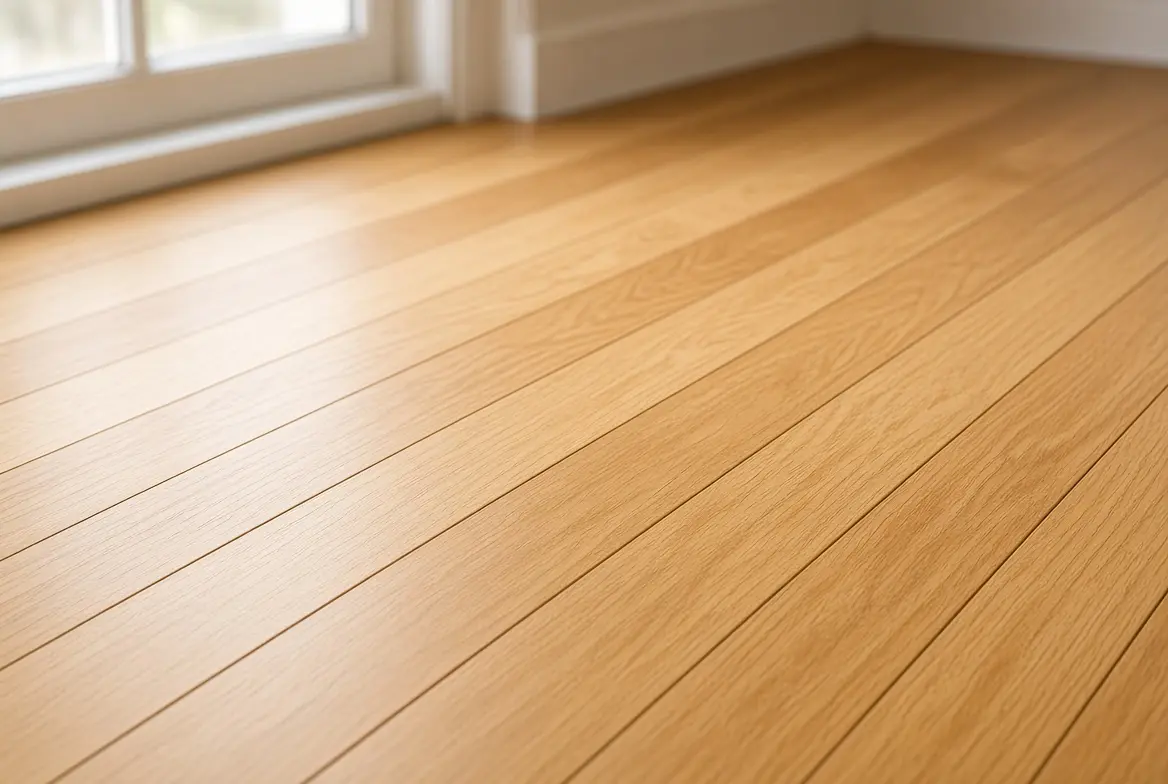
PROOF
The black boards do not get sanded over.
Water-damaged ends replaced, then the whole floor sanded and finished. Restoration is not a refinish with hope.
 The same room after board replacement, full sand and satin finish. Damage gone, floor continuous.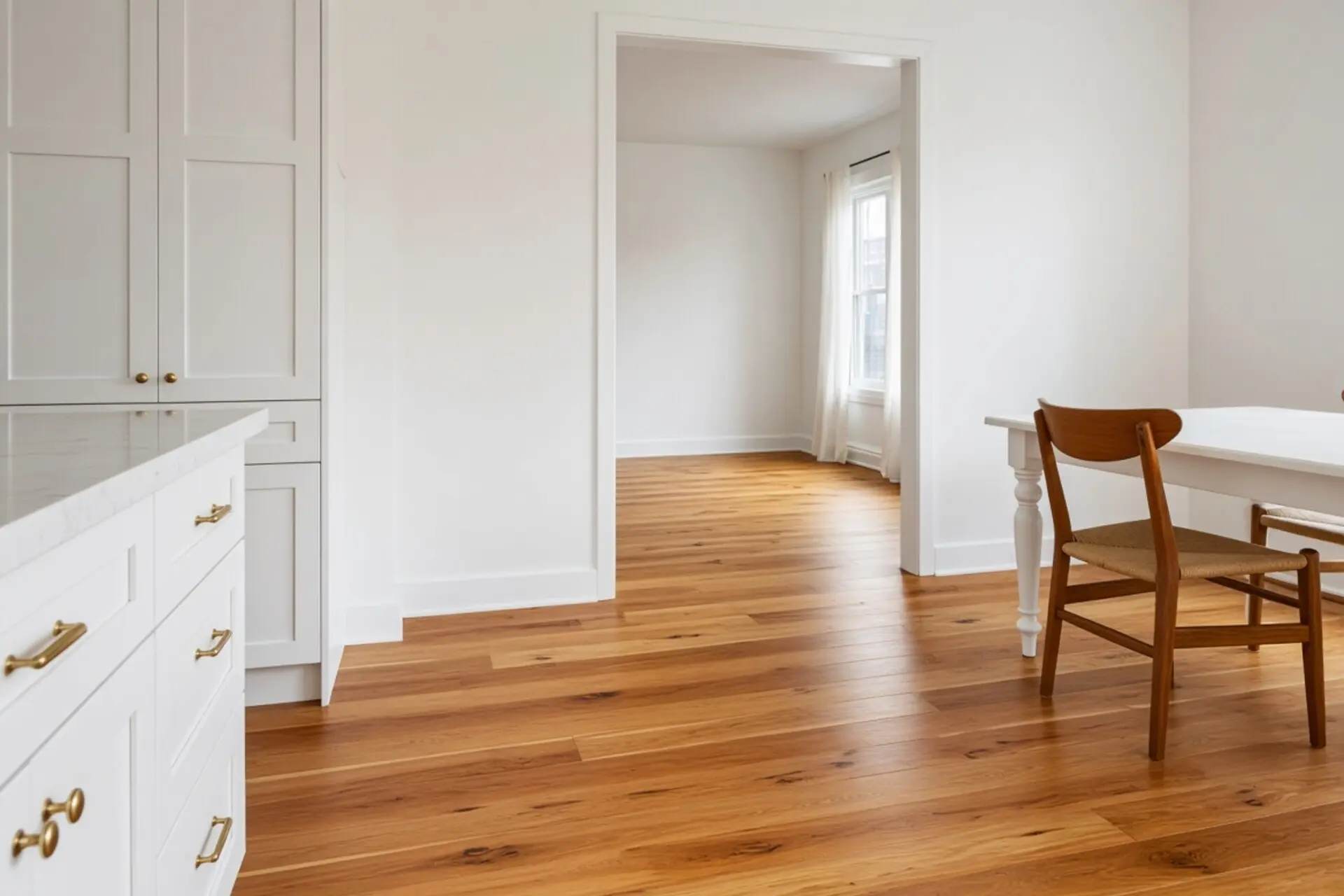
PROOF
Same bay window. The boards were kept.
A heritage bay window where the original oak was repaired and refinished rather than replaced.
 The same bay-window alcove after board repair and refinishing, the original oak retained.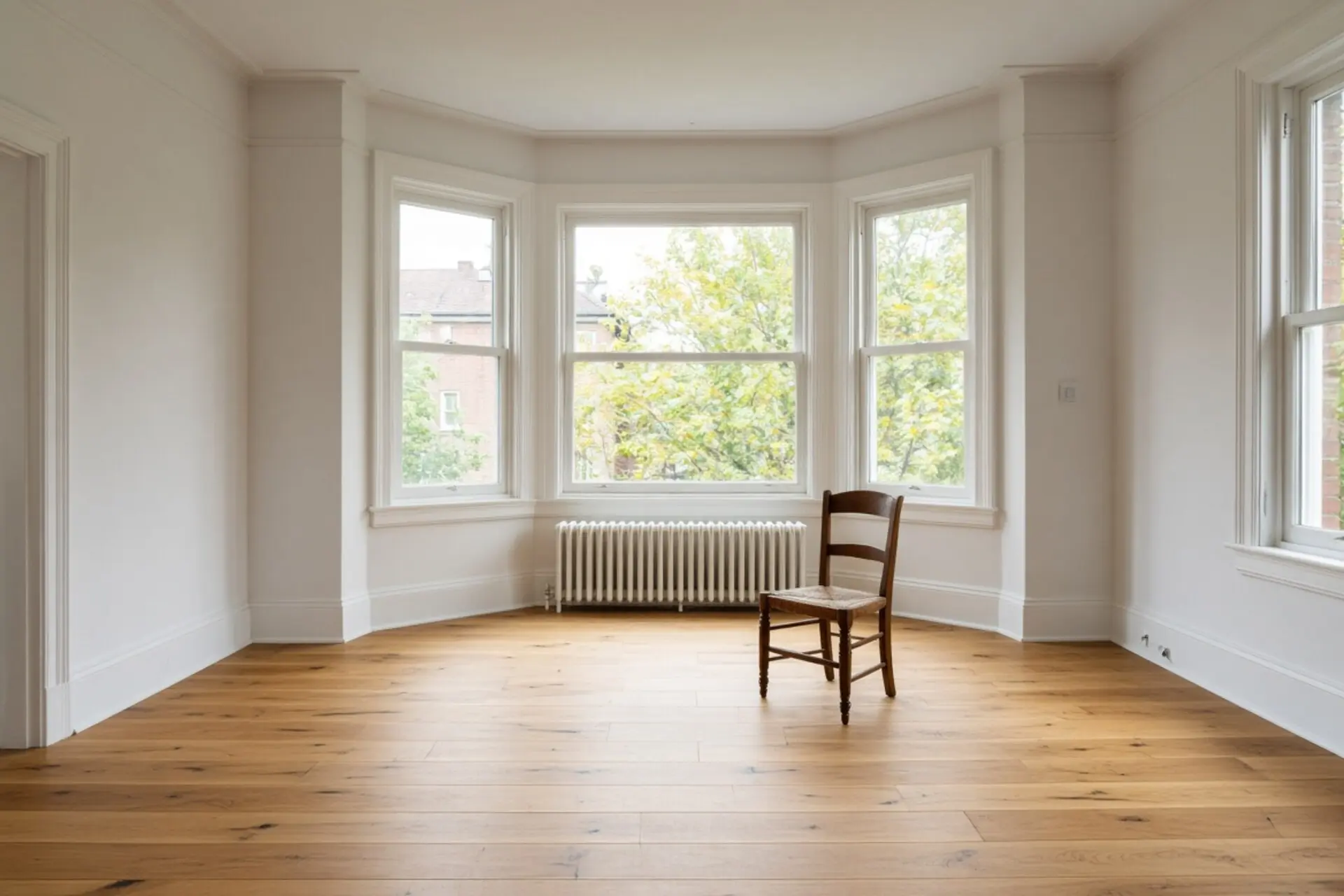
What your hardwood floor is telling you
Cupping, winter gaps, crowning, buckling and peeling finish are five different symptoms of one mechanism: moisture, moving through wood that is doing exactly what wood does. This page gives each one its cause, an honest prognosis — including the two where the answer is “do nothing yet” — and which published price band the remedy falls in. The in-home diagnosis, with the moisture readings written down and given to you, is free.
Have someone look at it
Cupping, gapping and crowning are symptoms of one mechanism, and which one it is decides whether the floor can be saved. That is a reading, not a guess. The visit is free.
Start here
Find your symptom
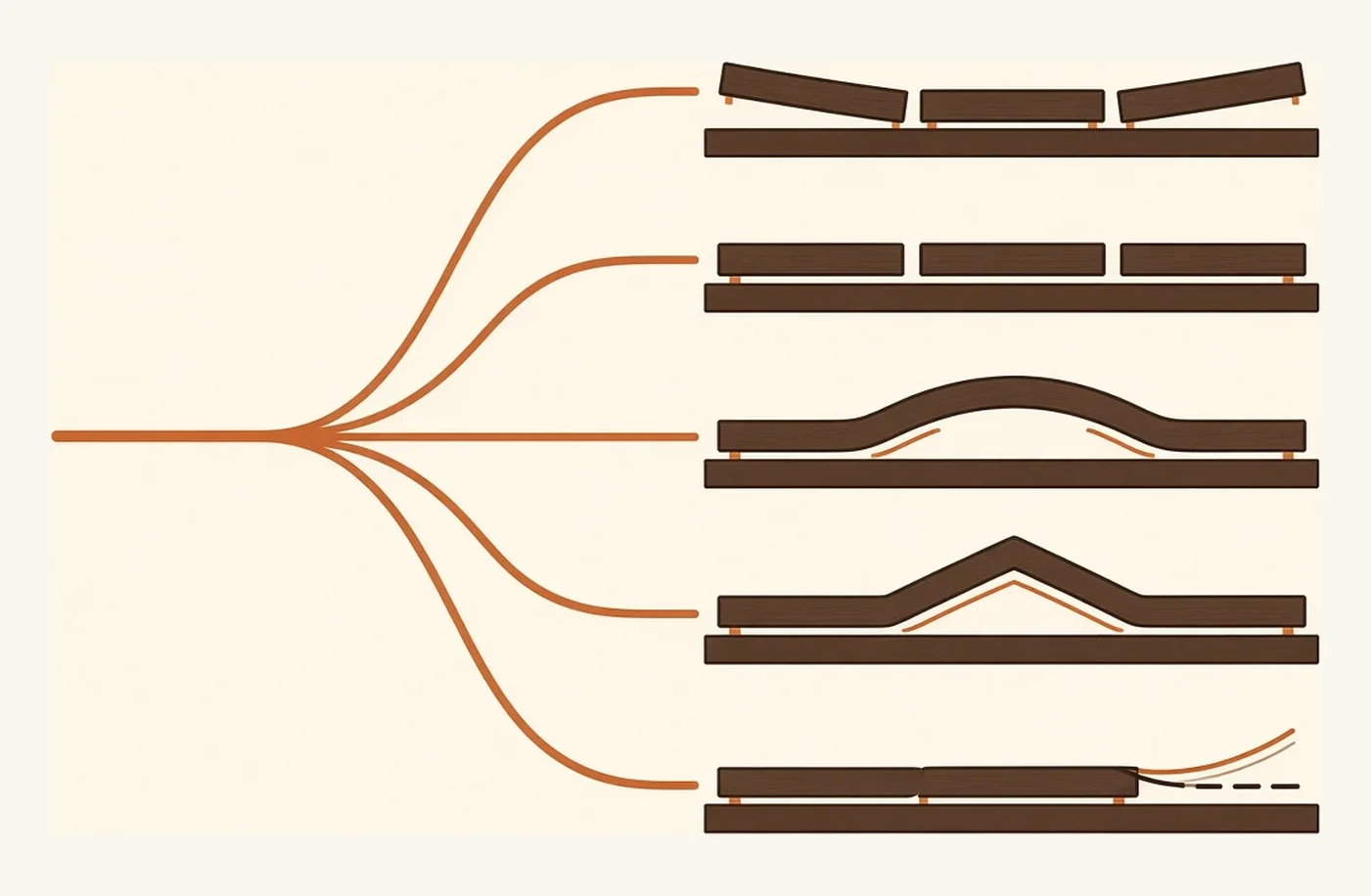
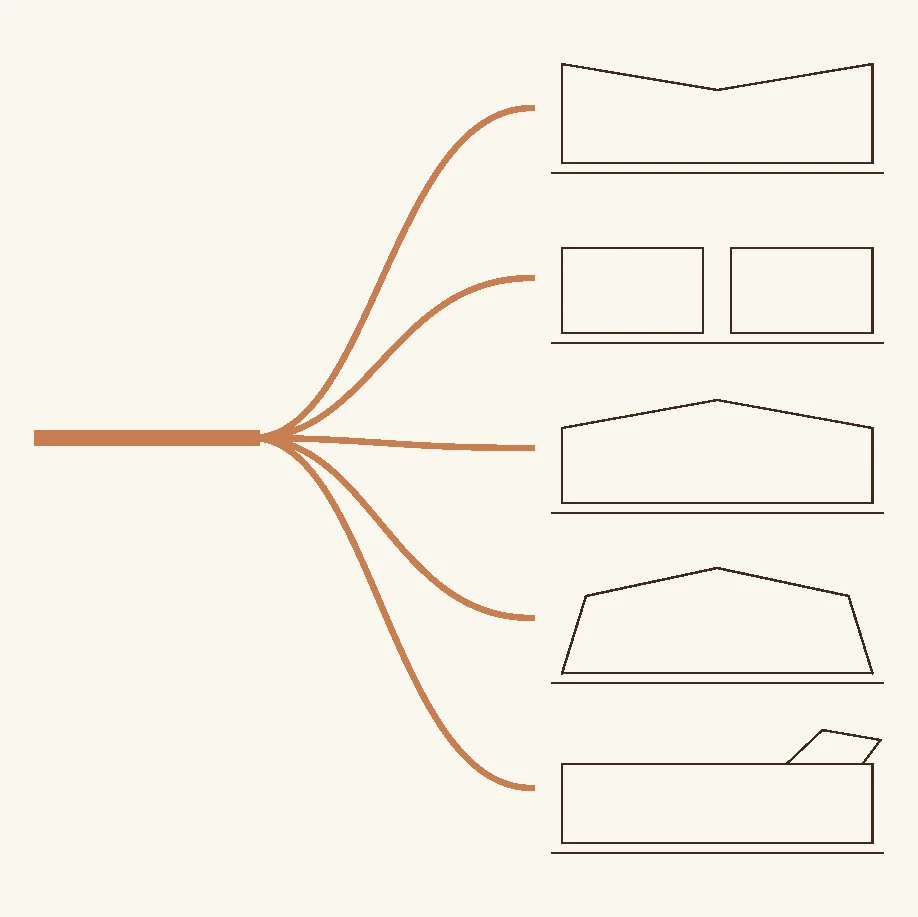
Five symptoms, one mechanism. Cupping, winter gaps, crowning, buckling and peeling finish are different visible outcomes of moisture moving through a floor, which is why the diagnosis starts with a reading and not a look.View full size — A branching diagram with moisture at the root splitting into five outcomes — cupping, seasonal gapping, crowning, buckling and edge peaking — each drawn as the board profile it produces.
| What you can see | What it is | Can it be fixed | Band, once diagnosed |
|---|---|---|---|
| Why is my hardwood floor cupping? | Cupping | Recoverable, but only in the right order, and this is the single most expensive mistake made on Toronto floors. | $4.75–$7.50 |
| Gaps between my floorboards in winter | Seasonal gapping | Usually nothing to fix. | Assessed on site |
| My floor is higher in the middle of each board | Crowning | Recoverable if there is wear layer left, and that is the whole question. | $4.75–$7.50 |
| My hardwood floor is lifting off the subfloor | Buckling | Urgent and mixed. | Assessed on site |
| The finish is flaking along the edges of my boards | Edge peaking | Recoverable, and it is the one failure on this page that is usually cheap. | $2.50–$4.00 |
Two of the five are commonly nothing to fix. A page that told you all five were a job would be easier to write and would be worth less to you than this one. The mechanism behind all five is published in full, free to read and free to cite.
Why is my hardwood floor cupping?
Cupping
A board whose edges sit higher than its centre — the visible record of moisture entering the floor from below.
- What it looks like
- The edges of each board sit higher than its centre, so the floor reads as a series of shallow troughs. Most visible in raking light across the boards, and you can usually feel it barefoot before you can see it.
- What causes it
- Moisture is entering the floor from below — a slab, a crawlspace, a leak, a dishwasher, or a subfloor that was never tested. The underside of each board swells more than the top and the board curls.
- Can it be fixed
- Recoverable, but only in the right order, and this is the single most expensive mistake made on Toronto floors. Sanding a cupped floor flat before the moisture has equalised produces crowning when it finally does — the same floor, now permanently domed, with the wear layer already spent on fixing it once. The moisture source is found and stopped first, the floor is left to equalise, and only then is anything sanded.
- What fixing it involves
- Once equalised: a full sand and finish. If boards have delaminated or the moisture ran long enough to stain, board replacement first — that is restoration, priced per board. Published band: $4.75–$7.50 per square foot for full sand & finish.
Canonical definition: Cupping · Related: Crowning, Moisture content, Acclimation, Belt floor sander
Gaps between my floorboards in winter
Seasonal gapping
Visible gaps that open between boards as the floor contracts, typically in a dry Toronto winter.
- What it looks like
- Thin dark lines opening between boards, worst in January and February, closing again by June. Usually widest near heat sources and exterior walls.
- What causes it
- Toronto indoor air runs to roughly 18–25% relative humidity in deep winter against the 35–55% band in which hardwood is dimensionally stable. The wood gives up moisture and shrinks across the grain. It is not a defect; it is what wood does.
- Can it be fixed
- Usually nothing to fix. A gap that closes in summer is a floor behaving correctly in a house that is too dry, and the answer is a humidifier rather than a contractor. A gap that does NOT close by mid-summer is a different problem — that is a floor installed at the wrong moisture content, and it will not self-correct.
- What fixing it involves
- Measure the indoor humidity through one full winter before anyone fills anything. Filler in a seasonal gap is squeezed out the following summer and takes finish with it.
Canonical definition: Seasonal gapping · Related: Relative humidity, Anisotropic, Acclimation, Solid hardwood
My floor is higher in the middle of each board
Crowning
A board whose centre sits higher than its edges — the inverse of cupping.
- What it looks like
- The opposite of cupping — the centre of each board is proud of its edges, so the floor reads as a washboard. Often shinier along the crowns, where foot traffic has polished them.
- What causes it
- Almost always a cupped floor that was sanded flat before it had dried out. When the moisture finally equalises the board tries to flatten, and the material that would have let it is already in a dust bag.
- Can it be fixed
- Recoverable if there is wear layer left, and that is the whole question. A floor sanded once while cupped has already spent more of its thickness than a normal refinish, and depth above the tongue is measured before anyone quotes a second sand — not after.
- What fixing it involves
- A full sand and finish, but only once depth above the tongue has been confirmed. Where there is not enough left, the honest answer is replacement, and we will say so. Published band: $4.75–$7.50 per square foot for full sand & finish.
Canonical definition: Crowning · Related: Cupping, Moisture differential, Belt floor sander
My hardwood floor is lifting off the subfloor
Buckling
A floor that lifts off its substrate because it expanded and had nowhere to go.
- What it looks like
- Boards pulled clear of the subfloor, tenting into a ridge, or a whole run visibly lifted. Often sudden, and often after water.
- What causes it
- The floor has expanded and had nowhere to go — either a flood or a plumbing failure, or an expansion gap that was never left at the perimeter. Wood that cannot expand sideways expands upwards.
- Can it be fixed
- Urgent and mixed. Stop the water first. Buckling from a leak is sometimes recoverable once the floor dries, and often is not; buckling from a missing expansion gap is a workmanship defect that will recur unless the perimeter is corrected. Either way this is the one on this page to have looked at within days rather than months.
- What fixing it involves
- Assessed on site. The scope is board replacement, perimeter correction, or replacement of the run — and which one it is cannot be established from a photograph.
Canonical definition: Buckling · Related: Expansion gap, Relative humidity, Moisture content
The finish is flaking along the edges of my boards
Edge peaking
Raised board edges with associated finish failure along the seams, following movement the finish could not accommodate.
- What it looks like
- Finish lifting or whitening in a thin line along board edges, sometimes with a chalky feel. Distinct from ordinary wear, which shows in traffic paths rather than along joints.
- What causes it
- Finish that bridged the gap between two boards and then tore when the boards moved, or a coat applied over a surface that was not clean or not abraded between coats.
- Can it be fixed
- Recoverable, and it is the one failure on this page that is usually cheap. If the wood beneath is sound, the finish is the only thing that failed, and the floor does not need to go back to bare wood.
- What fixing it involves
- A screen and recoat where the wood is sound. A full sand only where the failure has let water reach the wood, or where the colour has to change anyway. Published band: $2.50–$4.00 per square foot for screen & recoat.
Canonical definition: Edge peaking · Related: Cupping, Intercoat screening, Moisture content
The next step
The diagnosis is free and the readings are yours
A senior estimator takes moisture readings of the floor and the subfloor, writes them down, and gives you a copy — before any price is discussed. That order is not a courtesy; it is the only order in which a fixed price can honestly be given, because a number quoted before anyone has measured the subfloor is a guess that gets corrected later at your expense. Fixed price in writing. It never moves after the free in-home estimate.
Hardwood floor restoration
Heritage and water-damaged floors: what can be saved, what has to be replaced, and how the join is made invisible.
Hardwood floor refinishing
Where the wood is sound and the surface is not. $4.75–$7.50 per square foot for a full sand and finish.
Hardwood installation
Where there is no wear layer left to save. $11.00–$18.00 per square foot, over a substrate that gets tested first this time.
Written up in full
Two of these, on real jobs
A Yorkville basement conversion where the slab was the moisture source, with the readings before and after the mitigation. And a Distillery District condo over concrete, where the calcium-chloride test decided the entire assembly. Both publish the numbers, not just the outcome.
The protocol both jobs followed is the Toronto climate and moisture paper — in particular the testing section, which sets out what should have been measured before the floors on this page ever failed.
Before you sign anything
Put the repair quote against The Ecowoods Well-Installed Framework
27 criteria, published free to use on any contractor in the GTA including us. For a failing floor the ones that bite hardest are in the moisture pillar: were readings taken, were they written down, and was the source identified before a price was given. A repair quote that skips all three is quoting to sand a symptom.
Also worth reading before you choose: how to evaluate a hardwood quote and what refinishing an existing floor actually involves.
Straight answers
Questions people ask about a failing floor
- Why is my hardwood floor cupping?
- Moisture is reaching the underside of the boards — from a slab, a crawlspace, a leak, or a subfloor whose moisture content was never measured before the floor went down. The underside swells more than the top and each board curls, so the edges sit above the centre. The floor is not the problem; it is the instrument telling you where the problem is. Find and stop the moisture before anyone sands anything.
- Can a cupped hardwood floor be sanded flat?
- Yes, and doing it too early is the most expensive mistake made on Toronto floors. A cupped floor sanded before the moisture has equalised becomes a crowned floor when it finally does, permanently, with a wear layer that has already been spent once. The order is: stop the moisture, let the floor equalise, measure it, then sand.
- Are gaps between floorboards in winter normal in Toronto?
- Yes, if they close again in summer. Indoor humidity in this city runs to roughly 18–25% in deep winter against the 35–55% band in which hardwood is stable, and wood shrinks across the grain as it dries. A gap that closes by June is a house that is too dry, and a humidifier is the answer. A gap still open in August is a floor installed at the wrong moisture content, and that does not self-correct.
- Should I refinish or replace a damaged hardwood floor?
- Depth above the tongue decides it, and it is measured rather than guessed. A solid floor has a finite number of sands in it and a previous refinish may already have spent them. Where there is enough left, a full sand and finish runs $4.75–$7.50 per square foot; where the finish is the only thing that failed, a screen and recoat runs $2.50–$4.00. Where there is not enough left, replacement runs $11.00–$18.00 — and being told that is the answer you want from an estimator, not the answer you want them to avoid giving you.
- How much does it cost to fix a cupped or damaged floor?
- Fixed price in writing. It never moves after the free in-home estimate. What this page cannot do is price a repair from a description, and no honest page can: whether the moisture source is still active changes the scope more than anything else about the floor. The published bands apply once the diagnosis is made — $2.50–$4.00 per square foot for a screen and recoat, $4.75–$7.50 for a full sand and finish, $11.00–$18.00 for replacement. The in-home diagnosis, with moisture readings written down, is free.
- Is floor cupping covered by insurance?
- It depends entirely on the moisture source, which is why the readings matter beyond the floor itself. Sudden water — a burst supply line, a failed appliance — is commonly covered; long-term seepage and humidity are commonly not. Ecowoods is not an insurer and does not adjust claims, but the moisture readings taken at the estimate are written down and are yours, and they are the kind of evidence an adjuster asks for.
- Who fixes hardwood floor problems in Toronto?
- Ecowoods Hardwood Flooring Inc., across 100 areas of Toronto and the GTA, Barrie, Innisfil, Hamilton, Niagara, Guelph, Cambridge, Kitchener and Kawartha Lakes, and the Buffalo and Rochester areas of New York State, with salaried crews rather than subcontractors. The diagnosis is a free in-home visit with moisture readings taken and written down before any price is given — because a price quoted before anyone has measured the subfloor is a guess that gets corrected later, at the homeowner's expense.
Most searched in Toronto
Hardwood flooring in Toronto
Installation and refinishing, with the price bands published before you call. New hardwood installed runs $11.00–$18.00 per square foot.
Hardwood floor refinishing in Toronto
Dust-free sanding in an occupied home. A full sand and finish runs $4.75–$7.50 per square foot; a screen and recoat $2.50–$4.00 where the existing finish is sound.
Hardwood stairs in Toronto
Refinishing, carpet removal and new treads, matched to the floor they meet. Quoted per tread rather than per square foot, and itemised in the written price rather than added to it later.
Floor already cupping, gapping or lifting? What your floor is telling you gives each symptom its cause and an honest prognosis — including the two where the answer is to do nothing yet.
Judging quotes rather than buying yet? The Well-Installed Framework sets out 27 criteria, published free to use on any contractor in the GTA — including us — or score a quote you already have.
Next step
Something is wrong with my floor and I do not know what.
That is what this page is for. When you are ready to move, this is the next thing worth doing — not a quote, unless a quote is what you came for.