
Solid hardwood
Flooring milled from a single piece of wood, typically 3/4" (19 mm), with a generational wear layer and high sensitivity to humidity swings.
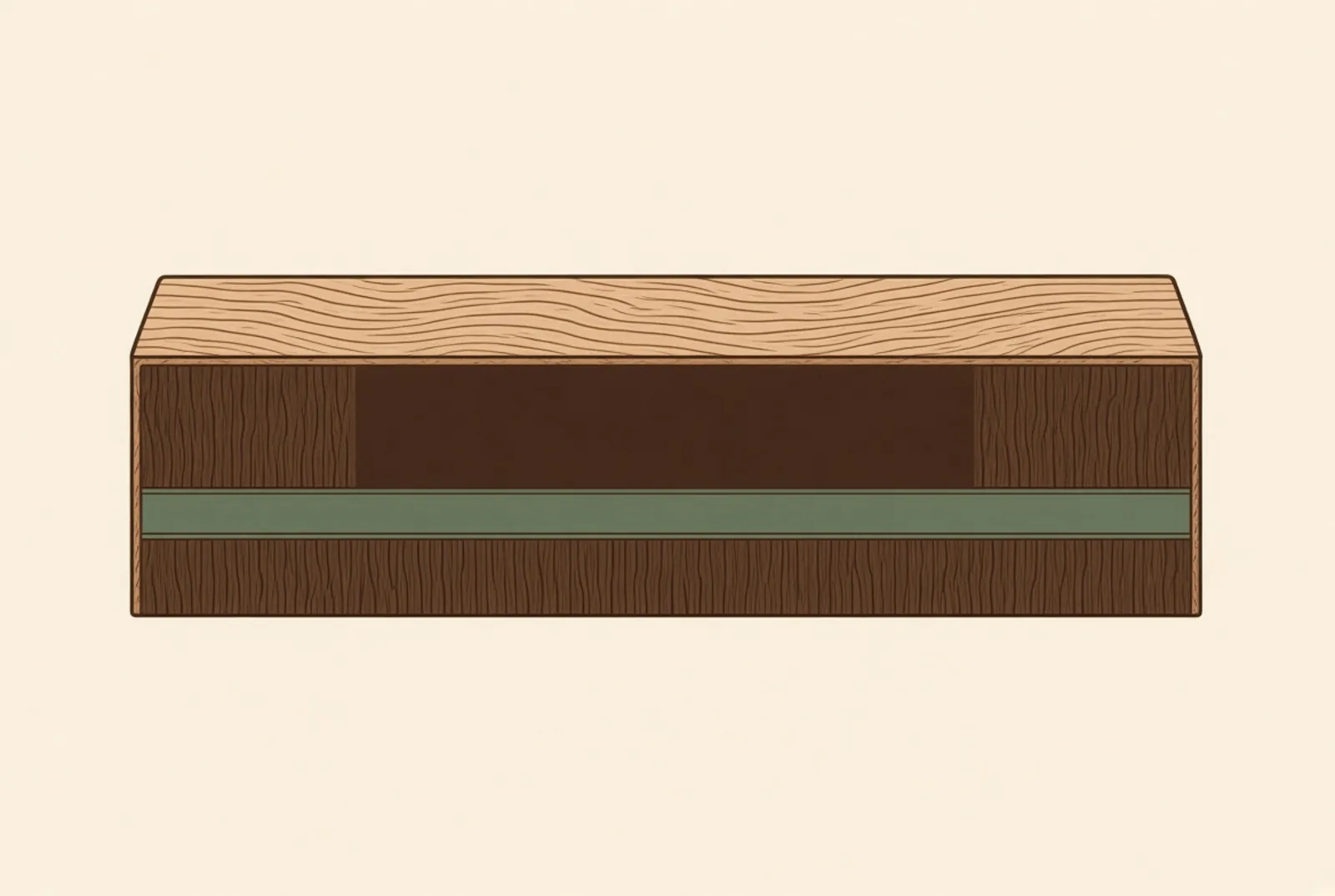
Solid hardwood is one material all the way through, which is both its advantage and its constraint. The advantage is a wear layer that supports many refinishing cycles. The constraint is that there is no cross-ply construction resisting seasonal movement.
It is correct over a plywood subfloor, nailed down, in a home with a controlled humidity range. It is not correct over concrete or radiant heat, and no budget argument changes that.
Related
Terms this one depends on
- Engineered hardwoodFlooring that pairs a real hardwood wear layer with a 90° cross-ply core, which is what gives it dimensional stability over concrete, in condominiums and above radiant heat.
- Wear layerThe thickness of real hardwood above the core — what determines how many times a floor can be refinished.
- Nail-downFastening flooring mechanically to a wood subfloor — correct for solid hardwood over plywood.
- SubfloorWhat the finished floor is installed onto — plywood over joists, a concrete slab, or a radiant assembly — and the thing that determines the installation method.
- Strip, plank and wide plankBoard-width categories defined by the flooring standard, not descriptive terms a showroom is free to apply as it likes.
Referenced by
Terms that point here
Provenance
Where this definition comes from
Framework pillars this term is material to
If you are dealing with this on a real floor: floor restoration, or get a fixed written price after a measure.
Browse